











Magnesium is among the most important minerals for human health, influencing over 300 reactions in the body. It should come as no surprise the best magnesium for perimenopause can help ease symptoms so you feel more like your old self again.
From supporting better sleep to easing physical tension, calming racing thoughts, and more - there are a lot of reasons to include magnesium in your self-care routine. But which magnesium is best for perimenopause? There are so many different forms at your fingertips, including:
- Magnesium Glycinate
- Magnesium Sulfate
- Magnesium Malate
- Magnesium Threonate
- Magnesium Chloride
- Magnesium Citrate
- Magnesium Oxide
- Magnesium Aspartate
- Magnesium Taurate
The best type of magnesium for perimenopause, though, is magnesium glycinate. It’s gentler on the digestive system and highly bioavailable, so you can tap into the benefits without the discomfort. That’s why we’ve included this form in resW perimenopause support.
Our supplement brings together magnesium glycinate along with other clinically studied ingredients to make meaningful changes to how you feel in this next chapter of life. Learn more about the science behind resW today and loosen the grip perimenopause has on your life.
“The balance in mood was the first change I felt. I didn’t realize how much stress had built up until it started to ease.” - Denise
“The stress support is real. I can get through the day without feeling so tense.” - Naomi
“resW has been a steady support. Not dramatic, but small changes that add up to a big improvement in daily life.” - Valerie
How Does Magnesium Help Ease Perimenopause Symptoms?
This mineral touches so many different areas of human health, including sleep regulation, muscle relaxation, nerve signaling, and mood support. These are all things women in perimenopause can struggle with, which is why magnesium is a must-have in your arsenal.
Shifting hormones can disrupt these systems as hormones start to go haywire in your late 30s to early 50s, but magnesium can help create a sense of balance. Women report noticeable changes in their symptom severity and frequency after incorporating magnesium.
Supporting Better Sleep
It’s all too common for sleep to become lighter or more fragmented during perimenopause. Magnesium plays a role in calming the nervous system and supporting natural melatonin rhythms, which can help the body settle more easily at night
It makes a big difference for women who wake frequently or struggle to unwind. It’s not a sedative, so don’t expect it to knock you out cold. But that’s a good thing. You’re less likely to deal with the same grogginess the next morning that other “sleep remedies” are notorious for.
Easing Racing Thoughts and Physical Tension
Magnesium helps regulate how nerves and muscles fire, which can be your saving grace when tension starts to creep into the shoulders, jaw, or lower back.
This mineral also supports calmer thinking. It helps shift the brain out of that “wired” state so many women in perimenopause feel stuck in - especially at night.
Improving Mood Swings
Hormonal fluctuations can make mood shifts feel sharper than usual. Magnesium supports the neurotransmitters that help keep your emotions in check. It may ease the irritability and stress-sensitivity that perimenopausal women so often struggle with.
Other Potential Benefits
Like we said from the start, magnesium can support as many as 300 different bodily functions. From encouraging healthy blood sugar to minimizing bloating, reducing headaches, calming hot flashes, and more, there are so many reasons to make room for magnesium in your life.
But not all types of magnesium are made equal.
Why the Type of Magnesium Matters
There are more than a dozen forms of magnesium, each with its own pros and cons. The difference is in what magnesium is bound to, from chloride to glycinate, taurate, and many more. Some are calming, others lean more energizing. But what matters most is bioavailability, side effect profile, and ease of intake on a regular basis. Here’s why you need to think carefully about the best magnesium for perimenopause.
Bioavailability
This refers to how much of the magnesium your body is actually capable of absorbing and putting to use. Some forms are really easy for your body to soak up and benefit from, while others are notorious for just passing through the body as waste.
The solution for low bioavailability is often to take a higher dose. But this is only going to lead to more severe side effects. Speaking of which…
Side Effects
Different forms of magnesium behave differently in the gut. Magnesium citrate and oxide can lead to loose stools, cramping, or urgency. That’s not ideal if you’re trying to take something in the evening to get better sleep. Frankly, it’s never ideal - you don’t want a supplement that leaves you feeling uncomfortable. Other forms are easier on digestion and don’t trigger sudden trips to the bathroom
Ease of Intake
A supplement only works when you can take it comfortably and regularly. This is why the actual form of magnesium matters as much as the type of magnesium. Pills and powders are way more convenient than topical forms, like lotions, sprays, and bath soaks.
Best Type of Magnesium For Perimenopause
You could get very answers if you asked a group of experts what the best magnesium for perimenopause is. But you’d find that a lot of them say the best type of magnesium for perimenopause is magnesium glycinate. It checks every box:
- It’s highly bioavailable.
- Its side effect profile is low.
- It’s easy to take daily.
Let’s take a closer look at all the different perimenopause magnesium supplements and what each brings to the table so you can choose the ideal support.
Magnesium Glycinate
This combination of magnesium with glycine, an amino acid known for supporting relaxation and deeper sleep, is the form we use here at resbiotic. It absorbs efficiently and is gentle on digestion, so you get the necessary support without bloating or urgency.
Glycinate is often used for calming the nervous system, easing tension in the shoulders and neck, and smoothing out those evenings when your mind won’t settle. It works even better when included with complementary ingredients, though, like in our supplement here at resbiotic. This is the best magnesium for perimenopause according to many doctors and users.
Magnesium Sulfate
You might know this form of magnesium better by its other name: epsom salt. It’s the best type of magnesium for perimenopause if you only want to take magnesium transdermally, or through the skin. It’s commonly added to baths to ease sore muscles and support relaxation.
Despite being helpful for temporary tension relief or winding down after a long day, it’s not a great fit for daily supplementation because oral forms can upset the digestive system and pass through too quickly for the body to actually make use of the mineral.
Magnesium Malate
Magnesium malate pairs magnesium with malic acid, which is involved in cellular energy production. That’s why this is considered the best magnesium for perimenopause when your main struggle is afternoon fatigue. It may help with muscle soreness as well.
Malate absorbs well and is generally easy on digestion. But, it’s obviously not as good a choice for sleep or calming the nervous system compared to magnesium glycinate.
Magnesium Threonate
This form of magnesium has the unique ability to cross the blood-brain barrier. That’s why you might see it recommended as the best type of magnesium for supporting cognitive function, memory, and mental clarity. It can be a solid choice if you struggle with “meno brain.”
It also supports the nervous system and may improve sleep quality for some women. The catch? You need to take very high doses for it to be effective, and it can be pretty expensive compared to other options.
Magnesium Chloride
If you’re looking for the most bioavailable form of magnesium, magnesium chloride will come up as an option. It absorbs very well and supports general magnesium replenishment.
Like magnesium sulfate, though, it’s mostly limited to topical use. That’s fine every once in a while, but not exactly convenient for daily magnesium intake. Its bioavailability is not as strong when taken orally, either.
Magnesium Citrate
Magnesium citrate is super easy to find and very affordable, which is why some people consider it the best magnesium for perimenopause.
It supports bowel regularity because it pulls water into the intestines. That can be a good or bad thing depending on how you look at it. While some women might find it beneficial for easing constipation, others will find it more of a hindrance than a help.
Magnesium Oxide
Magnesium oxide contains a high amount of elemental magnesium, but the body absorbs very little of it. Like magnesium citrate, it’s mostly used for short-term constipation relief. It won’t give you the support you need for perimenopause-related sleep, mood, or stress issues.
Magnesium Aspartate
Magnesium aspartate combines magnesium with aspartic acid, which is involved in energy production. It absorbs better than oxide and citrate, but some women find it too stimulating for evening use. It’s best used for daytime fatigue or muscle stiffness.
Magnesium Taurate
Last but not least, magnesium taurate binds magnesium to taurine, an amino acid that supports cardiovascular health and calming neurotransmitters. It’s similar to magnesium glycinate in that sense. But what makes it different is how it specifically supports heart rhythm. That’s its main appeal. The other thing it’s been shown to be helpful for is stress response.
A lot of women find it beneficial for finding a steadier emotional baseline, but it has relatively low bioavailability compared to magnesium glycinate. That being said, which magnesium is best for perimenopause in YOUR specific case?
So, Which Magnesium is Best for Perimenopause?
All things considered, magnesium glycinate is the best type of magnesium for perimenopause since it addresses most of the challenges you face at this stage of life: sleep disruptions, mood swings, physical tension, and stress.
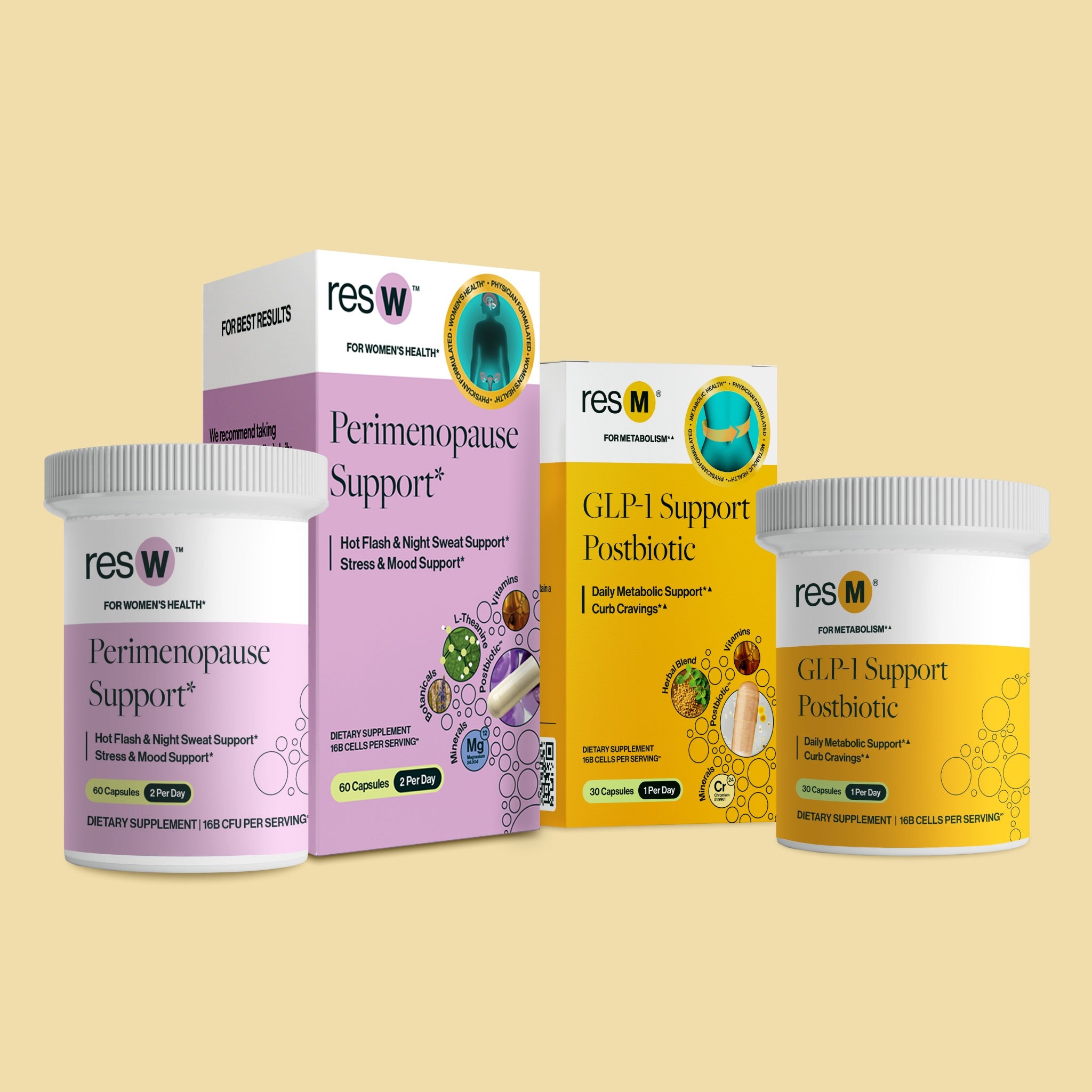
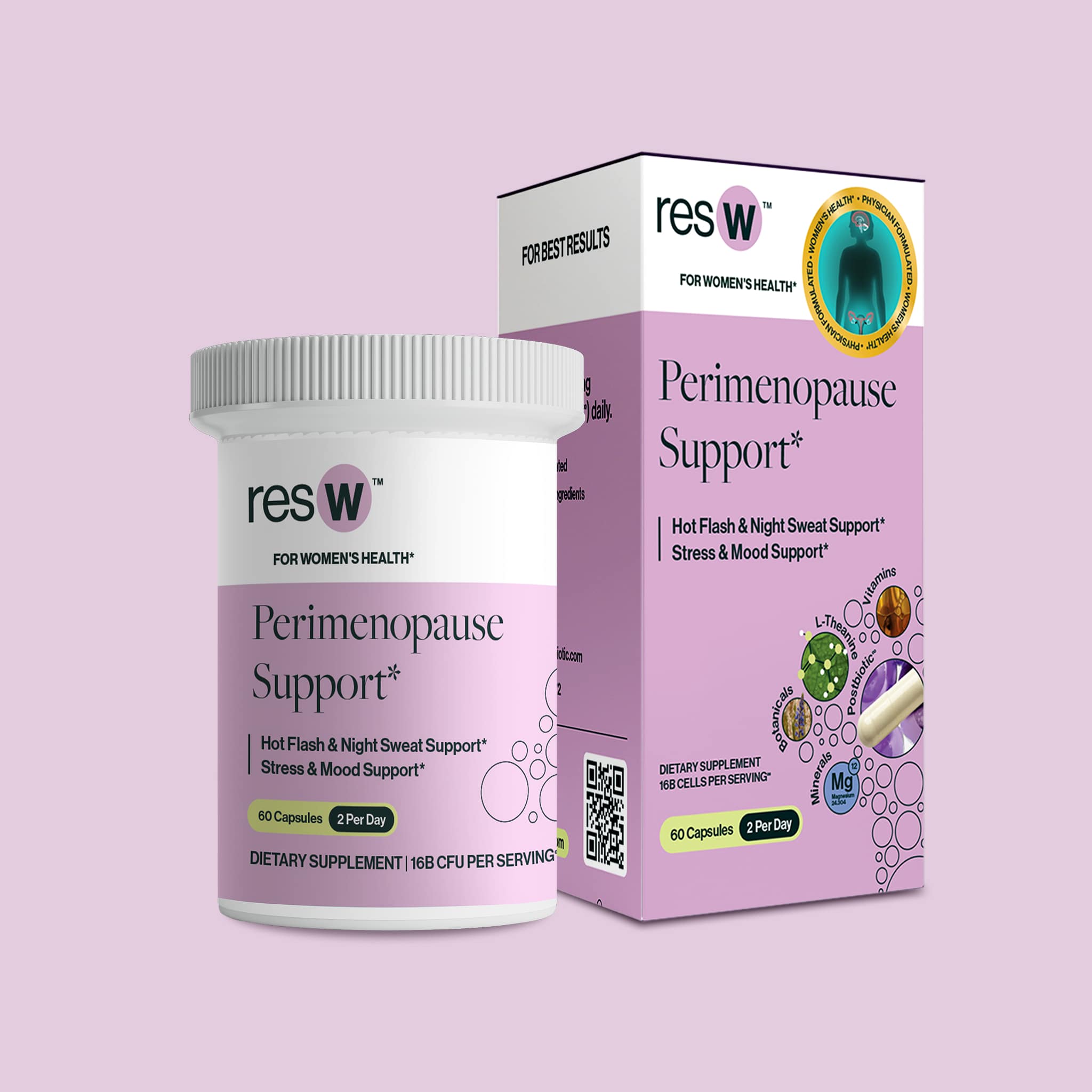
It fits naturally into an evening routine, it’s highly bioavailable, and the side effect profile is very low. That’s why we include it in our formula, resW, along with other probiotics, herbs, and vitamins for gut health.* Learn more about resW and how it can help you today.
How Much Magnesium Should I Take to Manage Perimenopause Symptoms?
Most women need around 300-400 mg of total magnesium per day from food and supplements combined, but the form of magnesium determines how much your body can actually use.
That’s why our formula, resW, contains 400 mg of magnesium glycinate (about 50 mg of elemental magnesium) yet still delivers meaningful support for nighttime comfort, tension, and mood steadiness.*
What matters most is consistency. There’s a good chance you’re deficient in magnesium if you aren’t supplementing this mineral regularly, and it’ll take a while to restock your body’s internal magnesium stores. At that point, the goal is to keep them topped off.
What Foods Are Naturally High in Magnesium?
We think the best type of magnesium comes through supplementation - because like we just said, consistency is everything. However, you can also include certain foods in your diet to get even more magnesium in your body:
- Leafy greens like spinach, Swiss chard, and kale
- Nuts and seeds, especially almonds, cashews, pumpkin seeds, and sunflower seeds
- Legumes such as black beans, chickpeas, and lentils
- Whole grains like brown rice, quinoa, and oats
- Fatty fish including salmon and mackerel
- Avocados, which offer both magnesium and healthy fats
- Dark chocolate with a high cocoa content
These foods make it easier to meet baseline needs, but it’s still worth including resW in your daily regimen. Not only are you getting the best magnesium for perimenopause, but you’re feeding your body:
- Postbiotic L. plantarum RSB11® (16B cells): Improves communication pathways between the gut and hormones, the brain, the immune system, and more.*
- Chasteberry: May support hormonal balance and ease menstrual cycle discomfort.*
- Black Cohosh: One of the most commonly used herbs to support comfort during hot flashes and night sweats*
- L-Theanine: A calming amino acid that helps you stay emotionally stable.*
We’ve also included Vitamins D3, B6, and B12 for their own benefits related to nervous system function, bone health, energy metabolism, and more. The B vitamins are also great vitamins for bloating.*
You can learn more about akkermansia foods and the best fruit for gut health if you want to dial in your diet, but remember that nothing brings you the consistency that a supplement can!
Final Thoughts on the Best Magnesium For Perimenopause
Choosing the best magnesium for perimenopause can make a meaningful difference in how you sleep, handle stress, and move through each day.*
While there are so many forms at your fingertips, the best type of magnesium for perimenopause is magnesium glycinate.* It addresses perimenopause challenges, has high bioavailability, and won’t cause digestive problems. That’s why we include it in resW.
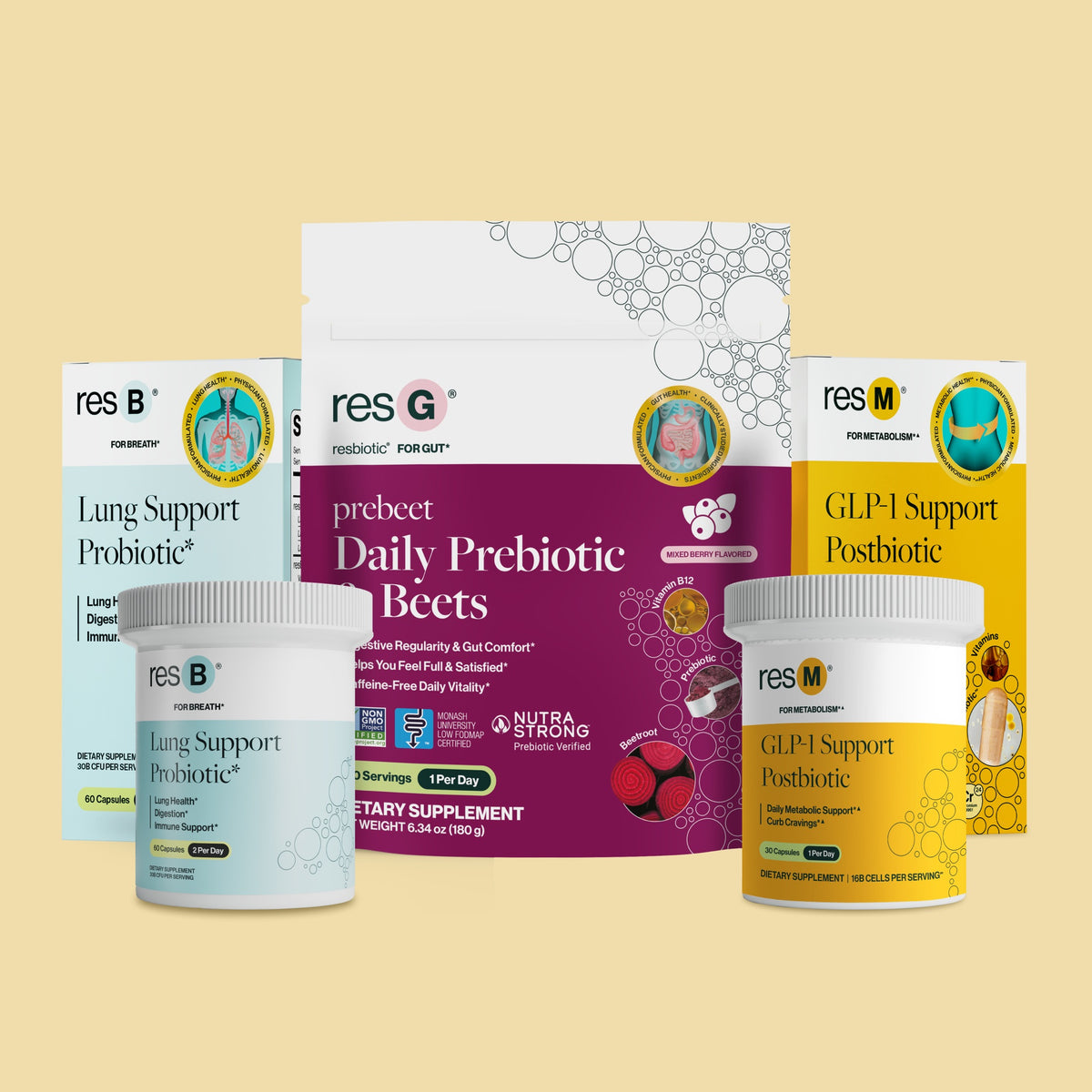
We also have a GLP-1 probiotic, a lung support probiotic, and much more. Taking our supplements together can create a stronger sense of balance throughout the body. But for women navigating perimenopause, resW alone can make a big difference.
Try it as part of a routine designed to support you through perimenopause*