

Does Akkermansia help with weight loss? This is something we see asked all the time, and it makes sense since it supports several mechanisms directly tied to weight management:
- GLP-1 production
- Insulin sensitivity
- Gut barrier integrity
Whether that translates to pounds on a scale depends on how many of those mechanisms are working in your favor simultaneously. There are a lot of misconceptions about what exactly Akkermansia muciniphila is, and we want to clear that up for you here today.
This isn't a weight loss supplement by any stretch. It's a bacterium already living in your gut that may create favorable metabolic conditions for weight management when present in healthy quantities. That’s the kicker - supporting your body to boost Akkermansia muciniphila levels.
We’ll explain how this bacteria connects to body weight and what you can do to nourish higher levels, including using resM, our clinically studied GLP-1 probiotic designed to work through this exact pathway.*
What is Akkermansia?
Akkermansia muciniphila (A. muciniphila) makes up around 1-5% of your total gut bacteria. It lives in the mucus layer lining your intestines and thrive on mucin - the protein that forms that protective coating.
This bacterium consumes mucin, which triggers your body to make more, creating a cycle that keeps the gut barrier thick and functional. Why does that matter, though? That barrier separates your bloodstream from the contents of your digestive tract. In other words, it’s a gate that keeps out undigested food particles, bacterial toxins, and inflammatory compounds.
These substances can easily sneak through a weakened gut barrier and trigger a systemic imbalance that disrupts metabolic function. This is a condition researchers call increased intestinal permeability.
People with obesity consistently have less Akkermansia living in the gut than lean individuals.1 The association is well-documented across multiple studies, but we don’t exactly know whether low Akkermansia causes weight gain or weight gain depletes Akkermansia.
What we can say confidently, though, is that the metabolic pathways Akkermansia supports are the same ones that regulate body weight. That’s why it’s worth learning how to increase Akkermansia in the gut. But before we get into that, how does Akkermansia help with weight loss exactly?
How Does Akkermansia Help With Weight Loss?
Three distinct mechanisms connect Akkermansia to weight management, and each works through a different pathway. They don't exist in isolation, though - they reinforce each other.
A stronger gut barrier supports better insulin signaling. That supports better appetite regulation. That reduces the caloric surplus that damages the gut barrier in the first place.
All of these things work towards the same goal of easier weight management.
Quieting Food Noise
“Food noise” is the constant background chatter of cravings that makes weight management feel like a battle of willpower. GLP-1 receptor agonist drugs (Ozempic, Wegovy) became famous partly because they silence this noise. Patients say that food simply stops dominating their mental space.
So what’s the connection to Akkermansia? This bacterium secretes a protein called P9 that directly stimulates GLP-1 production from L-cells in your gut.2 GLP-1 is the exact hormone these drugs mimic. Your body generates more of its own GLP-1 when Akkermansia populations are healthy and producing plenty of P9.
Does Akkermansia help with weight loss through this pathway alone? Probably not. The GLP-1 increase from Akkermansia is modest compared to pharmaceutical doses. But it CAN improve baseline appetite regulation, especially when compounded with the other mechanisms at play.
People aren't choosing between Akkermansia and GLP-1 drugs - many use both. The natural GLP-1 support from healthy Akkermansia populations means whatever else you're doing for appetite management is just a bit more effective.
Insulin and Glucose Connections
Insulin resistance so often gets in the way of weight loss. Cells stop responding efficiently to insulin, so blood sugar stays elevated, the body stores more fat (particularly visceral fat around organs), and energy regulation falls apart. Hunger signals become erratic. Fat burning slows. It’s a mess.
Fortunately, Akkermansia may improve insulin sensitivity through multiple routes.3 Animal studies show a strong correlation between higher Akkermansia populations and lower fasting glucose, lower insulin resistance markers, and less fat accumulation on high-fat diets.1 The bacterium reduces endoplasmic reticulum stress in liver and muscle cells, which would otherwise promote fat storage and glucose overproduction.
Pasteurized Akkermansia muciniphila supplementation showed improvements in insulin sensitivity markers in human studies. We want to be clear, though, that results were modest and not all parameters reached statistical significance.4
The takeaway: Akkermansia supports the metabolic machinery that makes weight loss easier, even if it doesn't cause weight loss by itself. In other words, it puts you in a position to succeed.
Protecting the Gut Barrier
We talked a bit already about why the gut barrier matters. Bacterial lipopolysaccharides (LPS) leak into your bloodstream when your gut barrier isn’t doing its job. This condition is called metabolic endotoxemia and triggers a low-grade inflammatory response throughout your body.
That inflammation gets in the way of leptin signaling (the hormone that tells your brain you're full), promotes insulin resistance, and shifts your metabolism toward fat storage. All things that are going to hold you back from managing your weight.
Akkermansia directly counters this by maintaining the mucus layer. It physically prevents LPS and other inflammatory compounds from getting into circulation.1 Less systemic inflammation means better hormonal signaling and more responsive insulin. It also creates metabolic conditions that favor fat loss over fat storage.
This mechanism always gets overlooked in weight loss discussions. People focus on calories and exercise while ignoring the inflammatory environment their metabolism operates in.
So, Does Akkermansia Help You Lose Weight?
Probably, but not in isolation and not dramatically. The associations between higher Akkermansia levels and lower body weight are established. We just don’t have a ton of direct evidence showing that supplementing Akkermansia alone leads to significant weight loss in humans.
One randomized trial with 130 participants displayed weight reduction in both probiotic and postbiotic groups, but results never reached statistical significance during the study period.4
But we want to be very clear, does Akkermansia help with weight loss as part of a broader strategy? We think so. A multi-faceted approach means each piece amplifies the others. The metabolic environment Akkermansia creates makes everything else you do for weight management work better.
So, what ELSE should you do alongside nourishing Akkermansia levels in the gut?
More Strategies to Support Weight Management
You need to address weight management from every possible angle, which means diet, exercise, and a few other lifestyle choices. Let’s start with the obvious.
Dietary Adjustments
You want to feed Akkermansia AND create a caloric environment conducive to weight loss.
Polyphenol-rich and prebiotic-rich foods can help boost Akkermansia. So, eat meals consisting of berries, apples, garlic, onions, oats, and legumes. Our guide on ways to support Akkermansia with specific foods covers more essentials in your diet, and you can learn about the best fruits for gut health while you’re at it.
As for weight management in general, the goal is to get into a caloric deficit - where your body burns more calories over a day than it consumes. This forces the body to turn to its own internal fat stores as fuel, which can lead to weight loss over the course of time.
Protein intake matters more than most people realize, too. Higher protein diets preserve muscle mass during caloric deficits. They also keep you feeling full even when you’re cutting calories. They tend to have a higher thermic effect as well. That just means your body burns more calories digesting protein than it does carbs or fat. Aim for 0.7-1g per pound of body weight daily - ideally from whole food sources rather than protein shake after protein shake.
Cut back on ultra-processed foods, excess sugar, and refined carbohydrates - not because they're inherently evil, but because they're calorie-dense, low in satiety, and they actively deplete Akkermansia populations.
The same dietary shift that feeds Akkermansia tends to naturally reduce caloric intake without it feeling as if you’re starving yourself. Go figure!
Regular Exercise
Exercise increases microbial diversity in the gut - including Akkermansia populations. It also improves insulin sensitivity, so your metabolic health is improving even before the scale moves. Plus, working out burns calories. It makes it easier to get into (and stay in) a caloric deficit.
But don’t assume that you need to do cardio every day for weight management. Combining resistance training and cardiovascular exercise outperforms either on its own. Resistance training preserves and builds muscle (which raises your basal metabolic rate), while cardio burns calories and boosts cardiovascular health.
You don't need to commit to anything crazy, either. Every week, aim for 150 minutes of moderate activity. Try to get 2-3 strength sessions in, too. That’s more than enough for a jumping-off point. You can add sessions or length as you see fit once you get into a good rhythm.
Targeted Supplementation
Let’s think back to what brought you here today - does Akkermansia help with weight loss? It can if you’re smart about how you boost A. muciniphila levels in the body. A targeted supplement works directly through the gut-hormone pathway.
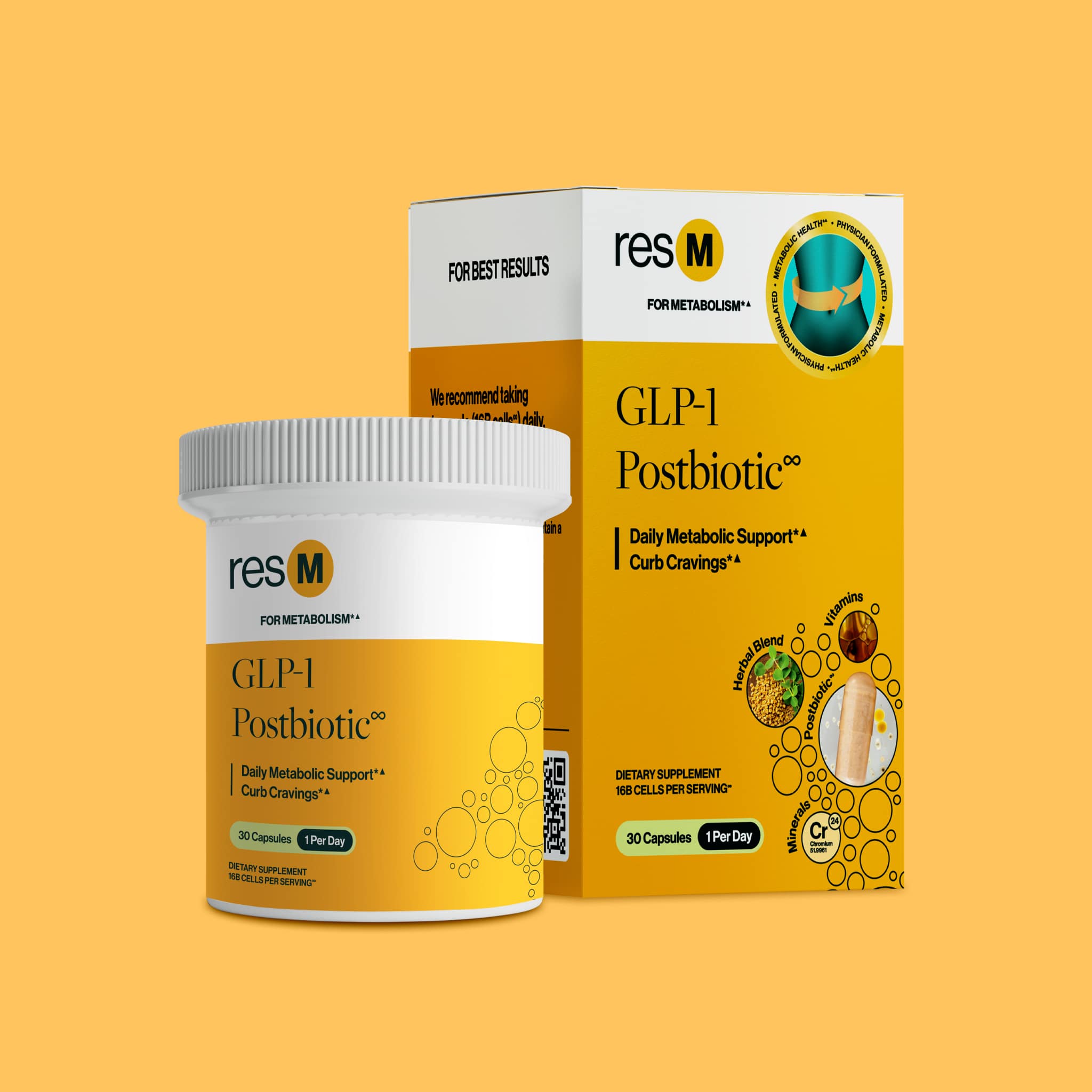
resbiotic’s resM was designed around this connection. It’s a postbiotic blend along with vitamins D3 and B12, chromium, fenugreek, and white mulberry. Each has been carefully selected for its role in metabolic and digestive support.
The results seen in clinical trials have been impressive - a 300% increase in GLP-1 hormone production in clinical studies.* That’s the same hormone Akkermansia naturally stimulates through its P9 protein. One capsule daily is all you need.
Getting enough vitamins for gut health (especially vitamin D and the B complex) also supports the broader gut environment where Akkermansia lives. Deficiencies in these nutrients can weaken both microbial diversity and the gut barrier. Learn more about the science behind resM today.
Don’t Overlook Stress and Sleep
Chronic stress raises cortisol, which is going to make steady weight management way harder than it needs to be. This hormone promotes visceral fat storage, increases appetite (for high-calorie comfort foods especially), and disrupts the gut microbiome.
To make matters worse, Akkermansia populations tend to plummet under chronic stress conditions. Whatever stress management practice works for you - meditation, exercise, therapy, time in nature - the metabolic benefits are real and measurable.
Similarly, sleep deprivation (<7 hours a night on a consistent basis) messes with your appetite hormones, raises insulin resistance, and shifts the microbiome in the wrong direction. Get 7-9 hours of quality sleep every night. Bare minimum. It’s free, and one of the easiest ways to support weight management.
So, Should You Focus on Akkermansia For Weight Management?
In closing, does Akkermansia help with weight loss? It’s kind of a loaded question. Studies show it may support the metabolic conditions that make weight management physiologically easier - GLP-1 production, insulin sensitivity, and gut barrier protection.
Just set your expectations, as it’s not a standalone solution. Nothing is. But healthy Akkermansia populations knock down some of the barriers standing between you and your goals.
So, support Akkermansia production and stop doing the things that deplete it. The bacteria already live in your gut, just need to give it what it needs to thrive. Order resM today.*
References
- Everard A, Belzer C, Geurts L, et al. "Cross-talk between Akkermansia muciniphila and intestinal epithelium controls diet-induced obesity." Proceedings of the National Academy of Sciences. 2013;110(22):9066-9071. PNAS
- Yoon HS, Cho CH, Yun MS, et al. "Akkermansia muciniphila secretes a glucagon-like peptide-1-inducing protein that improves glucose homeostasis and ameliorates metabolic disease in mice." Nature Microbiology. 2021;6(5):563-573. Nature
- Zeng et al. "Role of Akkermansia muciniphila in insulin resistance." Journal of Gastroenterology and Hepatology. 2025. Wiley
- "Akkermansia muciniphila: a potential candidate for ameliorating metabolic diseases." Frontiers in Immunology. 2024. Frontiers
*These statements have not been evaluated by the Food and Drug Administration. This product is not intended to diagnose, treat, cure, or prevent any disease.