
Your lungs take in around 20,000 breaths a day. Yet, most people don't think about supporting them until something feels off - be it a lingering cough, seasonal congestion, or shortness of breath that wasn't there before. You need the best supplements for lungs.
There are a range of supplements that may support respiratory health through different mechanisms. Some have a long history of traditional use, while others are backed by emerging, modern clinical research. A few actually offer both.
We'll walk you through the 10 best supplements for respiratory health backed by research, explain what to look for when choosing one, and cover the safety considerations you need to know.
Key Takeaways
- The best supplements for lungs include turmeric, holy basil, vasaka, targeted probiotics, NAC, quercetin, and vitamins C and D.*
- These supplements are generally well tolerated for most adults, though some may interact with blood thinners, immunosuppressants, and other medications.*
- For best results, pair supplements with regular exercise, avoid smoke/pollutants, and eat a diet rich in antioxidant-containing foods.
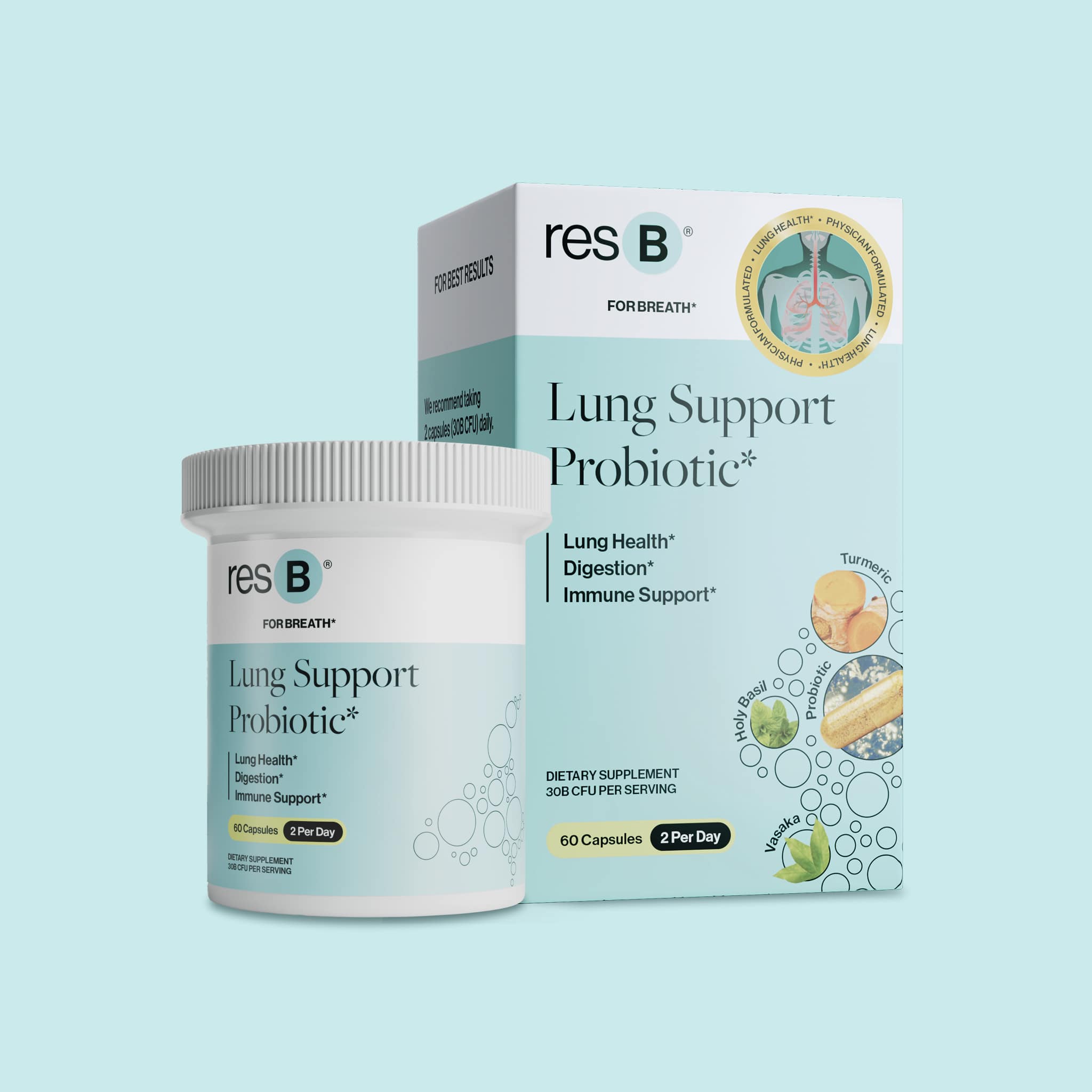
- resB lung support supplement is the top pick, combining turmeric, holy basil, vasaka, and three clinically studied probiotic strains in one doctor-developed formula.*
The 10 Best Supplements For Lungs
Not all lung supplements do the same thing. Some ease airway irritation while others thin and clear mucus. Some strengthen immune defenses to protect the lungs from infection.
That’s what you should leave here with - the best supplements for lung health address multiple pathways. More specifically, you’ll want to add at least a few of these into your regimen for multi-faceted support.
We’ll go down the list in order of what studies show to be the best supplements for lung health.*
Turmeric
Turmeric's active compound, curcumin, has a wealth of research suggesting it may help ease airway irritation and support healthier respiratory function in people dealing with chronic congestion.
Curcumin's bioavailability is low on its own, though. You need to make sure the supplement you use has piperine or some other sort of enhanced delivery system. Otherwise, your body won’t be able to make the most of it.
Turmeric is one of the core botanicals in the resB lung support supplement because it targets pathways that affect breathing.*.
Holy Basil
Holy basil (Ocimum sanctum) is an adaptogen that has brought respiratory support to Ayurvedic medicine for centuries. Reason being, it may help open airways, ease bronchial irritation, and beef up the body's response to environmental stressors like pollution and allergens.
This herb also has immunomodulatory properties. That means it might even help the body manage seasonal respiratory challenges. That’s a large part of why you’ll see holy basil as a key ingredient in resB - its respiratory and immune-supporting profile.*
Vasaka
Vasaka (Adhatoda vasica) may not be a household name in Western wellness, but it should be. It too has been used in Ayurvedic medicine as a bronchodilator and mucolytic. In other words, it may help relax airways and thin mucus so your body can clear it with ease.
You really can’t beat Vasaka when it comes to herbs that clear mucus from lungs.* It's a key botanical in the resB formula and one of the many reasons the formulation stands apart from generic lung supplements.
Probiotics
This is where the Gut-Lung Axis comes in - something not nearly enough people are aware exists. Your gut and lungs talk to one another through shared immune pathways. That’s why respiratory immune defenses weaken when gut health is off.
Specific probiotic strains have been shown to support respiratory immune function, and may help minimize the frequency and severity of seasonal respiratory issues.
Not all probiotics target the lungs the same way, though. In fact, the vast majority of commercial probiotic supplements are formulated for digestive health. Those strains won’t move the needle for your airways. Strain specificity matters. That’s why resB includes these three proprietary strains:
- L. plantarum RSB11®
- L. acidophilus RSB12®
- L. rhamnosus RSB13®
Each is clinically studied for its role in respiratory support.* While probiotics may not be what comes to mind when you research the best supplements for lungs, they are the foundation of resB.
Quercetin
This flavonoid is found in onions, apples, and berries. It has two main roles - it’s a natural antihistamine and anti-inflammatory. Research suggests it may help stabilize mast cells. Those are the immune cells that prompt allergic responses in the airways. So, quercetin could be a good fit if you think your lung issues are the result of allergies or environmental sensitivities.
Quercetin also has antioxidant properties, so it may help shield lung tissue from oxidative damage. Typical doses in respiratory research range from 500-1,000mg daily, usually split into two doses.
This is one of the best supplements for lungs for people dealing with seasonal irritation because it addresses the immune overreaction rather than just easing the symptoms. You get relief because you’re addressing the underlying issue itself.
Vitamin C
You probably know already that vitamin C supports immune function. But did you know it might even serve as a powerful antioxidant in lung tissue? Studies suggest ample vitamin C intake improves lung function and may help protect against respiratory decline.
This is one of the best supplements for lung health from an accessibility perspective because you can get it through food and supplements alike. Bell peppers, kiwi, and citrus are your best bet for diet, but supplementing on top of dietary intake is an even better approach.
This is one of those vitamins for lung health that consistently shows up in respiratory research.
That research typically involves doses ranging from 200mg to 2,000mg daily. Higher doses don't always mean better results - consistency matters more than megadosing.
N-Acetylcysteine (NAC)
NAC is a precursor to glutathione, AKA your body's master antioxidant. This supplement has well-documented mucolytic properties. It may help thin mucus in the airways so it’s easier to clear. Meanwhile, it supports the body's natural detoxification processes in the lungs.
Research suggests NAC may be extra powerful if you’ve been (or are constantly) exposed to environmental pollutants. It can also be very beneficial for chronic congestion.
Most studies use doses between 600-1,200mg daily, and they usually recommend splitting the dose morning and evening for consistent mucus-thinning effects. When it comes to how to remove mucus from lungs naturally, NAC is one of the best supplements for lung health.
Vitamin D
Low vitamin D levels are consistently linked to a higher risk of respiratory infections, along with poor lung function. Vitamin D helps regulate airway immune responses.
Supplementation may help support respiratory defense, especially during winter months when you aren't getting enough Vitamin D through sun exposure. This is also the time of year when respiratory challenges are most prevalent.
Honestly, though, most adults don't get enough from diet and sunlight alone at any time of the year. It’s one of the best supplements for lungs for that reason. You should get your levels tested first. A blood draw tells you where you stand, and your doctor can recommend a dose based on results.
At any rate, most adults benefit from 1,000-4,000 IU daily. It’s not uncommon to be recommended higher amounts initially if you have a diagnosed deficiency to get back into a healthy range. Then, you can move to a maintenance dose.
Omega-3 Fatty Acids
The balancing effects of EPA and DHA (found in omega-3s) can be powerful for the respiratory system. Research suggests omega-3 supplementation may help reduce airway irritation and support lung function, especially if your biggest issue is exercise-induced respiratory stress.
Like Vitamin C, this is one of the best supplements for lungs that you can get through diet. Fatty fish, flaxseed, and algae-based supplements are the main sources.
But, most studies on respiratory health specifically use a dosage of 1,000-2,000mg combined EPA/DHA daily. It's probably not realistic to eat that much through diet alone. You’ll want to incorporate a supplement, too.
Omega-3s are among the best supplements for respiratory health because they address the chronic low-grade imbalance that narrows airways over time.
Boswellia
Last but not least, we have boswellia serrata (frankincense extract). This supplement has been used traditionally for respiratory support for as long as any others. Its boswellic acids may help ease airway irritation and make breathing more comfortable.
This is one of the best supplements for respiratory health if you prefer botanical approaches. It pairs well with turmeric for a well-rounded balancing effect. Just make sure you’re using standardized extracts with at least 65% boswellic acids for the most consistent results.
How to Choose the Best Supplements For Lung Health
The best supplements for lungs vary in quality more than most people realize. Here are the factors that matter most as you look to add the best supplements for lungs to your regimen:
- Ingredient quality and dosing: Look for clinically studied doses, not proprietary blends. Otherwise, how do you know how much of each ingredient you're actually getting?
- Third-party certifications: Non-GMO, gluten-free, GMP-certified manufacturing all speak to supplement quality.
- Clinical backing: You’ll have more peace of mind using supplements with published clinical data over those relying purely on anecdotal evidence or traditional usage claims.
The good news is your search for the best supplements for lung health, according to real users and physicians alike, ends here at resbiotic. resB brings together many of the best supplements for lungs in one physician-developed, clinically studied formula - turmeric, holy basil, vasaka, and three proprietary probiotic strains.*
82% of users reported quality of life improvement,* and the formulation is backed by 20+ global patents.* It's vegan, gluten-free, non-GMO, HSA/FSA eligible, and rated 4.95/5 across 1,500+ reviews.
resB is the right place to start if you’re going to take one lung supplement.* Your first order is protected by a 30-day money-back guarantee, too.
“My chest doesn’t feel irritated when the weather changes now.” - Lila
“I noticed fewer coughing fits at night. My sleep has been better.” - Andrew
“I’ve tried other supplements and didn’t stick with them. This one felt different.” - Jocelyn
Are Lung Supplements Safe? Side Effects and Concerns
The best supplements for lungs are well-tolerated by healthy adults - these ingredients have well-established safety profiles when taken at appropriate doses.* There are always exceptions worth paying attention to if you're just starting out with the best supplements for lung health, though.
Potential Side Effects of Different Lung Health Supplements
- Turmeric: Digestive upset, nausea, or diarrhea in high doses.
- Holy basil: Nausea or stomach discomfort in some people.
- Vasaka: Nausea or stomach irritation at higher doses.
- Probiotics: Temporary bloating or gas as the gut adjusts.
- Quercetin: Can cause headaches or tingling in the extremities at high doses.
- Vitamin C: Diarrhea, nausea, and stomach cramps above 2,000mg daily.
- NAC: Nausea or gastrointestinal discomfort, particularly above 1,200mg daily.
- Vitamin D: Can cause nausea, weakness, and kidney issues with prolonged use.
- Omega-3s: Fishy burps, mild stomach issues, or loose stools.
- Boswellia: Stomach discomfort, acid reflux, or nausea in some people.
Interactions With Other Medications or Ailments
Always consult your doctor before adding any supplement to your routine, especially if you're managing a chronic condition or taking prescription medications. There are a few interactions in particular that we want to flag, though:
- Turmeric and omega-3s both have mild blood-thinning properties and may interact with anticoagulant medications.
- NAC can interact with nitroglycerin and certain blood pressure medications.
- Vitamin D supplementation should be monitored in people with kidney disease or hypercalcemia.
- Holy basil may lower blood sugar, which matters if you're on diabetes medications.
More Tips to Improve Lung Health Beyond Supplements
The best supplements for respiratory health work better alongside good habits.* Understanding how to improve lung health naturally means looking at the full picture:
- Exercise regularly: Sounds obvious, but needs to be said. Working out (especially cardio) strengthens your respiratory muscles and boosts lung capacity over time. Even 30 minutes of brisk walking most days makes a measurable difference in lung health.
- Stay hydrated: Water helps thin mucus in the airways, making it easier for your lungs to clear irritants. This is especially important if you’re working through chronic congestion.
- Avoid smoke and pollutants: Cigarette smoke, vaping, and constant exposure to air pollution are the biggest threats to lung health. You already know these things should be avoided, but you're fighting an uphill battle if you're still exposing your lungs to smoke.
- Eat antioxidant-rich foods: Berries, leafy greens, and citrus fruits all provide nutrients that protect the lungs. For example, the best fruit for lungs tend to be high in vitamin C and flavonoids.
- Practice breathing exercises: Diaphragmatic breathing and pursed-lip breathing can improve lung efficiency and help with mucus clearance.
Our blog has more tips on how to get rid of chronic congestion and other respiratory-related resources. In the meantime, though, all that’s left to do is get on the right path to breathing better with the best supplements for lungs at resbiotic.*
When Should You See an Expert for Lung Health?
The best supplements for respiratory health are meant to support your lungs day-to-day - not cure anything. None of the supplements we highlighted today is a substitute for medical evaluation when something feels seriously off. See a doctor if you're experiencing:
- Persistent shortness of breath
- A cough lasting more than 3 weeks
- Chest tightness during normal activities
- Coughing up blood
- Unexplained wheezing
These symptoms may indicate an underlying condition that needs a diagnosis and professional treatment. A pulmonologist can take a look at your lung function, uncover root causes, and build a treatment plan.
While supplements can be part of that plan, they shouldn't be the whole thing. Not even the best supplements for lungs are enough on their own sometimes. But it’s the easiest place to start improving respiratory health, alongside healthy lifestyle habits.*