









You’re exhausted - yet, you lie awake at night growing more and more frustrated because you’re too congested to fall asleep. Or, maybe you fall asleep fine but wake yourself up choking for air. We’re going to show you how to breathe better at night so you can get the rest you need.
Most nighttime breathing issues come down to just a handful of fixable causes. It could be as simple as changing the position you sleep in, the conditions in your bedroom, or adding a lung support probiotic to your daily regimen.* Learn more below to improve breathing while sleeping!
Key Takeaways
- Lying flat lets mucus pool in the airways and makes congestion worse. Sleeping on your side with your head elevated helps.
- A saline rinse before bed helps clear allergens and irritants so you can fall asleep easier.
- You might need to install a humidifier and air filter in your bedroom to improve air quality.
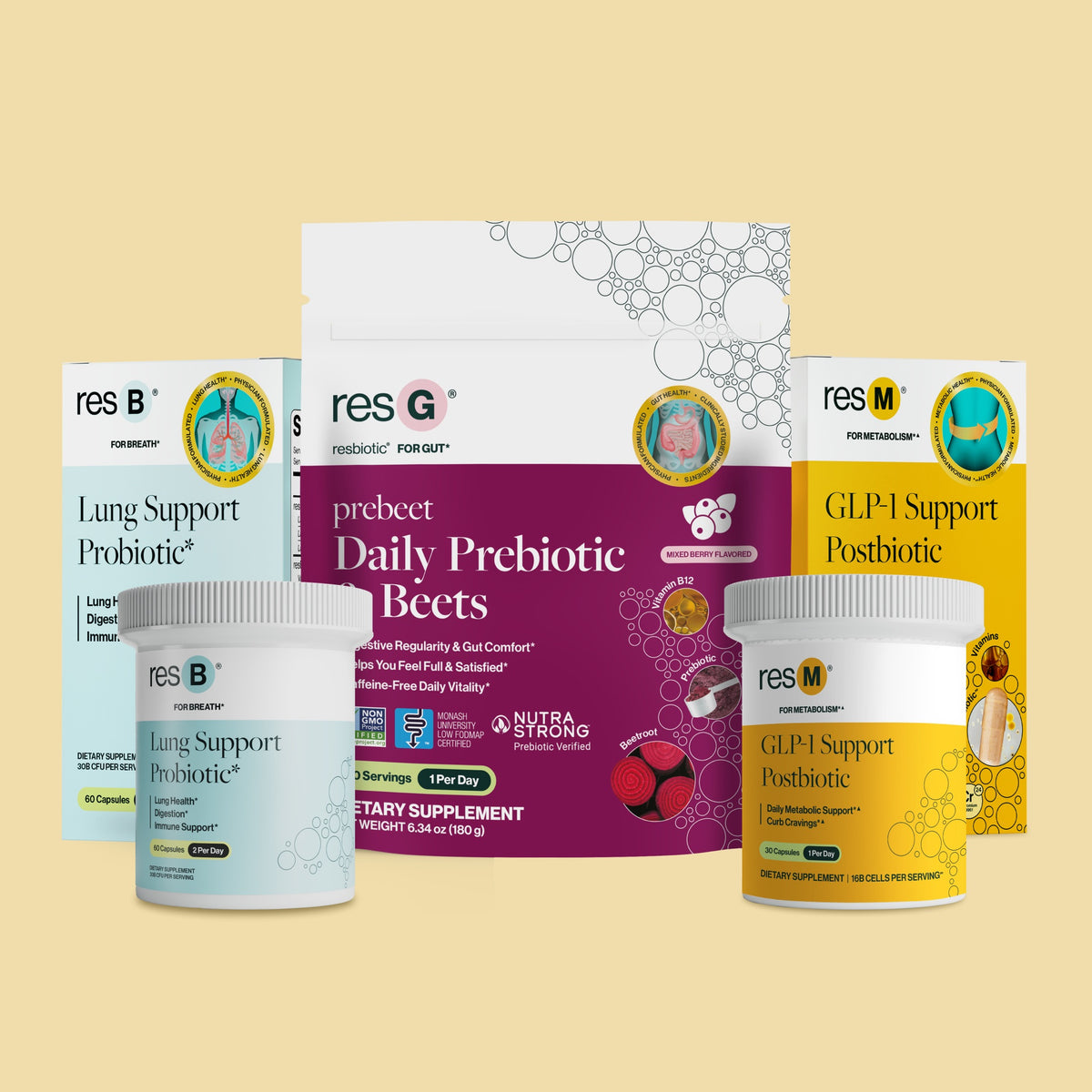
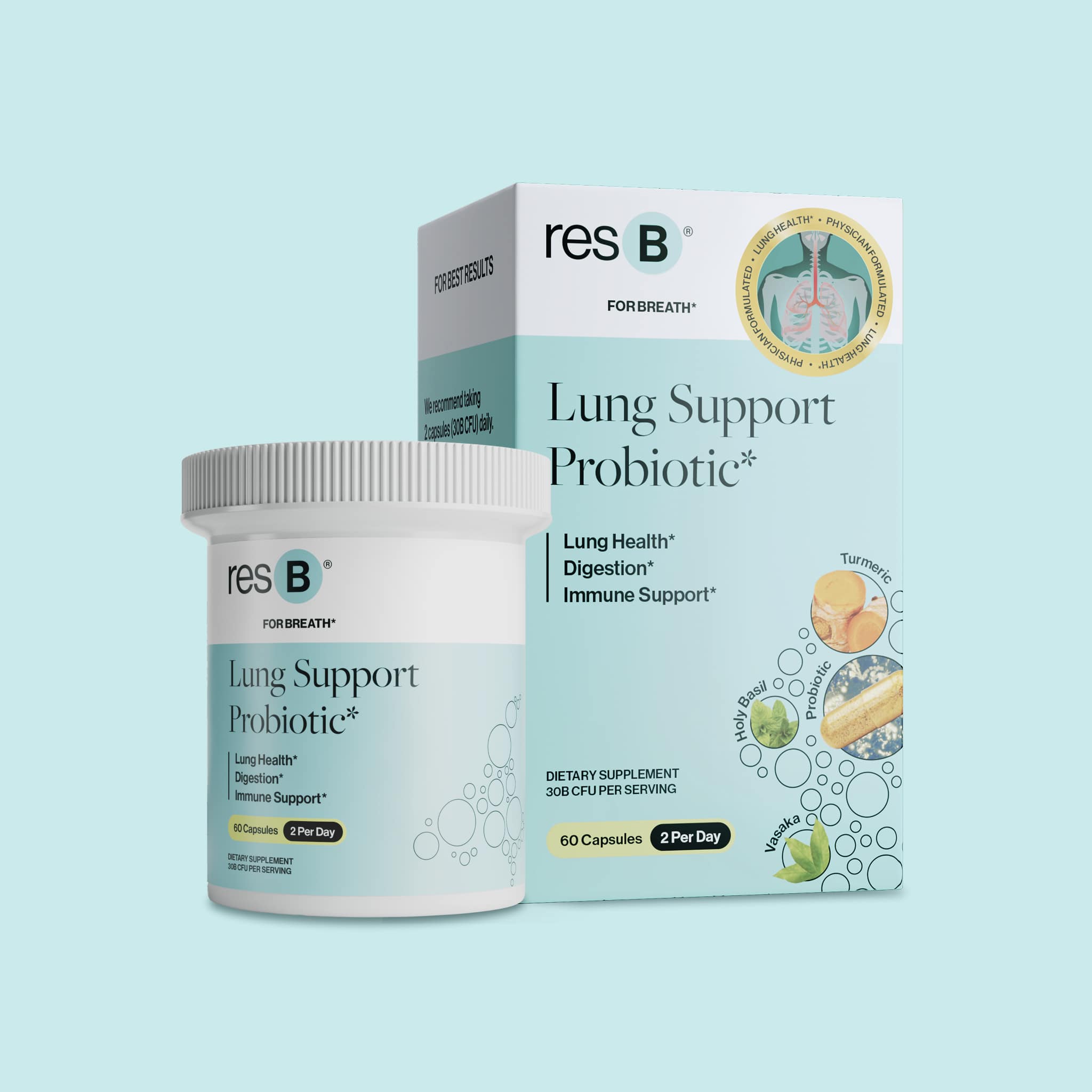
- resbiotic’s resB Lung Support Probiotic supports respiratory function through the gut-lung axis, targeting the root cause of chronic conditions rather than masking symptoms.*
- Persistent sleep challenges related to breathing warrant a sleep study.
How Congestion Gets in the Way of a Good Night’s Sleep
We probably don’t have to tell you if you’re here looking for tips on how to breathe easier at night. But struggling to breathe through your nose makes it feel impossible to fall asleep. And even if you do fall asleep, mouth breathing can wake you up throughout the night (and really annoy your partner). It leaves your throat sore the next morning, too.
The reason it happens is gravity. Or, a lack thereof. Gravity helps drain mucus from the sinuses while you’re upright, which is how you spend most of the day. But that natural drainage halts when you lie down. Mucus settles in your airways. More blood flow to the head makes matters worse as your nasal tissue swells up. That’s why a little stuffy nose during the day feels totally blocked up within a few minutes of your head hitting the pillow.
Bedroom allergens (like dust mites or pet dander) make matters worse. So does dry air from your HVAC system, which runs all throughout the night. You may even have some sort of underlying ailment making matters worse, such as GERD or untreated allergies.
The best way to breathe while sleeping is to get a little more specific about what’s keeping you up at night. Then, you can take more actionable steps to improve breathing while sleeping.
How to Breathe Better at Night: 7 Tips to Improve Breathing While Sleeping
Whatever the issue is, you can follow our advice below on how to breathe better at night. Implement all these tips for the most powerful effect.
Support Your Respiratory System With resB
The first thing you should do is beef up your body’s defense against congestion. It starts in your gut, where up to 70% of the immune system resides. This is known as the Gut-Lung Axis. Evidence shows gut health directly influences airway inflammation and immune function.1
So, start with resbiotic’s resB - a clinically studied, physician-formulated respiratory supplement. It brings together three targeted probiotic strains with the most powerful herbs for lung health.* Here’s what’s inside:
- Lactiplantibacillus plantarum RSB11
- Lactobacillus acidophilus RSB12
- Lacticaseibacillus rhamnosus RSB13
- Vasaka
- Turmeric
- Holy Basil
A clinical trial found that 82% of participants experienced meaningful quality of life improvement with zero adverse side effects along the way.*2 resB is backed by a 30-day satisfaction guarantee, too. Learn more about the science behind it.
Change Your Sleeping Position
The quickest fix by far is to change how you sleep, especially if you currently sleep flat on your back. While it may be good for posture, it’s not great for breathing - especially when you’re a little congested.
Most sleep experts say you should elevate your head 15-20 degrees to prevent mucus from pooling up in your airways. 3 Side sleeping eases the gravitational pressure on nasal tissue, too. You just need an extra pillow. It’s the simplest way to improve breathing while sleeping.
Get a Humidifier and/or Air Filter
Dry indoor air irritates nasal passages and lets mucus get thicker than it should, so it can more easily clog airways.4 This is a more prominent problem in homes that run the HVAC system through the night. Get a humidifier and aim to keep your bedroom in the 30-50% range.
While you’re at it, look into a HEPA air filter to cut down on the airborne allergens that can prompt an immune response in your body. Dust and pollen are common allergens that build up in the bedroom. Especially if you have pets.
Do a Saline Rinse Before Bed
Another tip for how to breathe better at night is to clear your sinuses before you hit the hay. A saline rinse physically flushes out dust and other irritants from your nasal passages, so you’re getting ahead of congestion and can at least fall asleep faster.
This is one of the best ways to breathe while sleeping, according to research. A meta-analysis reported a nearly 28% improvement in nasal symptom scores.5 It’s one of the top home remedies for congestion and takes less than two minutes.
Sleep With Nasal Strips
You’ve probably seen plenty of ads for those nose strips that open your nostrils so you can breathe better. They’re not gimmicks. They work by physically widening the nasal valve, which is the narrowest part of the nasal airway.6
Set your expectations, as these won’t treat the underlying cause of congestion. But they can be your saving grace if you struggle to breathe through your nose while you work on the actual culprit itself.
Try Pre-Sleep Breathing Exercises
Some pre-bed breathing exercises can go a long way not just in easing congestion but in calming your nervous system so you’re ready to fall asleep as soon as you crawl into bed.
We’ve used the 4-7-8 method (inhale for 4 counts, hold for 7, exhale for 8) when we struggle with nasal breathing at night. Really, though, any sort of slow, intentional breathing pattern can help. Research has shown diaphragmatic breathing lowers cortisol after consistent practice.7
Address Bedroom Allergens
The source of your bedtime congestion could be hiding in your bedding, under your bed, on your ceiling fan, or anywhere else in your room.
Dust mites are among the most common culprits, and they love hiding in your sheets.8 Make it a habit to wash your bedding once a week, ideally in hot water. You might even want to look into allergen-proof covers for your pillows and mattress.
As tough as it may be, you should try to keep your pets off your bed as well. You might even consider keeping them out of your bedroom altogether, at least during seasons when you don’t open the windows much.
When Should You Consider Getting a Sleep Study?
We hope these tips on how to breathe better at night help open your airways so you can get better sleep. But if you find yourself sleeping poorly despite these changes, you might want to get a sleep study. Especially if you snore and find yourself being awoken by choking or gasping for air.
Obstructive sleep apnea isn’t something you can treat with some home remedies. It requires medical intervention and potentially a CPAP machine.
Talk to a doctor if you or your partner has noticed these patterns. Constant fatigue despite a full night in bed is another sign something isn’t right with your sleep. A sleep study can help you uncover the root cause and come up with a more structured plan to address it.
Bottom Line on How to Breathe Easier at Night
There you have it, how to breathe better at night. Adjust your sleep position, manage indoor air quality, and consider a saline rinse before you crawl into bed. Make resB a part of your daily regimen to support your respiratory system from the inside out.* That's all there is to it.
Our blog has additional resources on how to improve lung health naturally, including the top vitamins for lungs and how to get rid of chronic congestion. At this point, though, all that’s left to do to improve breathing while sleeping is order resB.* Get the supplement support you need!
References
- Budden KF, et al. "Emerging pathogenic links between microbiota and the gut-lung axis." Nat Rev Microbiol. 2017;15(1):55-63. PubMed
- Wenger NM, et al. "Clinical trial of a probiotic and herbal supplement for lung and respiratory health." Frontiers in Nutrition. 2023;10:1168582. DOI
- Calvo-Henriquez C, et al. "The Recumbent Position Affects Nasal Resistance: A Systematic Review and Meta-Analysis." Laryngoscope. 2022;132(1):6-16. PubMed
- Wolkoff P. "The mystery of dry indoor air -- An overview." Environment International. 2018;121(Pt 2):1058-1065. DOI
- Roithmann R, et al. "Role of the external nasal dilator in the management of nasal obstruction." Laryngoscope. 1998;108(5):712-715. PubMed
- Hermelingmeier KE, et al. "Nasal irrigation as an adjunctive treatment in allergic rhinitis: a systematic review and meta-analysis." Am J Rhinol Allergy. 2012;26(5):e119-e125. PubMed
- Ma X, et al. "The Effect of Diaphragmatic Breathing on Attention, Negative Affect and Stress in Healthy Adults." Front Psychol. 2017;8:874. PubMed
- Wilson JM, Platts-Mills TAE. "Home Environmental Interventions for House Dust Mite." J Allergy Clin Immunol Pract. 2018;6(1):1-7. PubMed
This article is for educational purposes only and is not intended to diagnose, treat, or replace advice from your healthcare provider.