















Spring brings warmer weather, longer days - and unfortunately for a lot of people, a cough that shows up out of nowhere and lingers way too long. Can spring allergies cause coughing, though?
Short answer: Yes, a spring allergies cough is quite common. Pollen prompts an immune response that irritates your airways and sends mucus production into overdrive. Both of those things trigger the cough reflex.
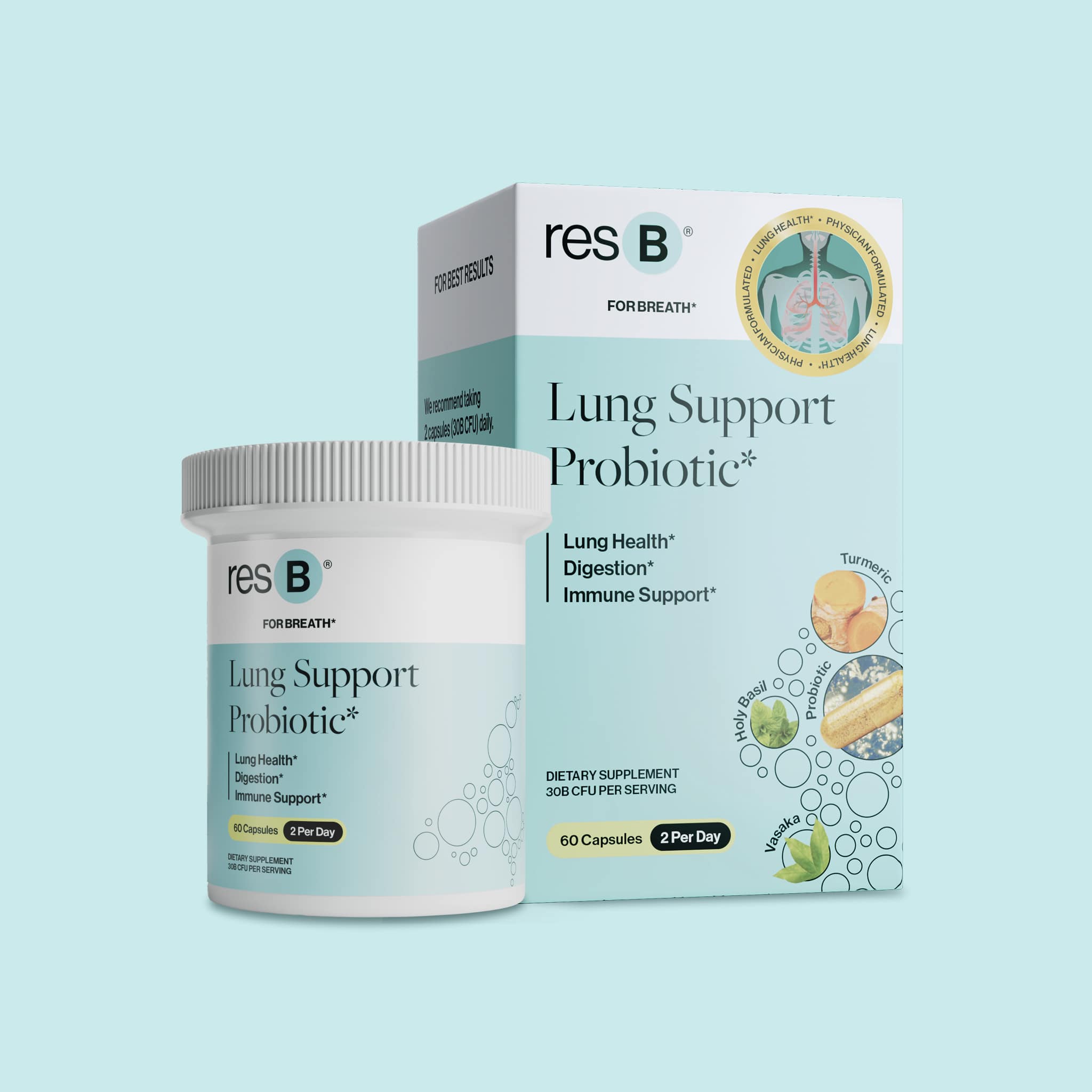
The good news is you're not stuck just riding it out until the season passes. resB lung support probiotic can help your respiratory system handle seasonal challenges with more resilience.*
What is “Coughing?”
Coughing is your lungs' main defense mechanism in response to something irritating your airways. That could be dust, smoke, mucus, or irritation caused by your own immune system. That last one is what’s going on with a cough related to spring allergies.
A dry cough produces no mucus. It feels like a tickle or scratch in the throat that you can’t seem to calm down. A wet (AKA productive) cough brings up phlegm and suggests your body is actively trying to clear something from the airways. A cough from spring allergies usually starts dry, but can become productive as post-nasal drip puts more mucus in the chest.
Can Spring Allergies Cause Coughing?
So, can spring allergies cause coughing? Yes. At least, for some people with a weakened immune system.
The immune system has a habit of overreacting to non-threats, and pollen is a perfect example. When it enters the airways, the immune system freaks out and releases histamine. That histamine can irritate your bronchial tubes, cause nasal passages to swell, and spike mucus production.
All three feed the cough reflex.
Post-nasal drip (mucus draining from your sinuses down the back of your throat) is the biggest driver of a spring allergies cough. The mucus coats your airways, and your lungs respond by trying to clear it.
The most effective approach is figuring out how to remove mucus from lungs naturally rather than just suppressing the cough with medication. But before we get to that, let’s make sure your cough is actually caused by spring allergies.
Signs Your Cough is Caused By Spring Allergies
A few patterns point clearly to allergies:
- The cough coincides with pollen season (March through June)
- It worsens on high pollen days or after spending time outdoors
- Other allergy symptoms are present (sneezing, itchy eyes, runny nose)
- The cough is dry and scratchy rather than deep and productive
- Antihistamines provide noticeable relief
- There's no fever, body aches, or other signs of infection
The treatment approach for a spring allergies cough is totally different from what you'd do for a cold or respiratory infection. That’s why narrowing it down to what’s giving you grief in the first place is so important.
Signs Your Cough is Unrelated to Spring Allergies
It might not be spring allergies at all that’s causing you to cough so incessantly. Here are some signs it’s something else:
- The cough persists year-round with no seasonal pattern
- It produces thick, colored mucus (green or yellow may suggest infection)
- It's accompanied by fever, chills, or body aches
- Antihistamines don't help at all
- It worsens when lying down regardless of season (possible GERD or asthma)
- Chest pain or wheezing accompanies the cough
I’ve ruled out spring allergies…so why do I keep coughing? That’s a conversation for another day - in the meantime, let’s look at some other common symptoms of spring allergies.
Other Symptoms of Spring Allergies You May Be Dealing With
A spring allergies cough almost never shows up alone. Most people experience several symptoms at once:
- Sneezing
- Itchy or watery eyes
- Runny nose
- Sore throat from post-nasal drip
- Fatigue from disrupted sleep
- Headaches from built-up pressure in the sinuses
The good news, though, is that there are plenty of ways to get that cough under control.
How to Calm a Cough From Spring Allergies
There’s not a single fix for a spring allergies cough - the more angles you approach the ailment from, the better. These are the easiest first steps:
- Antihistamines: Zyrtec, Claritin, or Allegra block histamine, which is what's making you cough in the first place. Go non-drowsy during the daytime.
- Nasal corticosteroid sprays: Flonase or Nasacort ease the swelling in your nasal passages that causes post-nasal drip (the biggest reason allergy coughs won't quit).
- Limit your exposure: Check pollen counts before you open a window. Shower after being outside. Run a HEPA filter in your bedroom. This small stuff adds up fast.
- Drink more water: This is just good advice in general, but it can really help thin mucus so your lungs actually clear it instead of coughing at it all day. Tea or broth if your throat is raw.
- Honey: Coats your throat to calm the irritation. A tablespoon before bed works about as well as most OTC cough suppressants without the drowsiness or scary ingredient labels.
Those things all address the symptom itself. But what about the root cause - an overreaction to an otherwise harmless invader? Supporting your respiratory system from the nutritional and immune side can make a real difference.
Research on probiotics for allergies shows specific probiotic strains may help modulate the immune overreaction that triggers allergy symptoms in the first place, potentially easing the irritation causing all this havoc in the first place.*
resB combines three clinically studied respiratory probiotic strains with turmeric, holy basil, and vasaka to support your lungs through allergy season and beyond. 82% of users reported quality of life improvement, and none of them reported any adverse side effects.*
The formula is physician-formulated and backed by a 30-day money-back guarantee, with thousands of positive reviews and is trusted by healthcare providers. Face allergy season head-on with resB in your arsenal!*
When Should You See a Doctor For a Spring Allergies Cough?
Most coughing from spring allergies gets better if you’re patient and you implement the strategies above. But, you should see a doctor if:
- The cough lasts longer than 4 weeks
- It gets progressively worse despite treatment
- It produces blood-tinged mucus,
- It comes with difficulty breathing or chest tightness
- It’s accompanied by a fever
These things point to something beyond allergies, be it asthma, a respiratory infection, or another condition that needs professional evaluation. A spring allergies cough should respond to antihistamines and exposure reduction within a week or two.
Related Resources
How to get rid of chronic congestion | Vitamins for lung health | Herbs that clear mucus from lungs
Frequently Asked Questions
Why am I coughing so much in spring?
Pollen. Your body sees it as an invader, ramps up histamine production, and leaves your airways irritated while producing more mucus. That mucus drips down the back of your throat. Then, your lungs try to cough it out. It’s worse on days when counts are high, worse outside, and worse in the morning when pollen settles overnight.
How do you know if your cough is from allergies?
Look at what came with it. Sneezing, itchy eyes, runny nose, no fever - that's allergies. A cold would bring body aches and probably a fever. The other giveaway is timing: pollen is probably the culprit if it shows up in March and gets worse on windy days.
How long will an allergy cough last?
Depends on your pollen season. Could be a few weeks, or it could stretch to a couple of months if you're reacting to multiple types (trees in early spring, grass later). Antihistamines and limiting exposure can help a lot. So does getting your immune system dialed in with something like resB so your body stops overreacting to every grain of pollen.*
How do you stop an allergy cough in spring?
Antihistamines and a nasal corticosteroid spray knock out the worst of it for most people. Keep windows shut on high-count days, shower after you've been outside, run a HEPA filter in your bedroom. resB supports the respiratory immune response that drives the whole reaction.*