








Probiotics for allergies might not be the first remedy that comes to mind when you have watery eyes and stuffy sinuses. But the gut-immune connection is honestly worth a closer look if you want to support how your body responds to seasonal and environmental challenges on a daily basis.
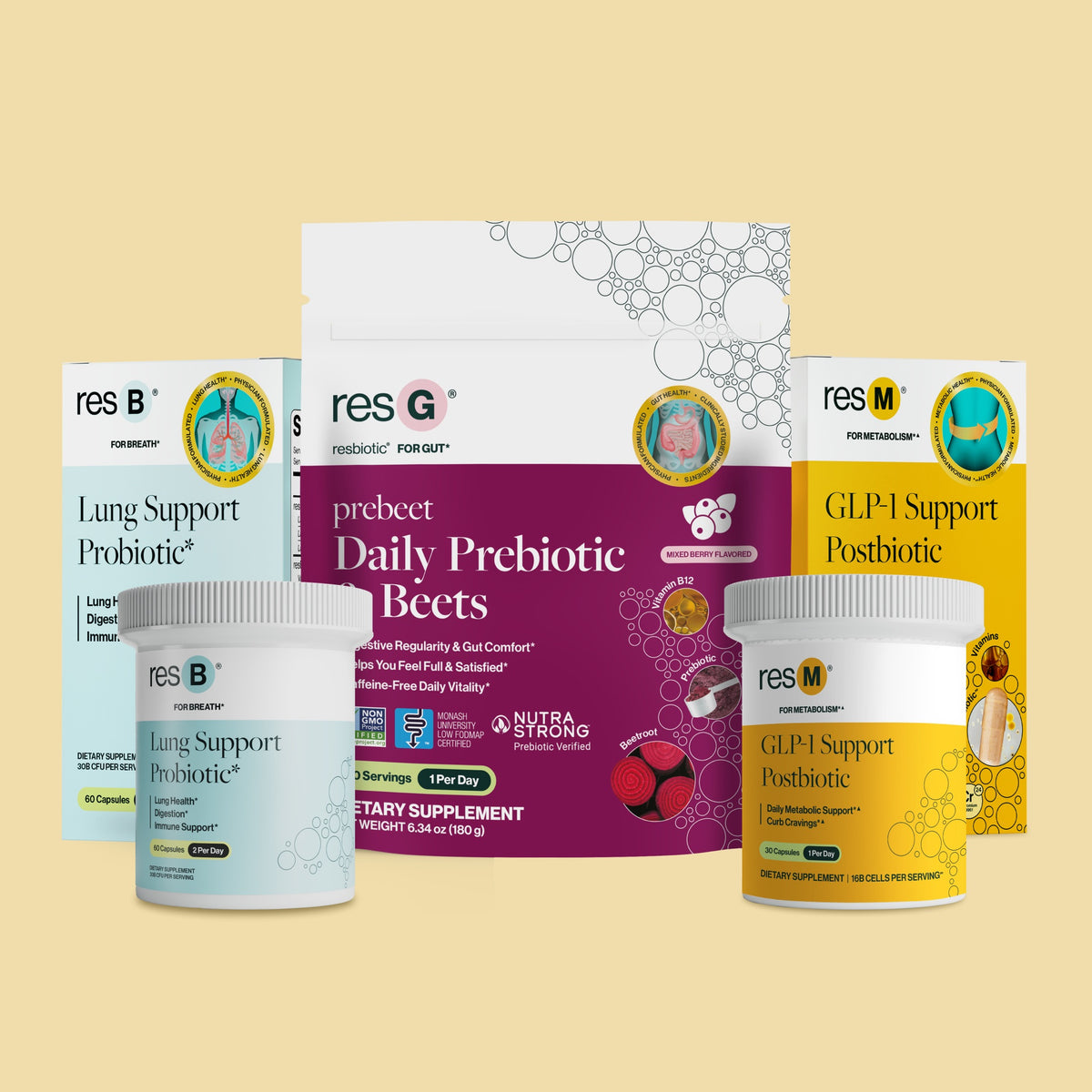
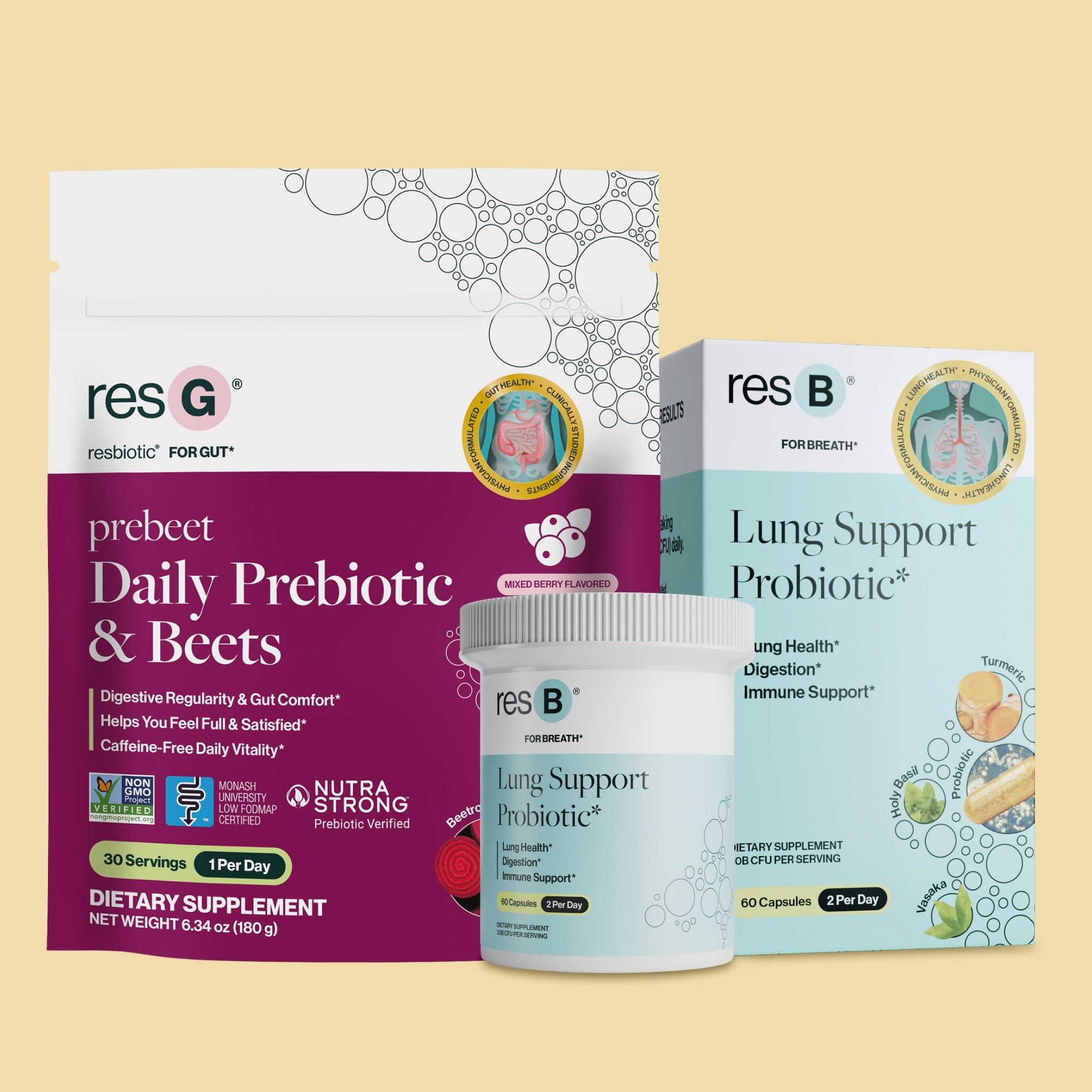
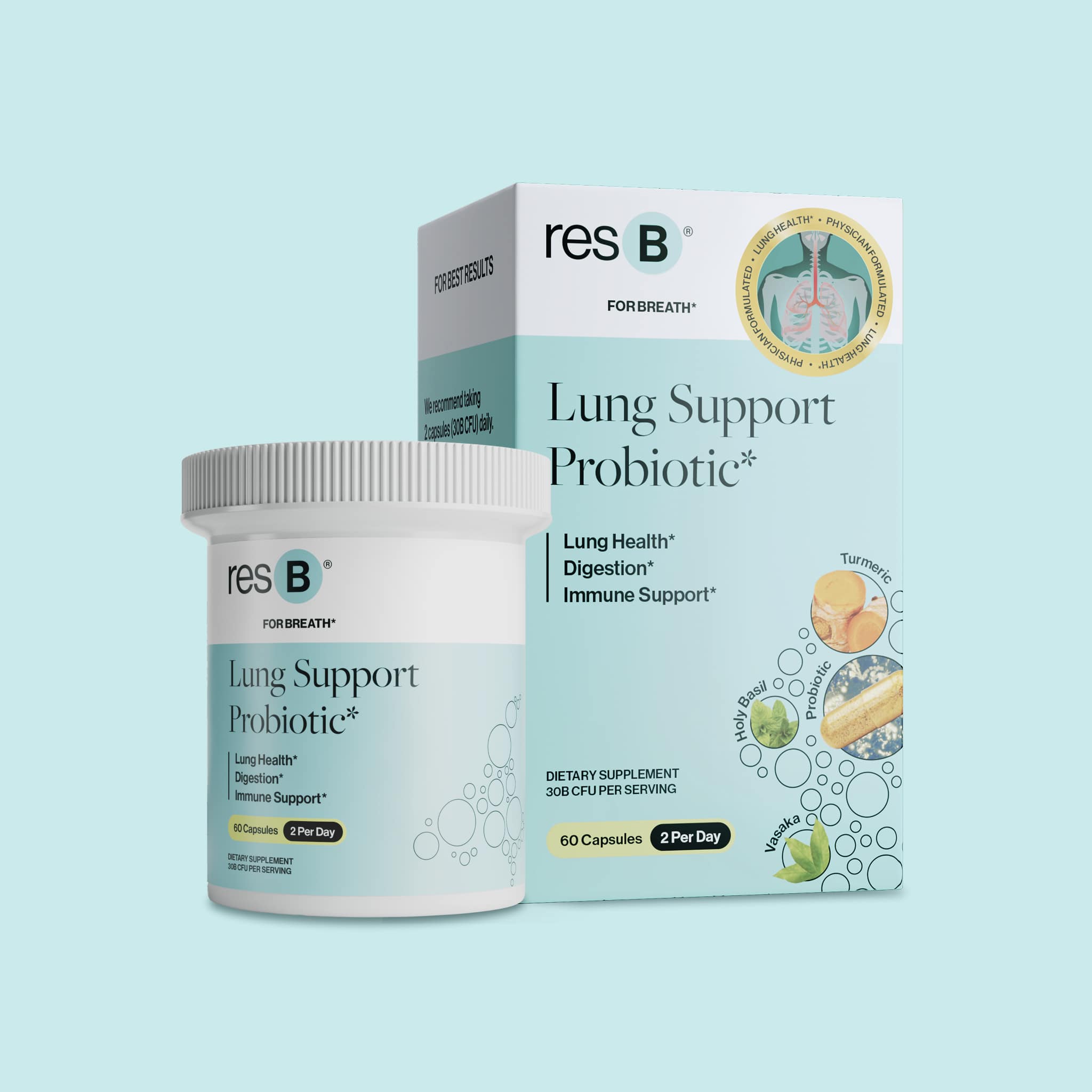
So, can probiotics help with allergies? The research says yes, at least, there’s strong potential. Our lung support probiotic (resB) taps into the gut-immune axis. It also has other clinically studied ingredients like vasaka, turmeric, and holy basil.* It’s a clinically studied respiratory structure and function supplement.*
Learn more about the science behind resB along with probiotics and allergies in general below.
Key Takeaways
- Your gut microbiome shapes how your immune system responds to allergens. An imbalanced gut can amplify allergic reactions.
- L. rhamnosus, L. plantarum, and L. acidophilus are among the most well-documented probiotic strains for supporting immune response and resilience.*
- Probiotics for allergies are a long-term, consistent strategy, not a quick fix.
- Fermented foods and targeted supplements are the two main ways to introduce probiotics for allergy support.
- resB uses patented, clinically studied probiotic strains and herbs to support respiratory health from multiple angles, with 82% of participants reporting better quality of life.*
Overview of Probiotics and Allergies
The relationship between probiotics and allergies makes more sense once you understand each system individually.
What Are Allergies?
Your immune system overreacts to a substance that's otherwise harmless - pollen, dust mites, pet dander, certain foods. That’s an allergy. It’s why you can flare up at the first sign of something, yet it doesn’t bother other people. Your body sees the allergen as a real threat and launches a response, often in the form of:
- Histamine release
- Swelling
- Mucus production
- Itching
- Sneezing
- Congestion
Some people deal with more intense respiratory symptoms, like wheezing, shortness of breath, tightness in the chest. Allergies are among the most common causes of coughing.
Allergies can be seasonal (triggered by pollen at specific times of year) or perennial (driven by year-round exposure to dust, mold, or animals). But same root cause at the end of the day - your immune system goes haywire in response to something it doesn't really need to fight.
What Are Probiotics?
These live, beneficial microorganisms (bacteria and certain yeasts) that live in your gut. You’ll also find them in fermented foods - think yogurt, kefir, sauerkraut, and kimchi. Or, you can get them through supplements.
You’re not alone if you’ve always associated probiotics with gut health and digestion. It’s natural to feel a little skeptical about probiotics for allergies. Let us explain.
The gut microbiome is made up of trillions of bacteria living in your digestive tract, and they don't just help your body break down food. They talk to your immune system, influence inflammation pathways, and dictate how the body responds to allergens.
So, can probiotics help with allergies?
Can Probiotics Help With Allergies?
The short answer is yes. There's evidence showing probiotics can help with allergies, especially seasonal allergic rhinitis (hay fever) and some types of eczema.
How Do Probiotics Help With Allergies?
Probiotics don't directly fight allergens. They just modulate the immune system's response, preventing an overreaction so your body doesn't treat every grain of pollen like a threat to life.
Explaining the Gut Flora
As much as 70% of the immune system lives in the gut. The microorganisms living there influence immune cell development and regulate inflammatory responses. They also help maintain the intestinal barrier, preventing undigested proteins and pathogens from leaking into the bloodstream.
Dysbiosis is the state when this ecosystem falls out of balance. It can lead to less-than-optimal immune responses. In fact, research has linked gut dysbiosis to higher IgE production. That antibody is closely connected to allergic reactions.
In other words, someone with an unhealthy gut environment is more prone to allergies.
The Gut-Immune System Connection
So how can probiotics help with allergies? Beneficial gut bacteria interact with T-regulatory cells to help determine whether there’s a real threat worthy of response, or if it’s a harmless substance. Probiotics can shift this balance toward tolerance by:
- Boosting anti-inflammatory cytokine production (like IL-10) to create balance in the body
- Minimizing harmful inflammatory cytokines (IL-4, IL-5) that cause allergic symptoms to flare up
- Strengthening the gut barrier to help restore balance
- Supporting healthy mucus production in the respiratory tract
This gut-immune conversation is why probiotics and allergies are so closely linked. Many of these same pathways also connect to probiotics for lung health. It makes sense when you think about it - the same immune modulation influencing allergy response also shapes respiratory function.
What Are the Best Probiotic Strains For Allergies?
So, can probiotics help with allergies? Not all strains have the same potential. These ones have the strongest research behind them:
- L. rhamnosus: One of the most studied strains for allergies. Multiple trials have explored its effects on allergic rhinitis and eczema, with some showing reduced symptom severity and improved quality of life. Our proprietary L. rhamnosus RSB13 is included in resB.*
- L. plantarum: Studied extensively for immune-modulating properties. Our L. plantarum RSB11 has been shown to support a healthy inflammatory response in preclinical samples.*
- L. acidophilus: Research has explored this strain for seasonal allergy relief. Some studies have explored this strain’s role in supporting immune resilience and seasonal comfort.*. Our L. acidophilus RSB12 rounds out the resB blend.*
- L. paracasei: Has shown promise in studies on allergic rhinitis, with participants reporting reduced nasal congestion and itching.
- B. longum: Some evidence suggests a role in allergy prevention when introduced early in life.
The key takeaway on probiotics and allergies: Multi-strain formulations may support more immune pathways simultaneously than single-strain supplements.* Keep that in mind when evaluating probiotics for allergies.
How Can You Get Probiotics For Allergies?
Understanding the science is one thing. The practical question is how to get these strains into your system consistently enough to actually see results. There are a few ways you can go about it.
Dietary Sources of Probiotics (and Prebiotics)
Fermented foods are the most accessible natural source of probiotics for allergies:
- Yogurt (with live active cultures)
- Kefir
- Sauerkraut (unpasteurized)
- Kimchi
- Miso
- Kombucha
Prebiotics (the specific fibers that feed beneficial bacteria) matter just as much. Garlic, onions, bananas, asparagus, and oats all provide fuel your gut flora needs to thrive.
Pairing probiotics with the right vitamins for lungs supports respiratory health from multiple angles, and incorporating herbs for lungs like turmeric and holy basil into your cooking adds even more support on top of that.
Consistency is the challenge with dietary sources alone, though. You can't always guarantee which strains you're consuming, at what potency, or whether they survived processing.
Lung Health Supplements With Probiotics
A targeted supplement solves the consistency problem. You know exactly which strains you're getting, at what potency, every single day. Here’s what to look for when shopping for probiotics for allergies in supplement form:
- Specific strain names. “L. rhamnosus GG” tells you way more than just “L. rhamnosus”
- CFU count that matches what was studied clinically (not just the highest number)
- Multi-strain formulations covering multiple immune pathways
- Third-party testing and transparent ingredient labeling
- No unnecessary fillers, artificial colors, or maltodextrin
- Research conducted on the complete formulation
resB Lung Support Probiotic checks every one of those boxes. Three proprietary Lactobacillus strains (RSB11, RSB12, RSB13) at 30 billion CFU, combined with vasaka, holy basil, and even turmeric for lungs for additional respiratory and immune support.*
It’s physician-developed, vegan, non-GMO, and made in the USA. 82% of participants in clinical data reported quality of life improvement.* resB Lung Support Probiotic is the world’s leading pulmonologist-formulated and clinically tested probiotic designed to support lung and respiratory health.* Your order is backed by our 30-day money-back guarantee.
“I noticed the biggest difference when the weather changed. Normally that messes with my chest, but this time it didn’t. That was enough for me to keep using it.”
“This made winter easier on my lungs. I’m glad I started before cold season.”
“I bought this during allergy season. I still had allergies, but my chest didn’t feel irritated like usual.”
Be Patient With Probiotics For Allergies
Probiotics aren't antihistamines, so don't expect instant symptom relief. Gut flora changes take time to establish. The immune modulation that follows takes even longer.
Most clinical research on probiotics and allergies uses study periods of 4-12 weeks before measuring outcomes. We recommend consistent daily use for at least 60-90 days before evaluating whether you're seeing meaningful improvement.
When to Consult Your Doctor
Probiotics for allergies are not a substitute for medical care. If you experience severe symptoms, seek immediate medical attention.
Parting Thoughts on Probiotics and Allergies
In closing, can probiotics help with allergies? For many people dealing with seasonal rhinitis or immune-driven respiratory symptoms, the link between probiotics and allergies is impossible to ignore.
Supporting your gut microbiome is one of the most foundational things you can do for balanced immune function, be it through fermented foods, targeted supplementation, or a combination of both.
Your gut and your airways are far more connected than most people realize. Tap into that connection with resB Lung Support Probiotic.*
Frequently asked questions
Are allergies a gut issue?
Yes, to some extent at least. Roughly 70% of your immune system lives in the gut, and research has connected imbalanced gut flora to poor allergic responses.
Can probiotics support immune function related to seasonal challenges?
Research suggests probiotics may support immune resilience, especially during seasonal changes.* Strains like L. rhamnosus, L. plantarum, and L. acidophilus have the most research behind them, which is why they’re included in resB.*
How to clear up allergies fast?
Antihistamines and nasal corticosteroids. Saline nasal rinses can help clear irritants fast, too. Probiotics for allergies address root immune function over weeks rather than masking symptoms in minutes. Learn more about how to remove mucus from lungs naturally in our blog.
Why am I always having allergies?
Year-round symptoms usually point to perennial triggers (dust mites, mold, pet dander, cockroach allergens). An imbalanced gut microbiome can also amplify how intensely your immune system reacts to these exposures.