








Most people think anxious feelings are always an indication that something is wrong in the brain. But the connection between gut health and anxiety is interesting. So, can poor gut health cause anxiety?
We’re going to take a close look at the gut-brain axis and explain why an imbalance in the gut could be the cause of feeling tense and stressed all the time. After all, as much as 95% of your body’s serotonin gets made in the gastrointestinal tract!1
More importantly, though, we’re going to show you how to improve gut health for anxiety so you can shift the system back into balance and start to feel better ASAP.
Key Takeaways
- Up to 95% of your body’s serotonin is made in the gut. 1
- The bacteria responsible for making serotonin in the gut tends to be reduced in people with generalized anxiety disorder.4
- Gut imbalance lets more inflammatory compounds cross the blood-brain barrier, impacting mood.5
- Anxiety spikes cortisol, which can further damage gut bacteria. It’s a vicious cycle.
- Prebiotics and probiotics can help bring the gut back into balance.6
The Gut-Brain Axis
Understanding the link between gut health and anxiety requires you to have a good grasp of what is known as the gut-brain axis. Your gut and brain are able to talk to each other through the vagus nerve, which sends around 80% of its signals upward - so your gut is basically reporting its internal status to the central nervous system around the clock.2
But your gut also has its own nervous system with over 500 million neurons. That’s enough to operate somewhat independently from the brain.
Serotonin is central to the connection between anxiety and gut health. Research shows that indigenous spore-forming bacteria in the gut encourage serotonin production from specialized intestinal cells called enterochromaffin cells.3 Thus, serotonin production can plummet as those bacterial populations decline.
Why does serotonin matter, you ask? This neurotransmitter does so much more than simply regulate mood. It influences everything from sleep to appetite and pain perception. All of those things can touch anxiety.
That being said, can poor gut health cause anxiety?
Can Poor Gut Health Cause Anxiety?
The evidence points toward yes.
We pulled some pretty telling insights from one study consisting of 40 patients all suffering from generalized anxiety disorder. Researchers found that their gut microbiome looked much different from those of healthy controls. They had less microbial diversity and far fewer bacteria making short-chain fatty acids.4 It turns out that the bacteria anxious patients were missing were the same species that are imperative for making anti-inflammatory compounds.
A lot of this has to do with inflammation. The intestinal wall becomes easier for stuff to cross through when gut bacteria fall out of balance. Inflammatory compounds like TNF-α and IL-6 can easily get into the bloodstream. They can eventually cross the blood-brain barrier and directly impact brain function.5
It’s a vicious cycle: an irritated, inflamed gut can make you feel anxious. Anxiety leads to cortisol spikes, which can throw off digestion and impact beneficial bacteria. In turn, more inflammatory signals are sent up to the brain from the gut.
How to Improve Gut Health For Anxiety
There are a few ways you can restore balance in the gut to minimize feelings of anxiety. It starts with what you put in your body on a daily basis.
Foods with lots of fiber can feed the bacteria that make the short-chain fatty acids people with anxiety tend to be missing. You can also feed your gut the beneficial strains more directly by consuming probiotic-rich foods like yogurt, kimchi, and sauerkraut.
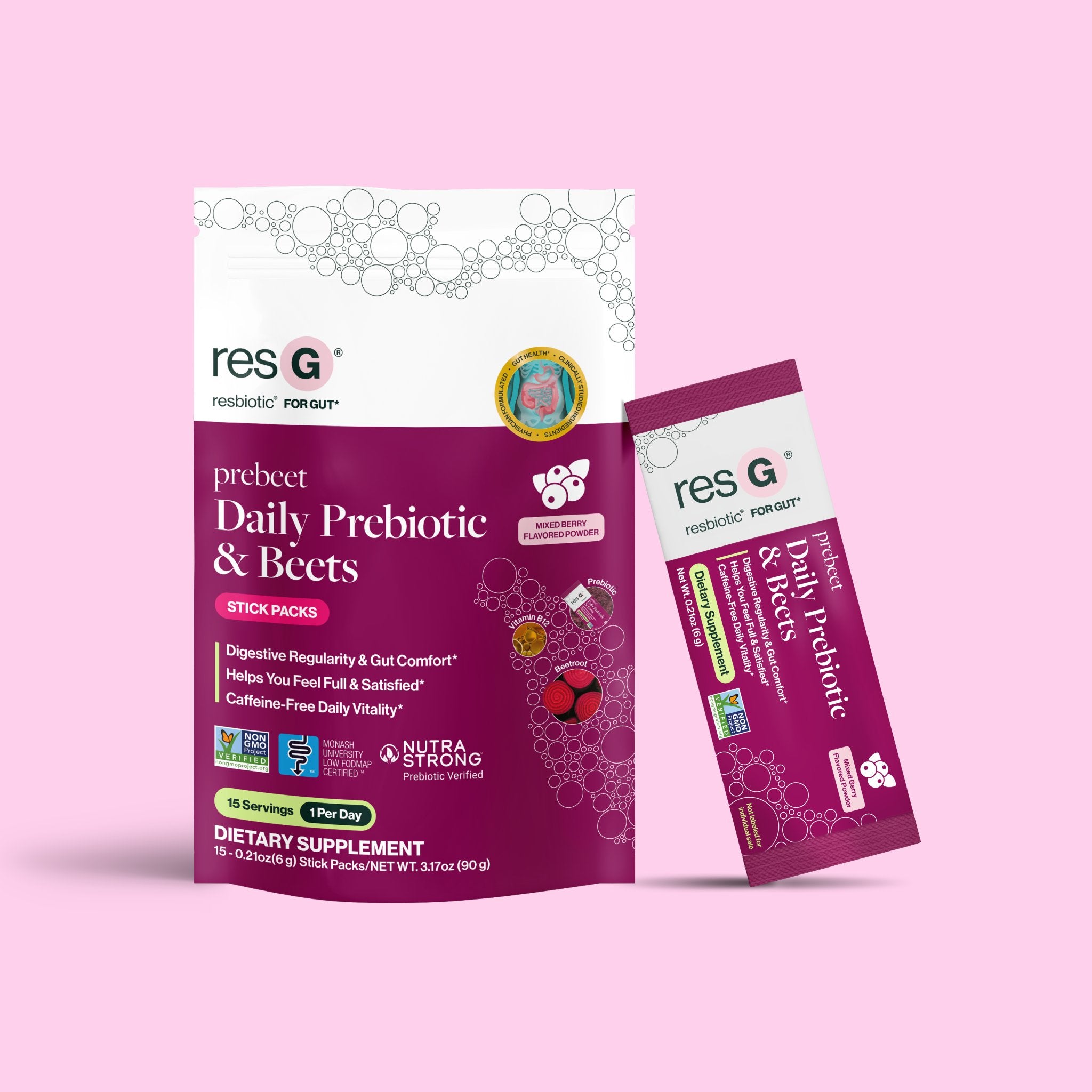
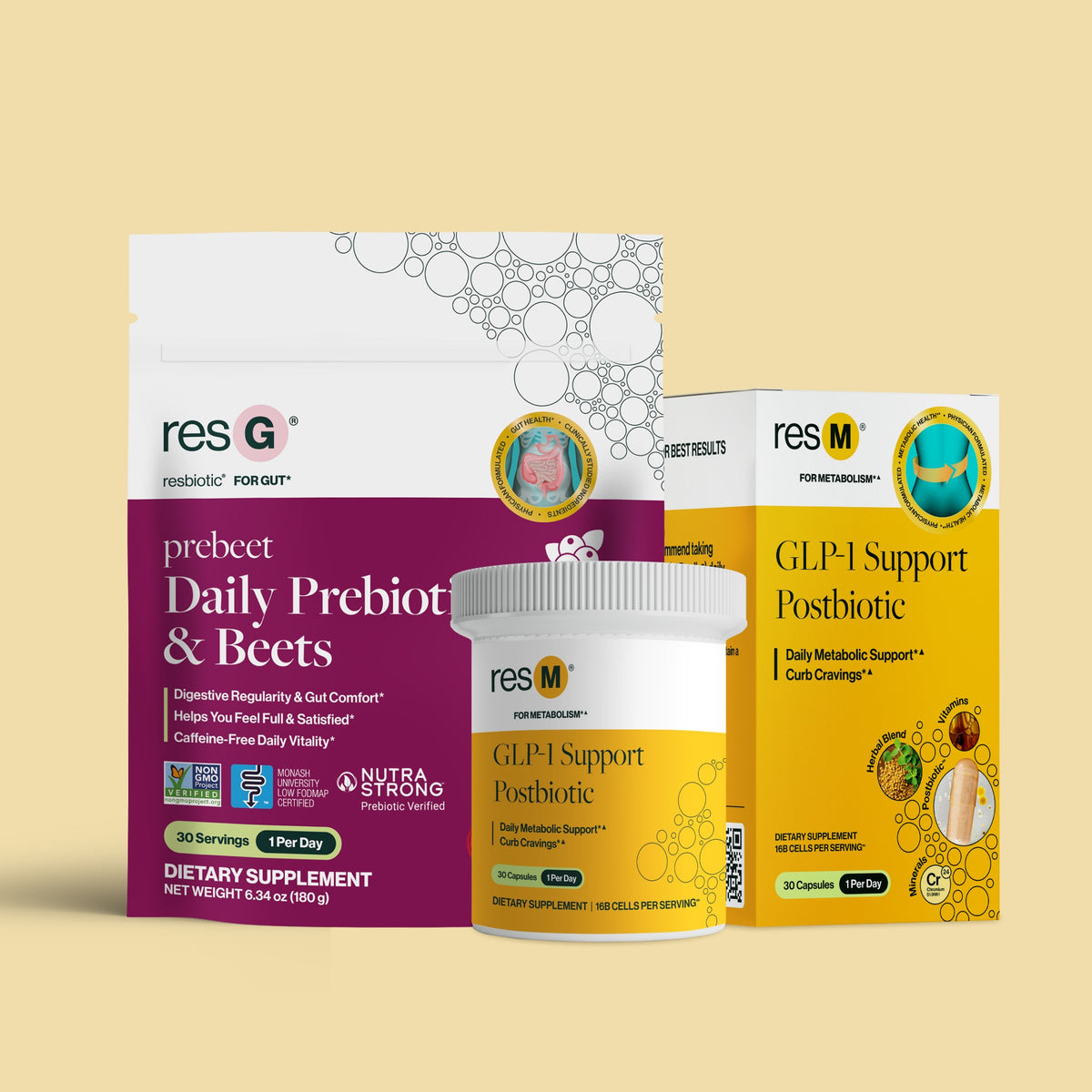
Better yet, adding supplements to your routine can ensure you consistently get the prebiotics and probiotics your gut is so often missing.. There are two in particular we recommend adding if you want to nourish the gut and all the systems connected to it*:
- resbiotic’s resG: Resistant potato starch, beetroot, and vitamin B12
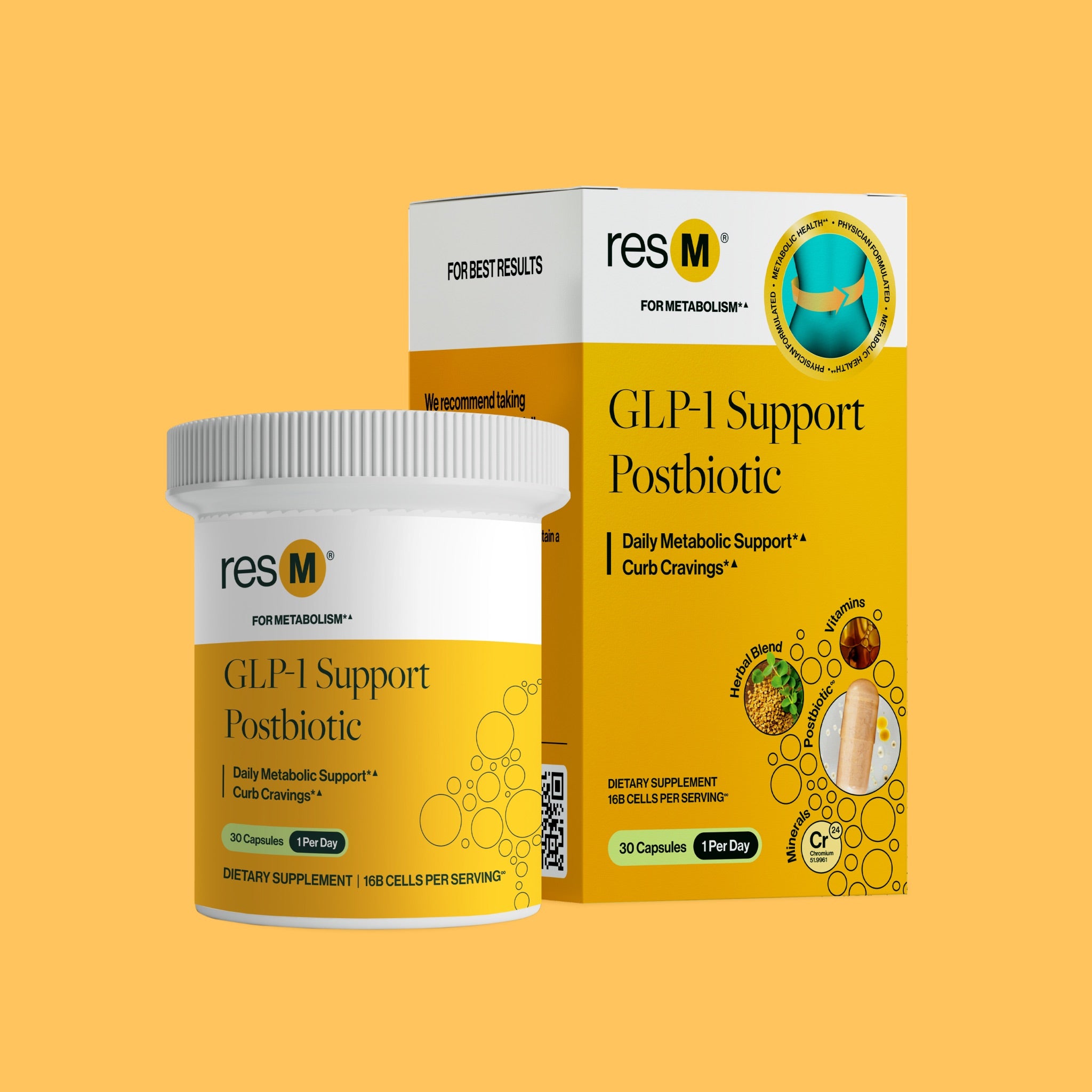
- resbiotic’s resM GLP-1 Support: Postbiotic, chromium, white mulberry, fenugreek, vitamin D3, and vitamin B12
Both are physician-formulated and clinically studied. Other than that, what you don’t put in the gut can have a big impact on gut health and anxiety. Limit (or better yet avoid altogether) alcohol, processed sugar, artificial sweeteners, and high FODMAP foods (if you struggle with irritable bowel or gut sensitivity).
Bottom Line on Gut Health and Anxiety
In closing, can poor gut health cause anxiety? There’s certainly ample research showing a connection between suboptimal gut health and anxiety. The good news is you don’t have to overhaul your life overnight. A few small changes can compound into massive differences in how you feel. Take the next step with res today, either online or at retailers near you.
Frequently asked questions
What are the warning signs of gut inflammation?
Constant bloating, gas, diarrhea or constipation, abdominal pain, and food sensitivities that come out of seemingly nowhere. Fatigue and brain fog can be signs of underlying gut inflammation as well. So can mood changes, given the connection between gut health and anxiety.
How do you know if your gut is causing anxiety?
You’ll notice that you feel anxious and experience digestive symptoms at the same time.
Can improving gut health help with anxiety?
It certainly can, according to the research. Probiotic supplementation has eased anxiety symptoms in clinical trials.6 This is just one of many reasons to nourish the gut.
Related Resources
Supplements to balance hormones and lose weight | Is Tirzepatide the same as Ozempic?
References
- Liu N, Sun S, Wang P, et al. "The Mechanism of Secretion and Metabolism of Gut-Derived 5-Hydroxytryptamine." International Journal of Molecular Sciences. 2021;22(15):7931. PubMed
- Bonaz B, Bazin T, Pellissier S. "The Vagus Nerve at the Interface of the Microbiota-Gut-Brain Axis." Frontiers in Neuroscience. 2018;12:49. PubMed
- Yano JM, Yu K, Donaldson GP, et al. "Indigenous Bacteria from the Gut Microbiota Regulate Host Serotonin Biosynthesis." Cell. 2015;161(2):264-276. PubMed
- Jiang HY, Zhang X, Yu ZH, et al. "Altered Gut Microbiota Profile in Patients with Generalized Anxiety Disorder." Journal of Psychiatric Research. 2018;104:130-136. PubMed
- Clapp M, Aurora N, Herrera L, et al. "Gut Microbiota's Effect on Mental Health: The Gut-Brain Axis." Clinics and Practice. 2017;7(4):987. PubMed
- Ma T, Jin H, Kwok LY, et al. "Probiotic Consumption Relieved Human Stress and Anxiety Symptoms Possibly via Modulating the Neuroactive Potential of the Gut Microbiota." Neurobiology of Stress. 2021;14:100294. PubMed