






It’s easy to overlook the connection between indoor air quality and respiratory health. You assume all the threats are outdoors - pollen, wildfire smoke, pollution, etc. You keep your home pretty clean. Surely it can’t pose a problem.
Here’s the scary truth, though. The EPA estimates your indoor air can be up to 5x more polluted than outdoor air - and Americans spend as much as 90% of their time indoors.1 That means the air you breathe most is often the air doing the most harm.
Don’t worry. We’re going to share strategies you can implement to improve air quality in your home or office, including filtration, controlling humidity, and more. You’ll also learn how you can build better respiratory resiliency with a daily lung support probiotic like resbiotic’s resB.*
Key Takeaways
- Indoor air is usually worse than the air outside due to poor ventilation and chemical off-gassing.
- Dust mites, mold spores, pet dander, and volatile organic compounds (VOCs) are the worst offenders.
- Chronic exposure to these pollutants can irritate your respiratory system and lead to chronic congestion.1
- HEPA filtration, ample ventilation, and regular cleaning are your best defenses against poor indoor air.
- resbiotic’s resB Lung Support Probiotic is a clinically studied, physician-formulated respiratory supplement worth adding to your regimen.*
The Link Between Indoor Air Quality and Respiratory Health 1
You’d be shocked to learn just how much nasty stuff lingers in your home. You can’t see or smell it most of the time. Rest assured, though, a mixture of harmful particles and gases is hiding in your bedroom, living room, kitchen, basement - anywhere you spend time.
These pollutants only build up more when ventilation is poor. They can cause the same type of airway irritation that outdoor smog, pollen, and wildfire smoke do. The worst offenders are:
- Biological pollutants (dust mites and mold): These thrive in humid environments and can trigger a cascade of respiratory symptoms.
- Pet dander: Even if you’re not “allergic” to cats or dogs. Even if your pet doesn’t enter a given room. Their dander can be detrimental to lung function.
- Chemical pollutants: These are harder to spot, but VOCs off-gas from cleaning products and paint. New furniture and synthetic air fresheners are common culprits.
- Combustion byproducts: Gas stoves and candles can also take a toll on indoor air quality and respiratory health over time.
But what is it about these pollutants that makes them such a threat?
The Toll Air Pollutants Take on Your Respiratory System
You’re not going to have an adverse reaction from walking into a room with these contaminants. It’s constant exposure that adds up. It triggers a low-grade airway inflammation that never really calms down since you spend all day breathing indoor air.
Your body’s response is to ramp up mucus production. This causes congestion and sinus pressure. Perhaps even a lingering cough that has no real obvious culprit.
The effects are even worse if you already have a compromised immune system or respiratory system, be it from allergies or asthma. Even otherwise healthy adults are at risk, though. Years of exposure to poor indoor air can slowly but surely degrade lung function and leave you more vulnerable to respiratory infections.
Signs Your Air is Contaminated
The consequences don’t show up right away. So by the time you notice there’s an issue, it’s probably been going on for quite a while. That’s why you need to be able to identify the signs of poor indoor air quality:
- Congestion or sinus pressure that gets better when you spend time outdoors
- A persistent dry cough with no obvious cause
- Headaches or fatigue that go away when you leave home
- Musty odors, especially in areas with bad ventilation (bathrooms, basements, etc.)
- Visible mold or dust buildup on surfaces like blinds, fans, etc.
- Symptoms that get worse when you don’t open the windows for a while (winter season)
You can’t pull up the AQI (Air Quality Index) for the air inside your house, so you have to pay attention to these warning signs. Don’t wait for them to show up to start making changes, though.
How Can You Improve Air Quality Indoors?
Cleaning up your indoor air is one of the best pieces of advice we have to offer on how to improve lung health naturally - and it’s a lot easier than you might think. You don’t need to tear your walls down and start fresh. Here are simple measures you can take.
Improve Ventilation
The reason indoor air is often worse than outdoor air all comes down to ventilation - or a lack thereof. This is why symptoms get worse in the heat of summer or the middle of winter when you don’t open windows much.
So, do your best to open windows when the weather allows and outdoor air quality is decent. Fresh air will dilute indoor pollutants faster than any filter can. Keep doors within your home open so air circulates rather than creating stale pockets in individual rooms.
On the other hand, you should close windows when air quality is poor outside. You’ll have to rely on air filters on these days.
Use a HEPA Air Purifier
HEPA filters are the gold standard. They can catch up to 99.97% of particles 0.3 microns and larger.2 Even the tiniest dust mites, pollen, and mold spores can’t hide from them.
It may not be practical to have one of these in every room. Just focus on the rooms you spend the most time in. That might be your bedroom, home office, and/or living room. You know where to put one better than we do. Make sure you choose a unit rated for whatever room it’s going to live in.
You can also get a standalone unit with an activated carbon filter. These help capture VOCs that standard HEPA media won't catch.
Keep Humidity in Check
This also happens to be one of our favorite home remedies for congestion. Mold and dust mites can thrive in spaces above 50% relative humidity (RH). Keep a dehumidifier in damp areas like your basement or bathrooms.
You want to keep humidity in the sweet spot - between 30-50%. Any lower, and the air will be so dry that you could deal with respiratory issues from that, too.
Minimize Chemical Exposure
Some off-gassing is inevitable. But you can at least switch to low-VOC or VOC-free cleaning products. Don’t use synthetic air fresheners to mask smells in your house, either. Candles are a little better, but these pose their own problems.
Clean on a Consistent Schedule
Vacuuming with a HEPA-filtered vacuum and dusting with a damp cloth will prevent particles from building up on surfaces in your home. Wash your bedding once a week - ideally in hot water. This will keep dust mite populations down. The cleaner you keep your home, the better!
More Ways to Support Respiratory Health
Air quality is just one side of the equation. You can also support your respiratory health through other lifestyle measures. For instance, make sure you eat a good diet rich in vitamins for lungs. Practice regular breathing exercises, and get plenty of exercise in general, for that matter.
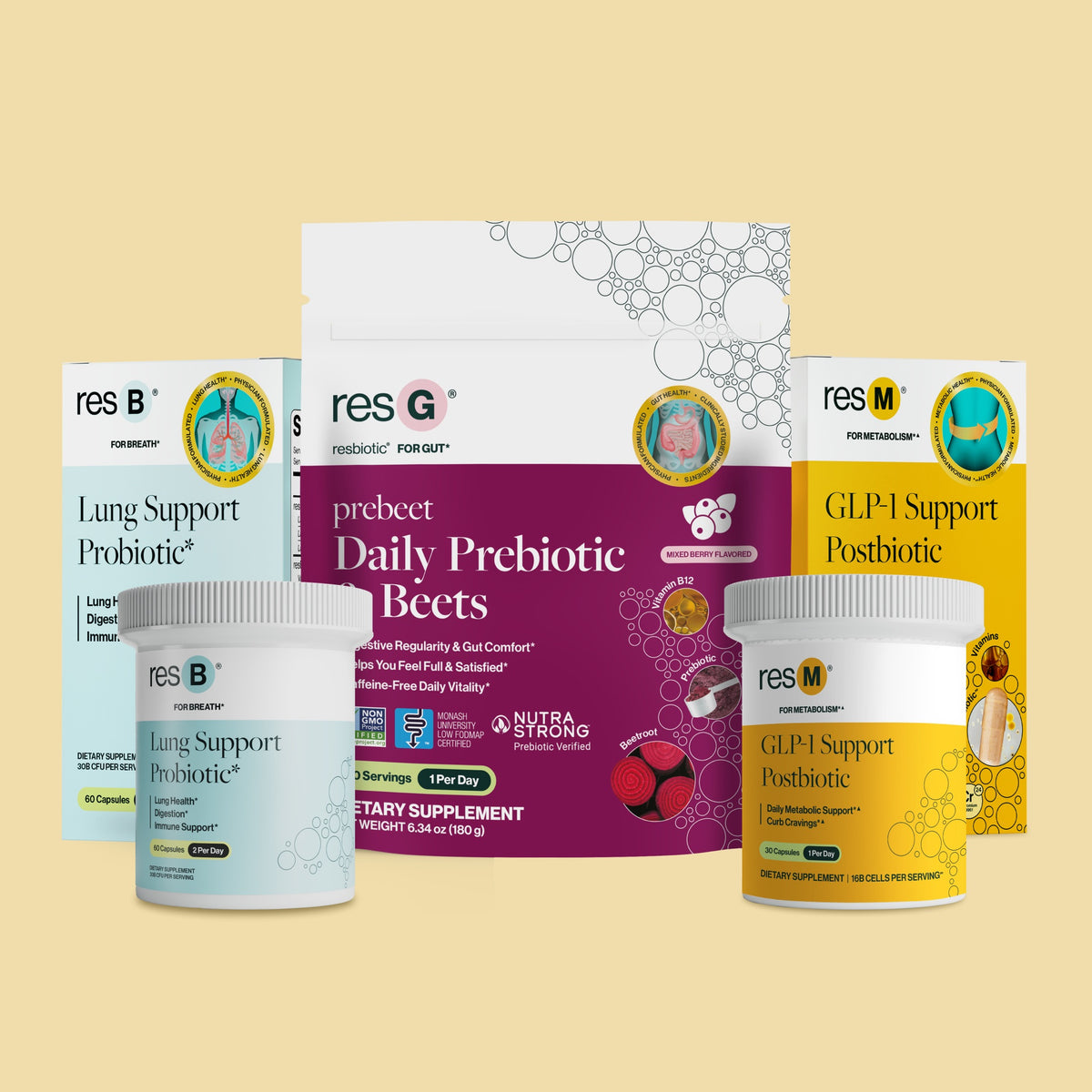
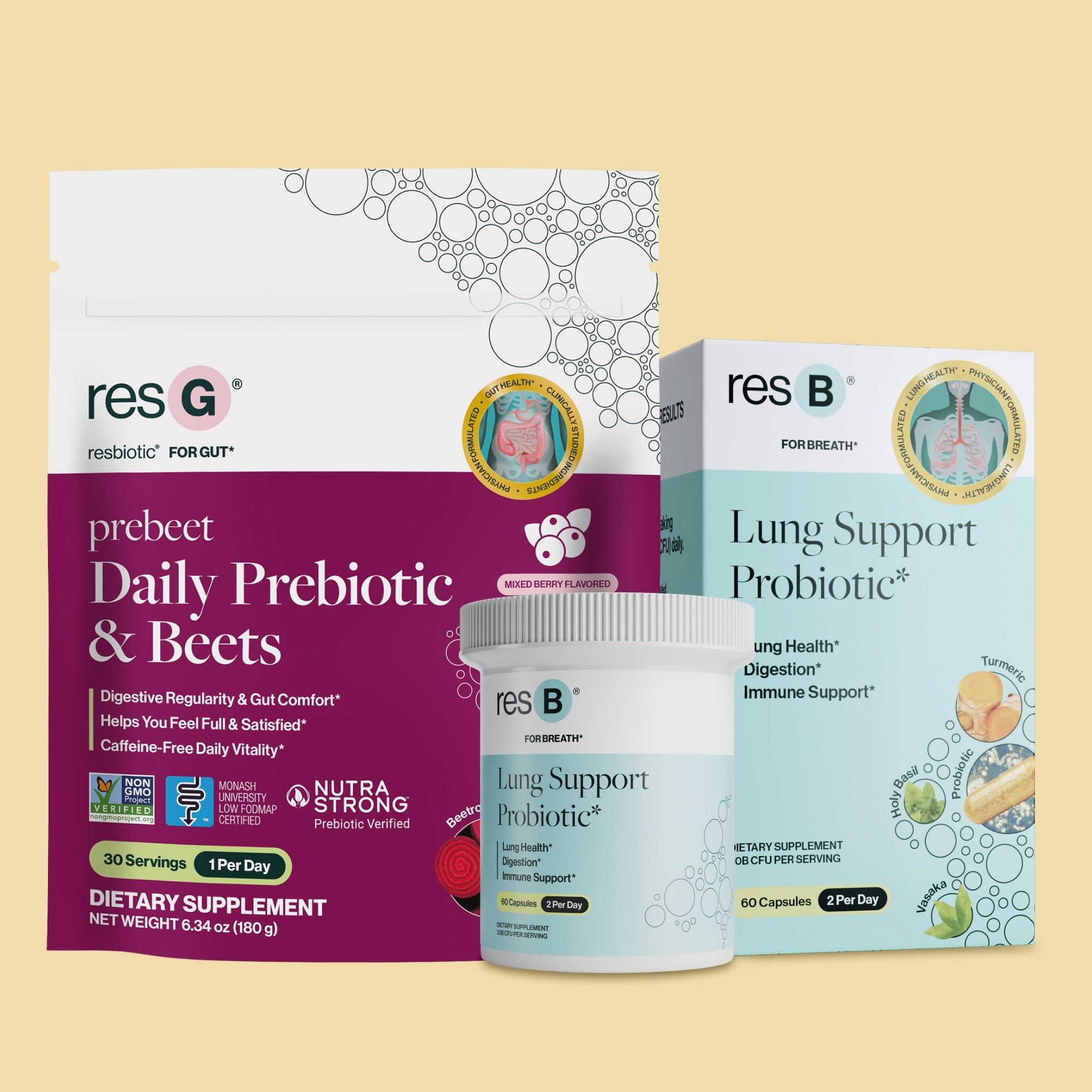
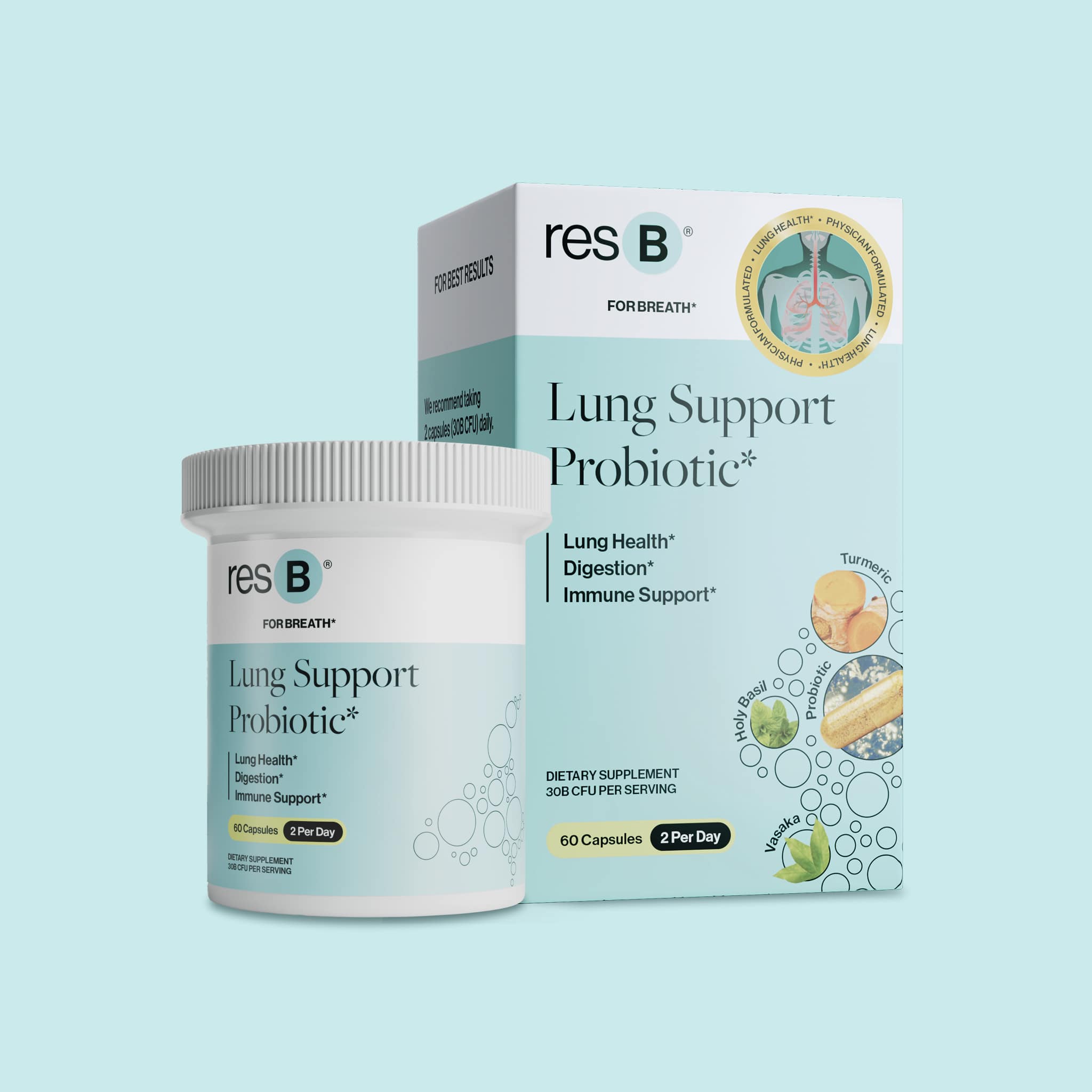
You can’t eliminate every little source of exposure, though. So, support your respiratory system and immune system from the inside out with resbiotic’s resB.* Our clinically studied, physician-formulated lung supplement brings together proven probiotics and herbs for lung health*:
- Lactiplantibacillus plantarum RSB11
- Lactobacillus acidophilus RSB12
- Lacticaseibacillus rhamnosus RSB13
- Vasaka
- Turmeric
- Holy Basil
These ingredients work in synergy to support your lungs, clear your chest, and help you breathe easier.* Clinical studies showed that 72% of participants saw better lung function, while 82% of them reported improved quality of life. 95% were likely to recommend resB to others.*3
The formulation didn’t show any adverse effects, and it’s backed by a 30-day satisfaction guarantee - so you have nothing to lose. Learn more about the science behind resB today.*
Parting Thoughts on Indoor Air Quality and Respiratory Health
Don’t make the mistake of overlooking the relationship between indoor air quality and respiratory health. Months or even years of exposure may have been wreaking havoc on you before you even notice symptoms surface.
You can take steps towards cleaning up your environment and improving indoor air quality today. While you’re at it, nourish your respiratory system from the inside out with resB!*
Related Resources
How to get rid of chronic congestion | Why do I keep coughing?
References
- U.S. Environmental Protection Agency. "Introduction to Indoor Air Quality." EPA.gov. https://www.epa.gov/indoor-air-quality-iaq
- U.S. Environmental Protection Agency. "What is a HEPA Filter?" EPA.gov. https://www.epa.gov/indoor-air-quality-iaq/what-hepa-filter
- Wenger NM, et al. "Clinical trial of a probiotic and herbal supplement for lung and respiratory health." Frontiers in Nutrition. 2023;10:1168582. https://doi.org/10.3389/fnut.2023.1168582
This article is for educational purposes only and is not intended to diagnose, treat, or replace advice from your healthcare provider.