


We see Tirzepatide vs Ozempic compared all the time, and we get it. They're prescribed for fairly similar use cases. But is Tirzepatide the same as Ozempic? Not at all. They're totally distinct drugs, and the difference between Ozempic and Tirzepatide matters.
Both of these drugs are type 2 diabetes medications at their core. Today, though, pharmaceutical companies push them as weight loss drugs. They mimic the effects of the GLP-1 hormone, which helps regulate appetite, digestion, and insulin release from the pancreas. So, which is right for you between Ozempic vs Tirzepatide, if either?
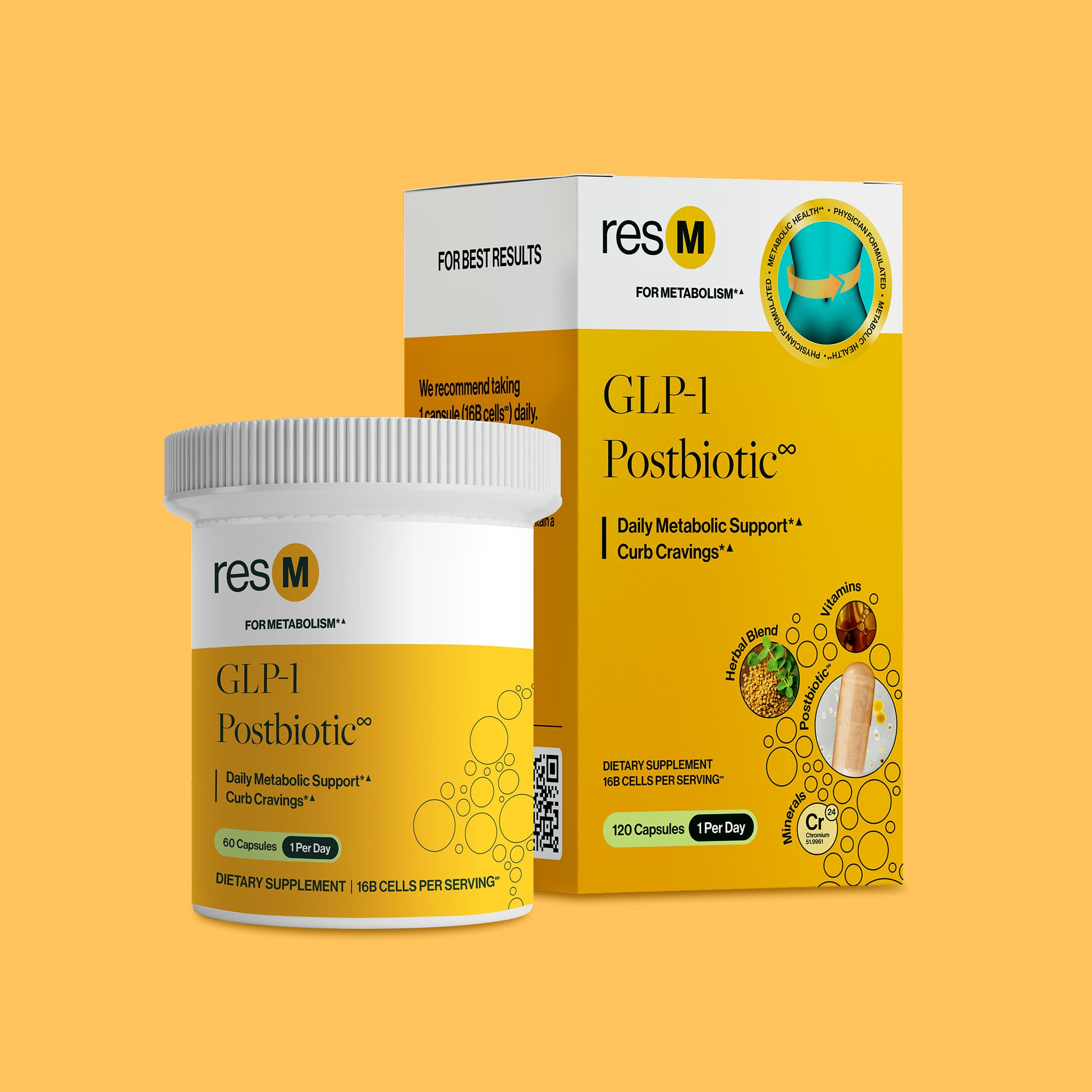
Our GLP-1 probiotic helps support appetite control and metabolic health without needles.* You can read more about the science and clinical studies on our gut health supplements today.


Key Takeaways
- Tirzepatide targets two hormones (GLP-1 and GIP). Ozempic only targets GLP-1.
- Clinical trials show greater average weight loss with tirzepatide (up to 22.5%) compared to semaglutide (about 15%).1,2
- Ozempic and Wegovy use semaglutide. Mounjaro and Zepbound use tirzepatide.
- Both require weekly injections and have well-documented side effects.
- Cost without insurance runs $349-$499/month for Ozempic and $1,000-$1,300/month for Mounjaro.4,5
- Weight rebounds when you stop either drug, so make sure you're willing to commit to long-term treatment.3
Understanding the GLP-1 Agonist Drug Class
GLP-1 stands for glucagon-like peptide-1. Your gut produces this hormone naturally after eating, and it does three things:
- Tells your pancreas to release insulin
- Slows stomach emptying
- Lets your brain know you've had enough food
People with type 2 diabetes often don't produce enough GLP-1, or their bodies don't respond to it properly. Either way, GLP-1 agonist drugs are commonly prescribed. They're just synthetic versions of the real hormone, so they bind to the same receptors your natural GLP-1 uses.
One key difference, though, is these drugs tend to stick around much longer - hours or days instead of minutes. That supports better blood sugar control and appetite suppression.
The FDA originally approved these drugs for type 2 diabetes. Weight loss was a side effect that caught everyone's attention. Now, it's the goal with these drugs. Specific formulations carry obesity indications these days, too.
Both semaglutide and tirzepatide belong to this drug class, but they operate differently within it. People ask all the time: is Tirzepatide the same as Ozempic? It isn't - and it's not just a matter of branding, either. The Tirzepatide vs Ozempic comparison starts at the molecular level.
How Do GLP-1 Drugs Tirzepatide vs Ozempic Compare?
The biggest difference between Ozempic and Tirzepatide is the receptor each targets. Ozempic activates only the GLP-1 receptor. Tirzepatide activates both GLP-1 and GIP (glucose-dependent insulinotropic polypeptide) receptors at the same time. Two birds, one stone.
GIP is just another gut hormone involved in insulin secretion and fat metabolism. Activating it alongside GLP-1 may amplify the metabolic response beyond what either hormone achieves alone.
That dual action translates to measurably different clinical outcomes in head-to-head-adjacent comparisons (STEP trials for semaglutide, SURMOUNT trials for tirzepatide). Participants on tirzepatide lost more weight on average. To be specific:
- The STEP 1 trial showed 14.9% body weight loss at 68 weeks with semaglutide 2.4mg.1
- SURMOUNT-1 showed 16% to 22.5% body weight loss at 72 weeks with tirzepatide, depending on dose.2
Be clear, numbers on paper don't tell you how either drug will work in YOUR body as individual responses vary widely. Some people respond better to Tirzepatide vs Ozempic, others the opposite. Your prescriber should help guide that decision based on your medical history.
So, Is Tirzepatide the Same as Ozempic?
No. There is a clear difference between Ozempic and Tirzepatide. They have different active ingredients. Ozempic uses semaglutide as its active ingredient. Tirzepatide is the active ingredient in some popular GLP-1 drugs.
This has different implications for your results. Ozempic only works on your GLP-1 receptor hormone. Tirzepatide is a dual-action agent, working on your GLP-1 receptor and GIP receptor. Think of it this way: Ozempic pulls one lever. Tirzepatide pulls two.
What's the Difference Between Ozempic and Tirzepatide, Then?
The receptor mechanism is by far the biggest practical difference between Ozempic and Tirzepatide. Couple other nuances you need to know before choosing between Tirzepatide vs Ozempic, though:
- Approval timeline: Ozempic has been on the market for nearly a decade. Mounjaro (tirzepatide) just launched in 2022. We have way more real-world data for Ozempic than we do for tirzepatide.
- Weight loss magnitude: Tirzepatide helped people lose more weight on average in clinical trials.2 That's something you should take with a grain of salt, but it can't be ignored.
- Insurance coverage: Ozempic is easier to get coverage for if you have type 2 diabetes because it's been around longer, and insurers are more familiar with it. This is changing in real time as we learn more and more about Tirzepatide, though.
One more difference between Ozempic and Tirzepatide worth knowing - there's an oral version of Ozempic (Rybelsus). Tirzepatide is only available as an injectable treatment right now. That matters if you don't want to inject yourself on a weekly basis (who does?).
Brand Name Drugs That Use Ozempic vs Tirzepatide
The active ingredient names and the brand names get mixed up constantly. Here's the breakdown:
Semaglutide (same active ingredient as Ozempic):
- Ozempic: FDA-approved for type 2 diabetes. Weekly injection.
- Wegovy: FDA-approved for weight management. Weekly injection, higher dose than Ozempic.
- Rybelsus: FDA-approved for type 2 diabetes. Daily oral tablet.
Tirzepatide:
- Mounjaro: FDA-approved for type 2 diabetes. Weekly injection.
- Zepbound: FDA-approved for weight management. Weekly injection, same doses as Mounjaro.
People who compare Ozempic vs Tirzepatide specifically for weight loss are usually comparing Wegovy to Zepbound - the weight-indicated versions. However, a lot of prescribers write Ozempic and Mounjaro off-label for weight management too.
So is Tirzepatide the same as Ozempic under a different label? No - different molecule, manufacturer, and receptor profile. Do not confuse the two as the same.
Which is Better For Weight Management, Tirzepatide or Ozempic?
There isn't a correct answer. Choosing between Tirzepatide vs Ozempic often comes down to how your body responds, what side effects you can handle, and what you're willing to pay.
Tirzepatide may look like the stronger pick on paper, but it also comes with higher risks and more question marks since it's so much newer. Ozempic has a longer history, but many people still struggle with its side effects and cost.
Let's look at the benefits of Ozempic vs Tirzepatide below and let you arrive at your own conclusion.
Benefits of Ozempic For Weight Management
- Longer track record: Approved in 2017, so there's more long-term safety data available
- Proven weight loss: STEP 1 trial showed nearly 15% average body weight reduction1
- Lower cost: Available for $349-$499/month through Novo Nordisk's self-pay program4
- Oral option exists: Rybelsus offers the same active ingredient without injections (though at lower doses, with less weight loss)
- Broader coverage: More widely covered by insurance for type 2 diabetes patients
Benefits of Tirzepatide For Weight Management
- Dual hormone action: Targets GLP-1 and GIP receptors together
- Greater average weight loss: SURMOUNT-1 showed up to 22.5% body weight reduction at the highest dose2
- High responder rate: 36% of participants lost 25% or more of their body weight2
- Insulin sensitivity: Improves beta-cell function and insulin sensitivity through the additional GIP pathway6
- Lower self-pay option: Zepbound vials available at $299-$449/month through LillyDirect5
Should You Consider Other Options?
Weekly injections, gastrointestinal side effects, and a high price tag - we just want you to be aware of what you're signing up for with GLP-1 drugs. The weight typically comes back if you stop, too.3
The trade-offs are clearly worth it for some people. For others, they raise a fair question: are there ways to support your body's GLP-1 production without the pharmaceutical commitment?
Gut health plays a direct role in how much GLP-1 your body produces on its own. You may be able to help stimulate natural GLP-1 release from intestinal cells just by making healthy lifestyle adjustments and adding the right supplements to your regimen.*
Not everyone needs Tirzepatide or Ozempic to move the needle on appetite and metabolism. It's also important that you set your expectations on what's actually possible, whether you go with Tirzepatide vs Ozempic.
Setting Expectations For Weight Loss With Tirzepatide or Ozempic
Most people lose weight while taking both of these drugs. But what happens after you stop taking them? These medicines don't have long-term effects. Studies show that most people regain weight once they stop using a GLP-1.3 This is known as the rebound effect.
So, you need to commit to ongoing costs, injections, and side effects. You should think carefully about whether or not you're willing to make this change for life, or at least, for long enough to be worth it. It's probably best to avoid them altogether if you're not. Otherwise, you may just end up back at square one.
Most of the weight loss happens in the first 12-16 months. After that, weight tends to plateau at whatever level the drug can maintain. The STEP 1 extension study found participants regained about two-thirds of the weight they'd lost within a year after discontinuing.3
Can I Use Tirzepatide or Ozempic to Manage My Blood Sugar?
Yes - this is actually what both drugs were designed for. Ozempic and Mounjaro are both FDA-approved for type 2 diabetes management. They lower HbA1c (your three-month blood sugar average) by stimulating insulin release (when glucose is elevated) and reducing glucagon secretion.
Meanwhile, the SURPASS trials showed tirzepatide reduced HbA1c by up to 2.4 percentage points, compared to about 1.5-1.8 points with semaglutide in the SUSTAIN trials.
The difference between Ozempic and Tirzepatide could matter if you want to manage both diabetes and weight at the same time, using the same drug. Tirzepatide's dual mechanism may move the needle more compared to Ozempic's one-dimensional approach.
There's another important takeaway if blood sugar control is your primary goal - insurance coverage becomes easier to secure for either drug. Most plans cover Ozempic or Mounjaro for type 2 diabetes with prior authorization. The off-label weight loss use is where coverage gets dicey.
Tirzepatide vs Ozempic: Comparing Side Effect Profiles
You'll see tons of overlap between Ozempic vs Tirzepatide in comparing side effects. They're very similar drugs, after all. Here's what you can expect with tirzepatide:
- Nausea
- Vomiting
- Diarrhea
- Fatigue
Ozempic carries the same list. Gastrointestinal symptoms are the price of admission for the entire GLP-1 drug class - slowing digestion is part of how these drugs work, and your stomach doesn't always appreciate it.
There are also concerns about gallbladder problems, thyroid issues, and muscle loss with long-term use.
Another thing to consider is how new tirzepatide is. The FDA released the drug as Mounjaro in 2022. That's why you won't find many long-term data studies about taking a dual-hormone drug like tirzepatide for weight loss.
What about Ozempic, though? About 20-30% of people taking Ozempic experience nausea and vomiting.1 Food sitting in your stomach for a long time usually causes nausea from GLP-1 meds. The side effects are so severe for some that they stop taking the drug altogether.
Ozempic is also a long-term commitment. Going off the medication can lead to rapid weight gain.3 So, you'll have to carefully weigh both the pros and cons before deciding if Tirzepatide or Ozempic is right for you.
Which is More Expensive, Ozempic or Tirzepatide?
Pricing is another consideration when weighing Tirzepatide vs Ozempic. Novo Nordisk now offers Ozempic at reduced self-pay rates, while Eli Lilly launched lower-cost Zepbound vials through LillyDirect. So either way, you may not have to pay thousands a month anymore.
Here's where things stand as of now:
- Ozempic: $349/month (0.25-1mg) or $499/month (2mg) through Novo Nordisk's self-pay pricing. New patients pay $199/month for their first two months.4
- Mounjaro: List price around $1,069 for a 28-day supply. Without insurance or savings programs, expect $1,000-$1,300/month depending on the pharmacy.
- Zepbound: List price $1,086 per 28-day supply. LillyDirect single-dose vials run $299-$449/month depending on dose.5
Keep in mind these are monthly figures. Ozempic runs $4,200-$6,000 over a year. Mounjaro is $12,000-$15,600 without discounts.
Like we just touched on a moment ago, insurance coverage depends on why you're taking the medication. Patients with type 2 diabetes can usually get Ozempic or Mounjaro covered. But you'll probably pay out of pocket if you're using the drugs strictly for weight management.
Some pharmacies offer compounded semaglutide and tirzepatide at lower prices. The FDA does not approve compounded versions of these medications, and quality can be hit or miss.
Is cost the deciding factor between Ozempic vs Tirzepatide? Ozempic's self-pay program currently offers the lowest entry point for brand-name medication.
Related Resources
Byetta vs Ozempic | Bydureon vs Ozempic | Wegovy vs Mounjaro
References
- Wilding JPH, et al. "Once-Weekly Semaglutide in Adults with Overweight or Obesity." N Engl J Med. 2021;384(11):989-1002. NEJM
- Jastreboff AM, et al. "Tirzepatide Once Weekly for the Treatment of Obesity." N Engl J Med. 2022;387(3):205-216. NEJM
- Wilding JPH, et al. "Weight regain and cardiometabolic effects after withdrawal of semaglutide." Diabetes Obes Metab. 2022;24(8):1553-1564. Wiley
- Novo Nordisk. "Novo Nordisk launches introductory self-pay offer for Wegovy and Ozempic for $199 per month." Press release. 2025. PR Newswire
- Eli Lilly. "Lilly lowers the price of Zepbound (tirzepatide) single-dose vials." Press release. 2025. Eli Lilly
- Thomas MK, et al. "Dual GIP and GLP-1 Receptor Agonist Tirzepatide Improves Beta-cell Function and Insulin Sensitivity in Type 2 Diabetes." J Clin Endocrinol Metab. 2021;106(2):388-396. PMC
*These statements have not been evaluated by the Food and Drug Administration. This product is not intended to diagnose, treat, cure, or prevent any disease.