







Most people reach for cough drops, inhalers, or antihistamines when their breathing feels off - almost nobody thinks to look at their gut. But it’s worth adding the best probiotics for respiratory health to your regimen.
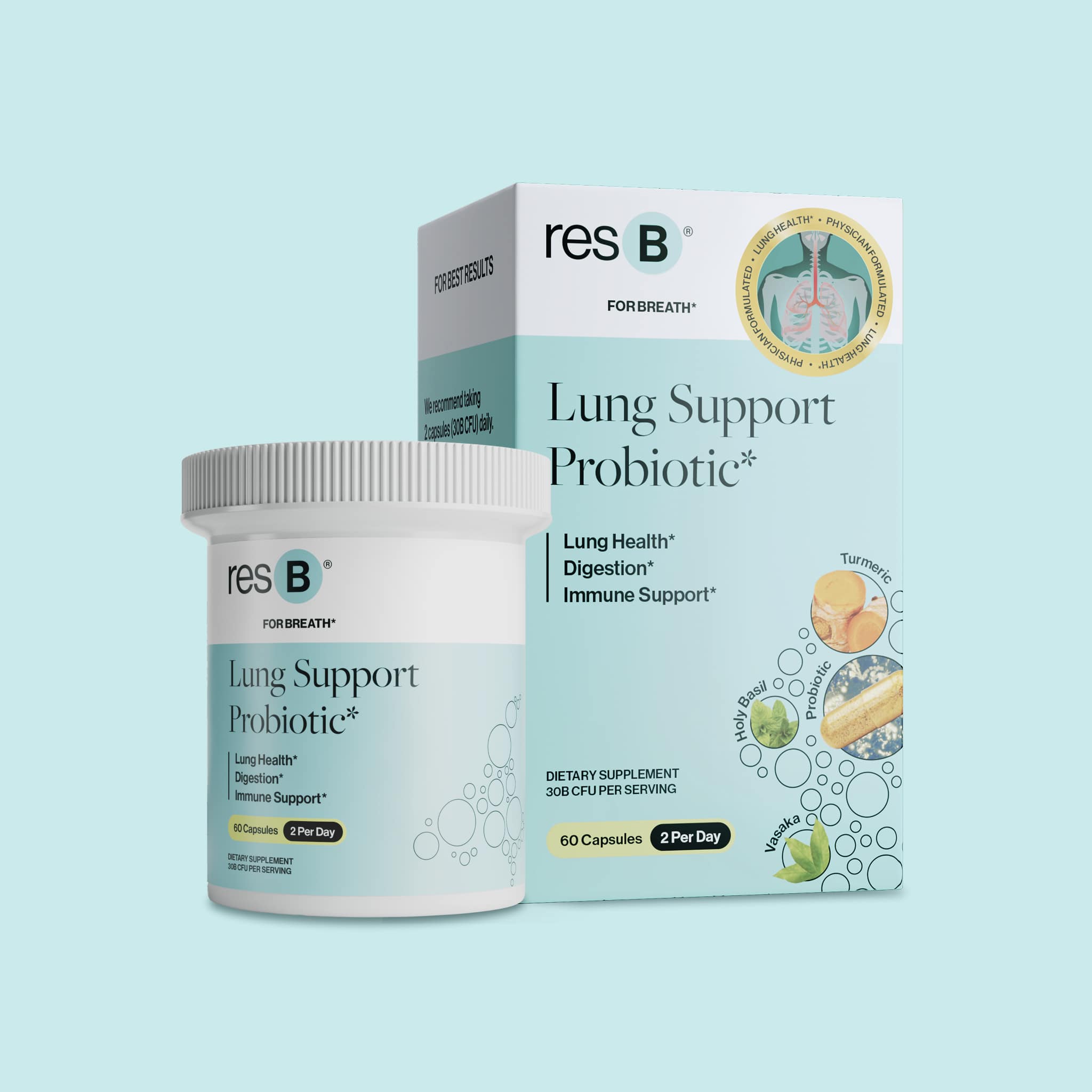
Your gut and lungs share immune pathways that influence how well your respiratory system handles irritation, infections, and environmental stressors. The right respiratory probiotics strengthen those pathways from the inside out, and resB lung support probiotic was built around that exact science.*
Key Takeaways
- Your gut and lungs are connected through the Gut-Lung Axis.
- That connection is why gut imbalance may show up in the form of poor respiratory health (and vice versa - a well-balanced gut may lead to better respiratory health).
- The best probiotics for respiratory health are Lactiplantibacillus plantarum RSB11®, Lactobacillus acidophilus RSB12®, and Lacticaseibacillus rhamnosus RSB13®
- resB brings these together with turmeric, holy basil, and vasaka in a physician-developed formula that led to better quality of life for 82% of clinical study participants.*
The Connection Between Respiratory Health and Your Gut
Around 70% of your immune system lives in your gut. So, it should come as no surprise that the gut and your respiratory health are closely intertwined.
The Gut-Lung Axis is the communication highway between your digestive system and your lungs. The signals sent here directly influence airway immune responses.
A well-balanced gut microbiome makes plenty of anti-inflammatory compounds. It also trains immune cells that travel to the lungs to help keep threats at bay.
The opposite is true, too, though. Whether gut health is off because of diet, antibiotics, stress, or illness, your respiratory health is left vulnerable. The lungs become more prone to irritation, infection, and overreaction to allergens.
People with chronic gut dysbiosis usually have more respiratory challenges. That’s not a coincidence. Researchers have seen measurable changes in respiratory immune markers after disruptions to gut microbiome balance.
This is why targeting the Gut-Lung Axis with specific probiotic strains is becoming more popular. You can tap into a physiological pathway that mainstream medicine is starting to take more seriously. So, how do probiotics help with respiratory health?
How Do Probiotics Help With Respiratory Health?
Research shows certain strains can minimize both the frequency and duration of upper respiratory challenges, support healthy inflammatory responses in the airways, and even help modulate the type of immune activity that affects breathing.
Clinical evidence suggests respiratory probiotics may be MOST beneficial during seasonal transitions when respiratory challenges are notorious for spiking. But even those dealing with chronic congestion could benefit from probiotics for respiratory health.
Multiple studies have found that participants taking specific probiotic strains experienced fewer sick days, with symptoms fading faster when they did flare up. They also encountered fewer severe respiratory episodes compared to placebo groups.
The important qualifier is the probiotic strain in question. Most commercial probiotics are designed for digestive health. While improving gut health may lead to better respiratory health just through the Gut-Lung Axis, there are certain strains that move the needle much more.
So, do probiotics help with respiratory health if you grab a random bottle off the shelf? Probably not as much as you’d hope. Dose and delivery matter too. The strain needs to reach your gut alive and in a high enough concentration to actually tip the microbial balance in the right direction.
What Probiotics Are Good For Respiratory Health?
It’s clear not all probiotics are made equal. So, what probiotics are good for respiratory health? There are three strains in particular with clinical validation supporting their role in respiratory immune function. These three probiotics form the foundation of the resB formula.*
Lactiplantibacillus plantarum RSB11®
- plantarum is one of the most researched probiotic species in general, and RSB11® is a proprietary strain selected specifically for respiratory applications.*
Research suggests it may help modulate the immune system's response to respiratory challenges - basically, that means it supports the body's ability to manage airway imbalance without overreacting and prompting a disproportionate response to things that aren’t really a threat.*
RSB11® brings the kind of targeted immune calibration that actually moves the needle when you’re struggling with seasonal sensitivities or chronic respiratory irritation. Unlike broad-spectrum immune boosters, it helps fine-tune the immune response.
Lactobacillus acidophilus RSB12®
- acidophilus RSB12® works on the front line of the Gut-Lung Axis to help preserve gut barrier integrity. You know now that inflammatory signals can escalate and reach the lungs when the gut barrier is compromised. RSB12® helps keep the gut and lungs communicating properly.*
The benefits extend beyond immune signaling alone, though. A healthy gut barrier also translates to better nutrient absorption, so your respiratory system has everything it needs to thrive.*
It’s among the best probiotics for respiratory health for those two reasons.*
Lacticaseibacillus rhamnosus RSB13®
- rhamnosus has been prominently studied for quite a few wellness applications, and RSB13® was selected specifically for its immune properties relating to respiratory health. Research suggests it may support the body's natural defenses against respiratory pathogens and help maintain healthy immune balance in the airways.*
Together with RSB11® and RSB12®, it rounds out a clinically studied three-strain approach that targets the Gut-Lung Axis from multiple angles.* That’s an important piece of context on using respiratory probiotics - multi-faceted support tends to work better than single-strain support.
Choosing the Best Probiotics For Respiratory Health (Key Criteria Beyond the Strain)
Knowing what probiotics are good for respiratory health is the first step. The second is evaluating the product itself. A supplement can list the right strain and still fall short on dosing, viability, or formulation. Here's what to look for when choosing the best probiotics for respiratory health:
- CFU count and viability: Colony-forming units matter, but so does whether those bacteria are alive when they reach your gut. You need a supplement that guarantees CFU count at the time of use, not just when the batch was formulated.
- Strain specificity: Generic species names (like “L. acidophilus”) aren't enough. The strain designation (like RSB12®) connects it to specific research. You're guessing without that.
- Clinical data: Respiratory probiotics backed by published clinical evidence are obviously a better choice than those relying on general probiotic claims applied loosely to lung health.
- Complementary ingredients: Probiotics for respiratory health are just one piece of the puzzle. Botanicals and vitamins for lung health that support lung function alongside probiotic strains create a more well-rounded approach.
There are tons of supplements on the market all claiming to be the best. But very few actually have real evidence behind them. Even fewer were designed by a physician. resB checks both boxes.
Introducing resB: Multi-Faceted, Clinically-Validated Lung Support
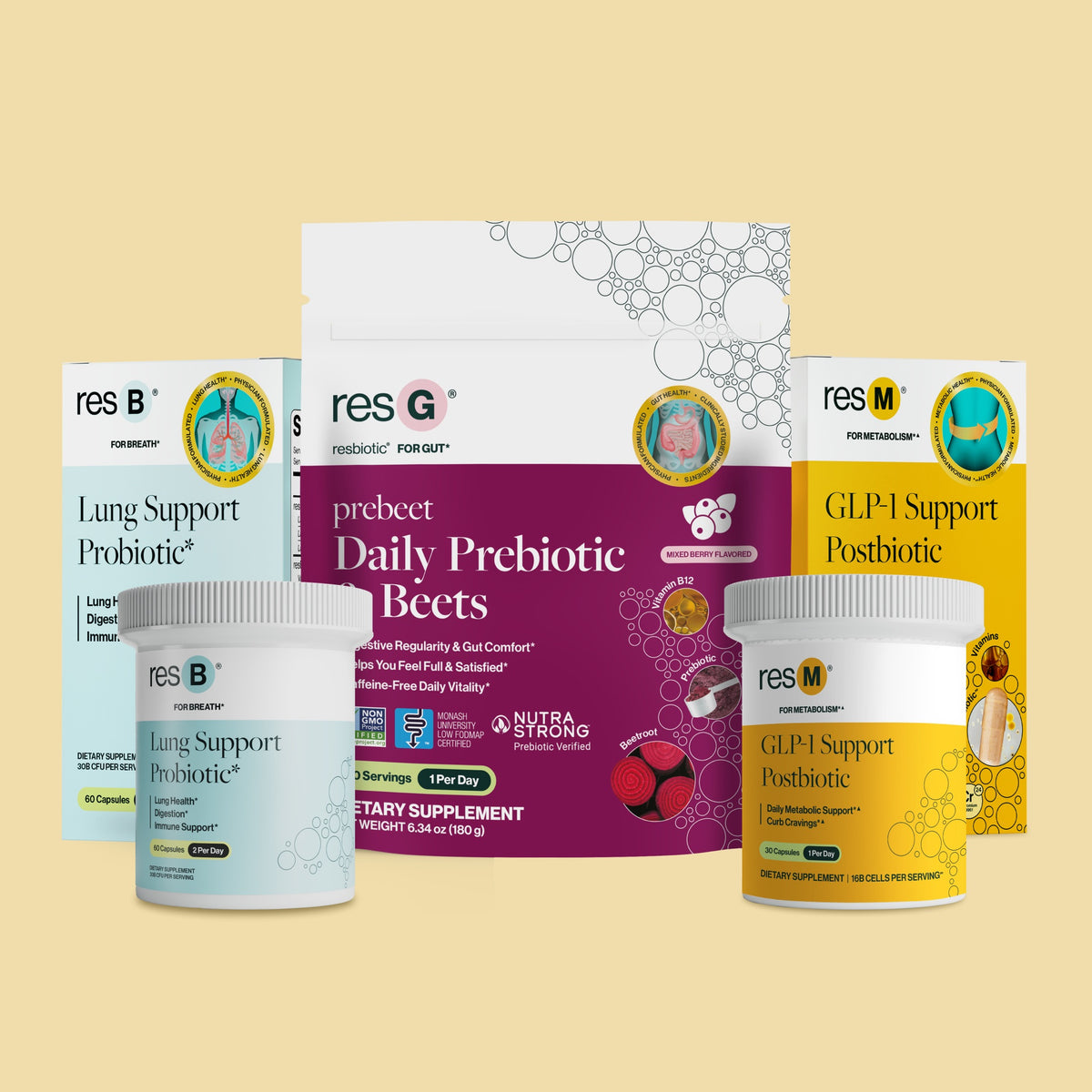
resB was made to meet every one of those criteria we talked about above. It combines the three best respiratory probiotic strains (RSB11®, RSB12®, and RSB13®) with turmeric, holy basil, and vasaka. Everything was chosen for its balancing and bronchial support properties.*
The formula delivers 30 billion CFU per serving, too, so you know you’re getting enough support to genuinely make a difference in your respiratory health. You can also rest assured you’re not getting any of the stuff you don’t want. The formula is vegan, gluten-free, non-GMO, sugar-free, etc.
Most importantly, though, resB is backed by clinical data showing 82% of users reported quality of life improvement. 95% of them were likely to recommend resB to others, and 100% reported zero adverse side effects.
Physician-developed by Dr. Vivek Lal, protected by 20+ global patents, and rated 4.95/5 across 1,500+ reviews - resB brings you the best probiotics for respiratory health in two daily capsules.* Get started improving respiratory function today.
“I used to wake up clearing my throat every morning. That stopped after a few weeks.” - Daniel
“I wasn’t sure what to expect, but I’m still taking it. That says a lot.” - Hannah
“My breathing just feels easier. That’s all I wanted.” - Monique
Tips on Incorporating Respiratory Probiotics Safely
Getting started with resB is easy. Just take two capsules a day with or without food. A lot of customers start to notice something within their first week, but the real benefits come from consistent use over the course of 3-4 months. Be patient, and pair resB with these other habits:
- Pair with supportive nutrition: Probiotics work better in a healthy gut environment, which is where prebiotics come into play. These are fuel for probiotics. You can get these types of fiber from fruits, veggies, and whole grains to feed the good bacteria you're introducing. The best fruit for lungs (berries, citrus, apples) also happen to be solid prebiotic sources.
- Keep up other lung-supportive habits: Respiratory probiotics don't replace good fundamentals. Learning how to improve lung health naturally through exercise, hydration, and avoiding smoke gives your probiotics a stronger foundation to work from.
- Talk to your doctor if you're immunocompromised: Probiotics are generally safe, but people with severely compromised immune systems should talk with a healthcare provider before starting any probiotic regimen.
Our blog has more resources on how to get rid of chronic congestion, how to remove mucus from lungs naturally, or herbs that clear mucus from lungs if you are struggling with something more specific, rather than simply trying to improve respiratory health overall.
Parting Thoughts on Probiotics For Respiratory Health
The Gut-Lung Axis has changed how researchers and physicians think about respiratory support. Respiratory probiotics sit at the center of that shift. So, what probiotics are good for respiratory health? In closing, resB brings together the three most clinically validated strains:
- Lactiplantibacillus plantarum RSB11®
- Lactobacillus acidophilus RSB12®
- Lacticaseibacillus rhamnosus RSB13®
You also get botanical support to target respiratory function from as many angles as possible. Your order is protected by a 30-day money-back guarantee, too. Order now and see how quickly you’ll be breathing better*.
Frequently Asked Questions
How quickly will I notice probiotics improving my respiratory health?
Most people start noticing differences within 4-8 weeks of consistent daily use. Probiotics for respiratory health work by slowly but surely rebalancing your gut microbiome and strengthening immune pathways. Some people notice less congestion or more comfortable breathing within the first few weeks, but the full benefits build with months of consistent use.
Do probiotics help with seasonal allergies?
Yes, certain respiratory probiotics may help modulate the exact same immune responses that drive seasonal allergy symptoms. Respiratory probiotics may reduce the severity of allergic reactions in the airways by supporting a healthier immune balance through the Gut-Lung Axis. They won't replace antihistamines during a severe allergy season, but they may help your body better manage the underlying immune overreaction over time.
Should I take lung support probiotics every day?
Yes - consistency is everything. These effects of these supplements build through ongoing daily use. Skipping days or taking them sporadically doesn’t give your gut microbiome the consistent balance it needs to support respiratory health. Think of it the same way you'd think about exercise - skipping a week doesn't erase all your progress, but you are holding yourself back from the full benefits.
Which probiotic is best for respiratory health?
The best probiotics for respiratory health are RSB11®, RSB12®, and RSB13®. resB pairs them with lung-supportive botanicals in a clinically studied formula. It’s the leading respiratory probiotic available.*