






Whether you're under the weather right now or just want to breathe better for the long haul, the right tea for respiratory health can support your lungs - but there are quite a few different concoctions worth trying. So, what tea is good for lungs?
- Turmeric tea
- Chrysanthemum tea
- Peppermint tea
- Green tea
- Tangerine puerh tea
- Ginger tea
- Eucalyptus tea
Learn what makes each of these one of the best teas for lung health below, and discover how our lung support supplement resB® pairs with them so you can breathe easier.*
Why Drink Tea for Respiratory Health?
The warm liquid itself helps move the mucus sitting in your airways so it can be cleared faster.1 That's just from the heat. Meanwhile, each tea has its own beneficial compounds that get delivered into your system with each sip:
- Polyphenols
- Volatile oils
- Flavonoids
Some support a healthier inflammatory response in the airway lining. Others loosen up the bronchial tissue that tightens when you cough. That's why it's worth getting a little more specific about which tea for respiratory health is best for YOUR needs. They don't all work the same.
A study of over 400,000 participants found that people who drank tea regularly had better lung function.2 So no, tea for lung health is not an old wives' tale. There's real evidence showing it's worth adding to your regimen.
What Tea is Good For Lungs? 7 Best Teas For Lung Health
The best tea for lung health depends on what's really giving you grief - system imbalance, mucus, or airway tightness. Sometimes it's all three at once.
The good news is you don't need to pick just one. Rotating between a few throughout the week gives you far more well-rounded support. So, what tea is good for lungs?
Turmeric Tea
When we talk about turmeric, it's really curcumin that we're excited about. This compound goes right after airway inflammation, activating one of your body's own antioxidant defense pathways in lung tissue.3
Brew it with black pepper. The piperine in pepper helps your body absorb curcumin way better. Otherwise, most of it goes right through you. Golden milk is the easy version: turmeric, pepper, coconut milk, and honey.
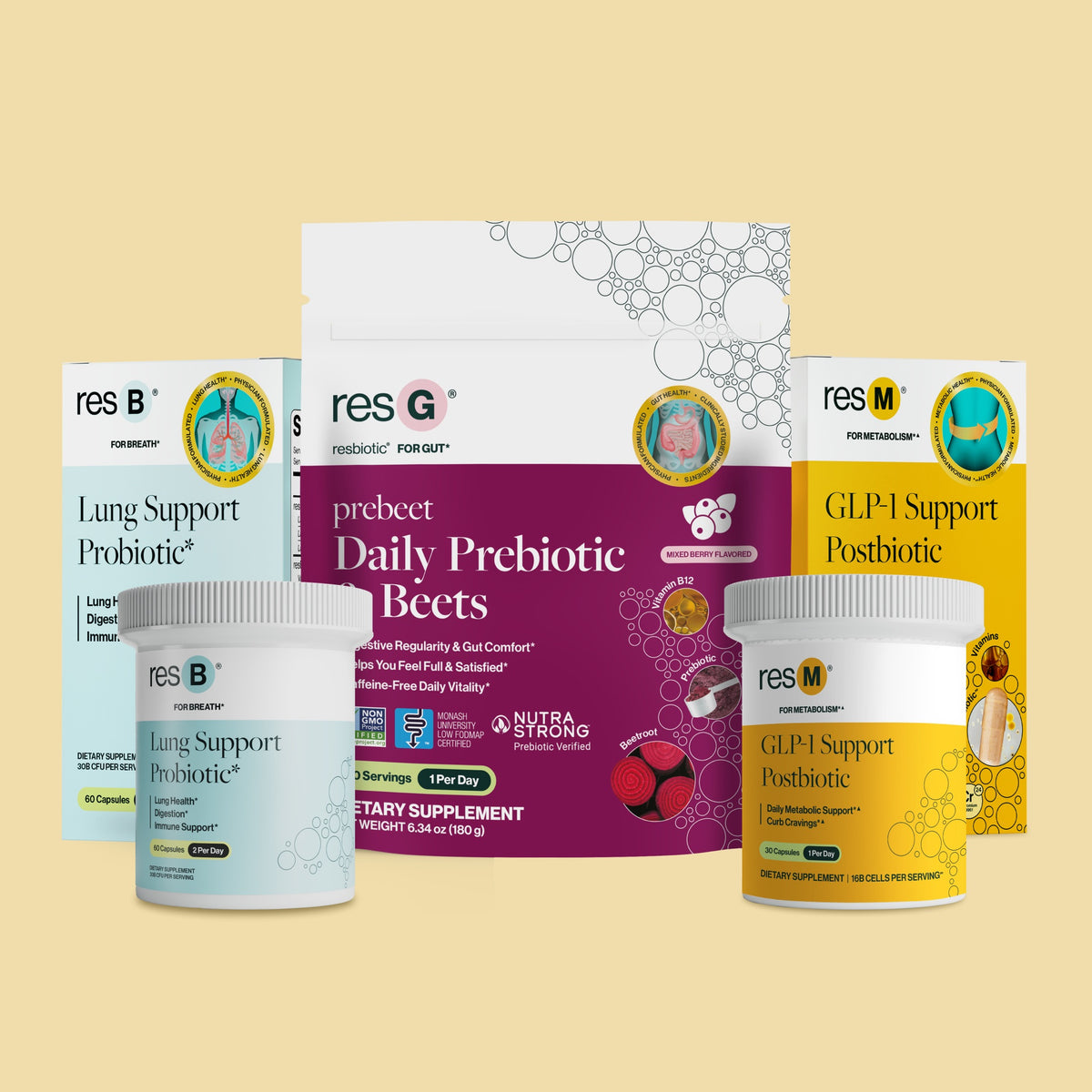
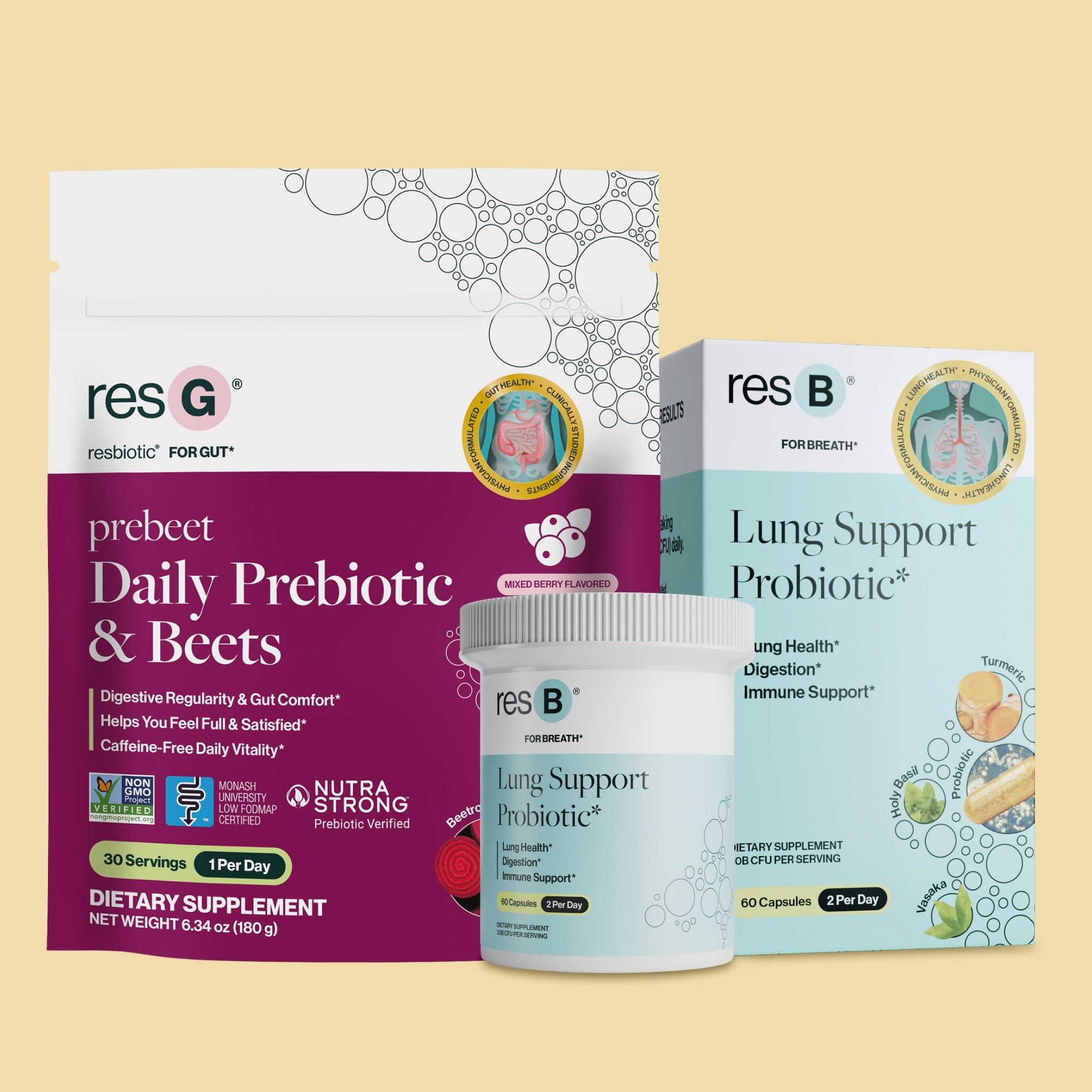
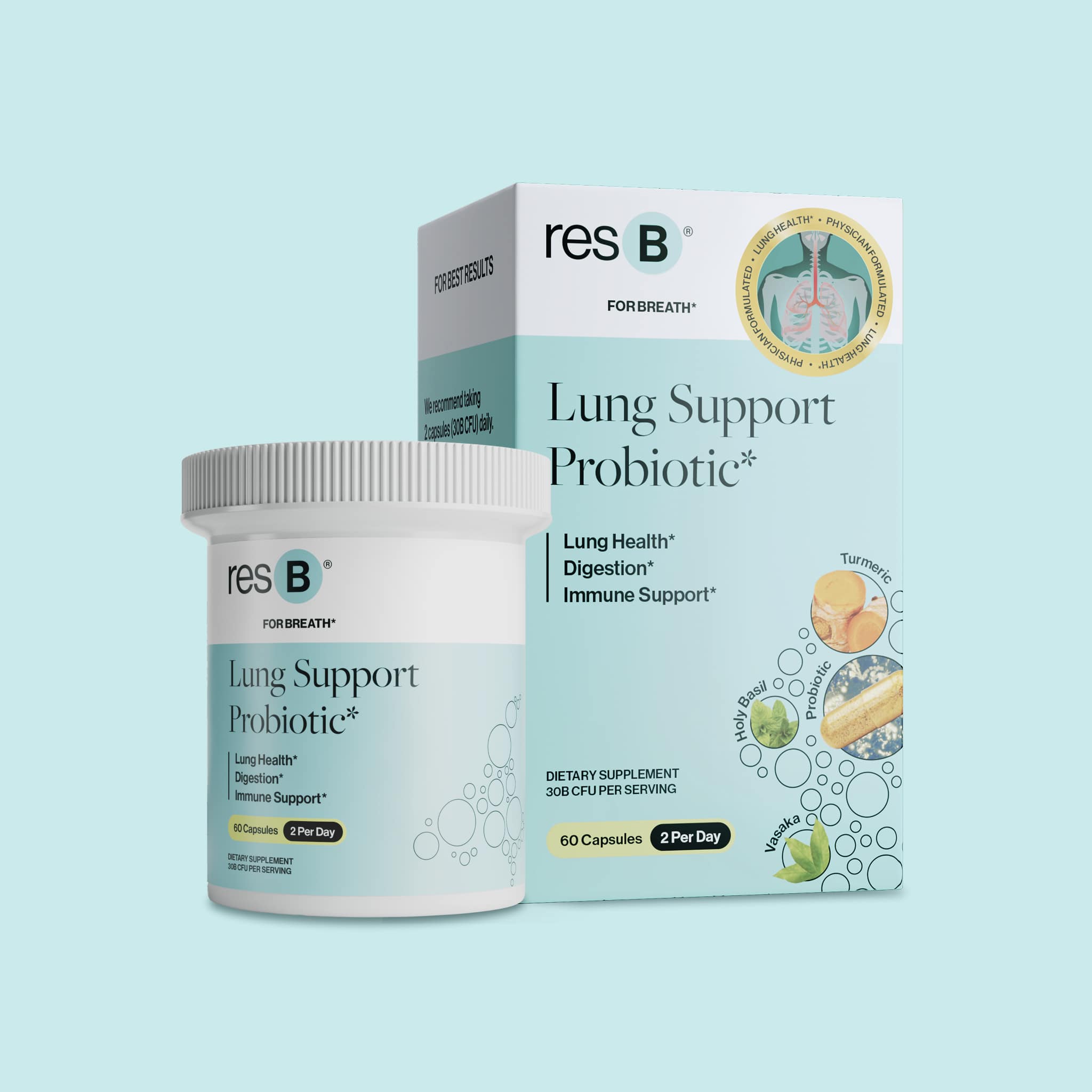
There's another way you can take turmeric for lungs that's more practical on a day-to-day basis, though. resB® is among the best supplements for lungs because it not only has turmeric but also holy basil, vasaka, and three clinically-studied probiotic strains.*
Chrysanthemum Tea
Used in East Asian medicine as a tea for respiratory health for centuries. We have more modern evidence to back it up, too. A 2021 study showed chrysanthemum extract calmed bronchial hypersensitivity - the immune overreaction behind wheezing and coughing fits.4
This is all thanks to the luteolin and apigenin in chrysanthemum flowers. They're flavonoids with anti-inflammatory potential.4 The tea itself is mild and floral with no caffeine, so you can drink it at night. We think it's the easiest tea on this list to stay consistent with.
Peppermint Tea
What tea is good for lungs when you just want relief from discomfort? You can't beat peppermint tea because of its menthol content. It actually inhibits smooth muscle contraction in your airways, physically loosening the squeeze around your bronchial tubes.5
You could feel relief in just a few sips if you're congested. Peppermint is one of the more effective herbs for mucus, too. It thins secretions while relaxing the tissue around them.
Green Tea
Green tea shows up in respiratory research because of EGCG. A 2022 review went through its effects across a number of lung conditions and found three ways green tea can slow long-term tissue damage6:
- Anti-inflammatory properties
- Antioxidant capabilities
- Anti-fibrotic potential
The only thing to keep in mind is that these studies involved 2-3 cups a day, every day. That's a lot to commit to, but it's cheap, easy to get your hands on, and is certainly backed by strong evidence.
You could also drink matcha for the concentrated version. You get more of the good stuff per cup since you're drinking the whole ground leaf instead of steeping it. This might mean you can just drink 1 cup a day.
Tangerine Puerh Tea
Maybe you're wondering, what tea is good for lungs when you're dealing with phlegm specifically? Tangerine puerh. It might not be as popular here in North America, but it's been used in Traditional Chinese Medicine (TCM) forever.
Aged puerh leaves are packed inside a dried tangerine peel (called chenpi). The two are then fermented together. The part of the plant that's most interesting is the peel. Modern research shows chenpi has alkaloid compounds that support anti-asthmatic activity.7 Meanwhile, the puerh itself has gut-supporting probiotics that come out during the fermentation process.
Earthy flavor with a citrus finish. It's a lot better than it sounds. Give it a shot if you can find it at a specialty tea shop or online and want to clear mucus quickly.
Ginger Tea
Gingerols and shogaols from the ginger root relax airway smooth muscle.8 It's the best tea for lung health when your airways feel as if they're squeezing shut. The warming effect helps move mucus along, too.
Make sure you use the fresh root (not bags) for the full effects, since the volatile oils are more concentrated. Grate it straight into hot water and let it simmer for at least ten minutes. The longer it sits, the more gingerol is extracted into the water.
Eucalyptus Tea
Eucalyptus tea is best known for 1,8-cineole, the dominant compound that makes it the best tea for respiratory health in many cases, even though it's hard to get your hands on.
1,8-cineole was put through a double-blind placebo-controlled trial, where bronchial asthma patients felt as if their symptoms got better.9 It has both anti-inflammatory and bronchodilating properties, which is rare for a single plant compound.
The taste is aggressively medicinal. There are other ways you can tap into the benefits of eucalyptus, though. Inhaling eucalyptus steam gets the cineole directly into your airways. Put a few drops of the essential oil in a bowl of hot water and breathe in the steam.
Other Ways to Support Respiratory Health
There are plenty of reasons to try tea for respiratory health, but your lungs need more. From fruits for lungs to lifestyle adjustments, here are some more ways to support lung health.
Lung Health Supplements
Tea sounds great in theory, but it's not the most practical way to encourage better lung function on a daily basis. A supplement or vitamins for lung health may make more sense. Look no further than resB®.
It's built around three proprietary probiotic strains (L. plantarum RSB11®, L. acidophilus RSB12®, L. rhamnosus RSB13®) alongside Vasaka, Turmeric, and Holy Basil. You get the same curcumin you'd get from turmeric tea. In this case, though, it's paired with probiotics that reach your respiratory immune system through the gut-lung axis. It's backed by clinical studies showing:
- 82% participants felt their quality of life improved.
- 72% participants reported lung function improvement.
- 95% participants would recommend resB to others.
- 100% participants didn't feel adverse side effects.
Our physician-formulated supplement is backed by a 30-day money-back guarantee, too. Add it to your lung health regimen today.
Lung Strengthening Exercises
You may not have tried breathing exercises before, but they can make a measurable difference in lung function.
Diaphragmatic breathing is the main one we recommend. You're essentially training yourself to pull air into the bottom of your lungs with the diaphragm instead of breathing shallow into your upper chest. Put one hand on your stomach and the other on your chest. You want to feel your stomach moving with proper diaphragmatic breathing.
You can also try pursed-lip breathing: in through your nose, out slowly through pursed lips. This forces your airways to stay open longer on the exhale.
Do these regularly, and you'll notice your lung capacity increases over the weeks.
Lifestyle Adjustments
Air quality could be the reason you're looking for tea for respiratory health in the first place. Get a HEPA filter for wherever you sleep and spend most of your time during the day.
Humidity matters, too. Your airways start drying out when you constantly breathe air below 30%. This makes mucus thicken. Things get worse overnight. Other things you should watch out for:
- Constantly lighting scented candles
- Cleaning sprays loaded with VOCs
- Mold hiding in your bathroom or bedroom
- Smoking or vaping in any way, shape, or form
All of these keep airways inflamed, and the symptoms won't get better until you address the underlying cause. Our blog has more tips on how to get rid of chronic congestion if things don't improve despite drinking tea for lung health and cleaning up your environment.
References
- Saketkhoo K, Januszkiewicz A, Sackner MA. "Effects of drinking hot water, cold water, and chicken soup on nasal mucus velocity and nasal airflow resistance." Chest, 1978; 74(4): 408-410. PubMed
- Bondonno NP, Pokharel P, Parmenter BH, et al. "Tea and coffee intakes, COPD, adult asthma, and lung function in the UK Biobank." Food & Function, 2026; 17(2): 673-686. PubMed
- Liu L, Shang Y, Li M, et al. "Curcumin ameliorates asthmatic airway inflammation by activating Nrf2/HO-1 signalling pathway." Clinical and Experimental Pharmacology & Physiology, 2015; 42(5): 520-529. PubMed
- Cho K, Park SS, Choi H. "Improvement of Bronchial Immune Hypersensitivity Reaction Using Extracts from Chrysanthemum morifolium and Scutellaria baicalensis." Evidence-Based Complementary and Alternative Medicine, 2021; 2021: 3173823. PubMed
- Ito S, Kume H, Shiraki A, et al. "Inhibition by the cold receptor agonists menthol and icilin of airway smooth muscle contraction." Pulmonary Pharmacology & Therapeutics, 2008; 21(5): 812-817. PubMed
- Mokra D, Adamcakova J, Mokry J. "Green Tea Polyphenol (-)-Epigallocatechin-3-Gallate (EGCG): A Time for a New Player in the Treatment of Respiratory Diseases?" Antioxidants, 2022; 11(8): 1566. PubMed
- Fu M, Zou B, An K, et al. "Anti-asthmatic activity of alkaloid compounds from Pericarpium Citri Reticulatae (Citrus reticulata 'Chachi')." Food & Function, 2019; 10(2): 903-911. PubMed
- Townsend EA, Siviski ME, Zhang Y, et al. "Effects of ginger and its constituents on airway smooth muscle relaxation and calcium regulation." American Journal of Respiratory Cell and Molecular Biology, 2013; 48(2): 157-163. PubMed
- Juergens UR, Dethlefsen U, Steinkamp G, et al. "Anti-inflammatory activity of 1.8-cineol (eucalyptol) in bronchial asthma: a double-blind placebo-controlled trial." Respiratory Medicine, 2003; 97(3): 250-256. PubMed