
Lung detox herbs won't undo years of exposure overnight. But they may support your body's natural ability to thin, loosen, and expel excess mucus.¹ It’s almost certainly worth trying herbs for lung detox if you've been dealing with congestion that lingers, a cough that won't quit, or that heavy feeling in your chest after a cold. But what are the best herbs that clear mucus from lungs?
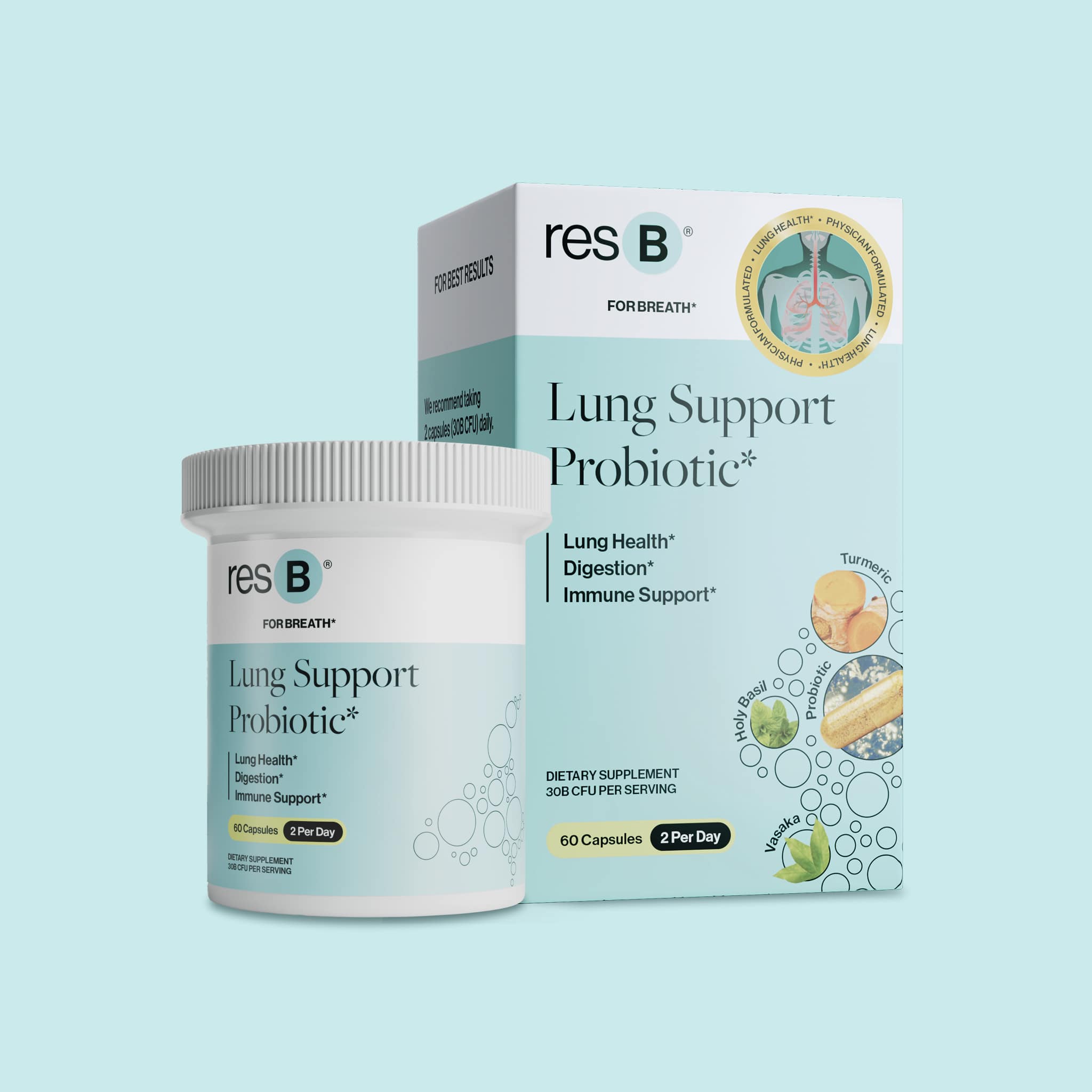
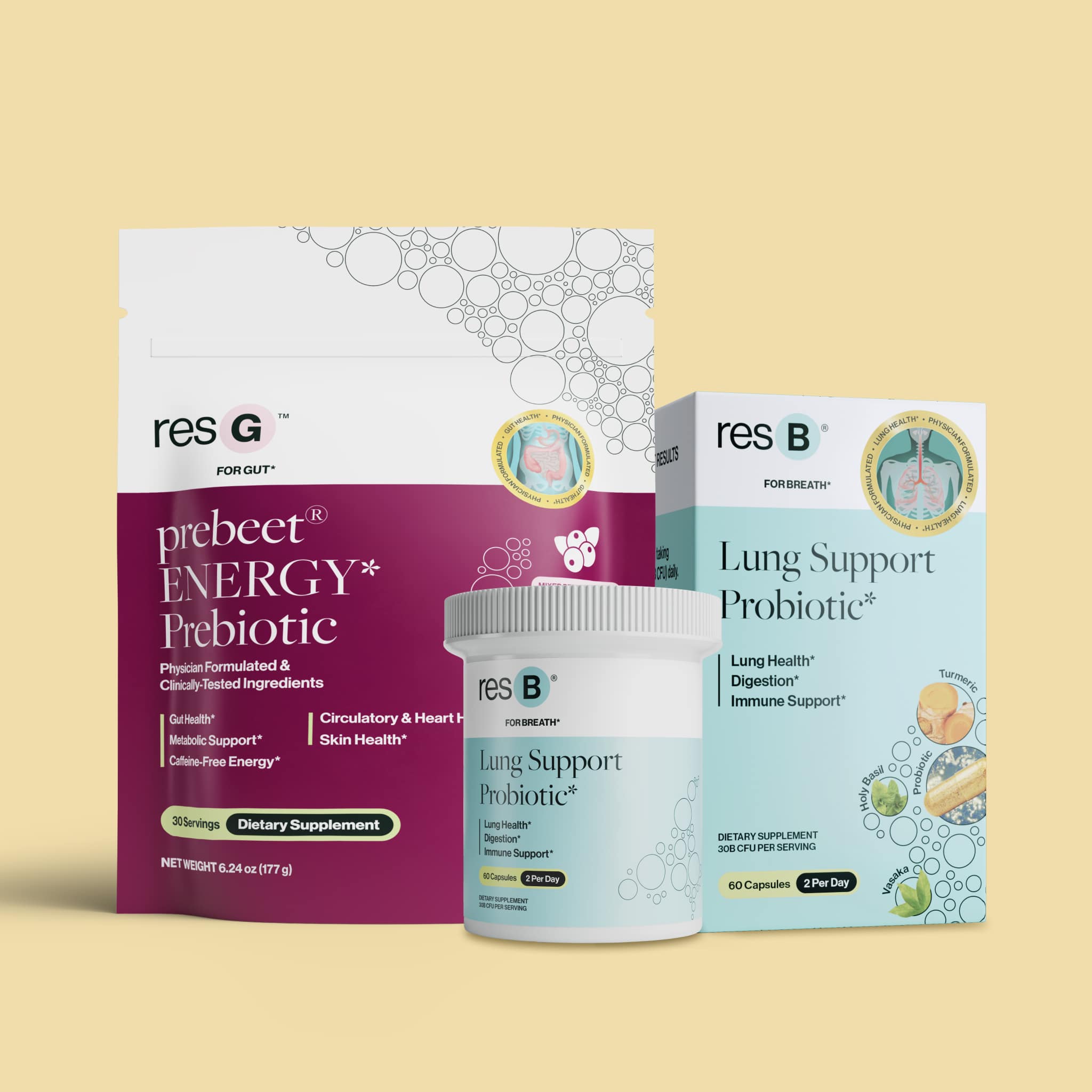
resB is a clinically studied lung support supplement crafted from vasaka, turmeric, and holy basil - along with probiotics.* But there are other herbs for lung cleaning worth exploring, such as mullein, peppermint, and licorice root. We cover all six below, along with tips on how to actually use them.
What is Mucus?
This gel-like substance is purposefully made in the airways as a defense mechanism. It lines the bronchial tubes and traps whatever particles you inhale, like pollen, bacteria, pollution, dust, etc. Mucus catches these before they get to the delicate gas-exchange tissue deeper in your lungs.
Then, tiny hair-like structures (these are called cilia) sweep that loaded mucus upward toward your throat, where you either swallow it or cough it out. This is known as the mucociliary clearance system. You barely notice it when it's working well.¹
Problems start when mucus production outpaces clearance. Imbalance, infection, allergies, smoking, and environmental irritants can all make your airways produce more mucus than your cilia can move. The result: congestion, chest tightness, productive cough, and that frustrating feeling that something is stuck in your throat.
The good news? You can learn how to remove mucus from lungs naturally simply by supporting the clearance system your body already has. That's where herbs for lung detox come in.
What Are the Best Herbs For Lung Detox to Clear Mucus?
These are six of the best herbs for lung detox, ranked by how strong the evidence is in their lung cleaning potential.
Vasaka
You may not have heard of Vasaka (Adhatoda vasica), but it might be the most important. Its main alkaloid (vasicine) is such a powerful bronchodilator and expectorant that it was synthesized for two of the most commonly prescribed pharmaceutical mucolytics - bromhexine and ambroxol.²
Vasicine and its oxidized form, vasicinone, may support bronchial relaxation and help thin mucus so it can be efficiently cleared from your airways.* Vasaka is one of the most well-established herbs that clear mucus from lungs, and is an essential piece of the resB formula.*
Holy Basil
Holy basil (Ocimum sanctum), AKA tulsi, contains an array of compounds that may support a healthy respiratory inflammatory response - eugenol, ursolic acid, and rosmarinic acid.*
A 2017 systematic review showed 24 human studies that all saw improvements across immune function, inflammation, and metabolic health.³ A separate review noted tulsi's traditional use for coughs, bronchitis, and asthma, connecting those uses to documented anti-inflammatory activity.⁴ You can learn more about the holy basil benefits in our blog.
Turmeric
Curcumin is the main active compound in turmeric, and it’s really what we’re interested in when it comes to lung detox herbs. Curcumin has been studied for its role in modulating inflammatory pathways for decades*
A 2009 study in Carcinogenesis showed dietary curcumin could minimize COPD-like airway inflammation in a preclinical model by up to 85%.5 Curcumin showed impressive potential to attenuate airway mucus hypersecretion through inflammatory signaling pathways in a separate study.6
Keep in mind, most curcumin studies are in animal models, not large human trials. Human data is still developing. We include turmeric in resB because the preclinical signal is strong and consistent.*
Mullein
European folk medicine has relied on Mullein (Verbascum thapsus) for bronchitis, dry coughs, and respiratory discomfort for centuries. Its saponins may promote expectorant activity, while its mucilages coat and soothe irritated mucous membranes.7
Again, the research is promising but not entirely conclusive. Mullein's evidence base is almost entirely traditional and in vitro. There aren’t any published human clinical trials that test it specifically for respiratory outcomes.
Peppermint
You may know already that menthol is peppermint's signature compound, which is where that cool sensation comes from. It’s also what makes peppermint one of the top lung detox herbs.
Menthol activates cold-sensitive receptors in your nasal passages and airways to produce a strong sensation of improved airflow. You feel like you can breathe more freely. But a 2003 review from Cardiff University's Common Cold and Nasal Research Centre clarified something important: menthol doesn’t actually reduce nasal resistance or physically open your airways.8 It just makes you feel better.
It’s still useful, to be clear. Peppermint tea or menthol steam can provide some much-needed relief when congestion makes every breath painful or laborious. Just make sure you’re using other herbs for lungs cleaning to do the actual mucolytic work underneath.
Licorice Root
Licorice root (Glycyrrhiza glabra) was included in our list of herbs that clear mucus from lungs for two reasons: it has both antitussive and expectorant properties. In other words, it can help suppress the urge to cough while simultaneously helping your body move mucus upward.
A 2018 study in Bioorganic & Medicinal Chemistry tested 14 compounds from licorice and found that three of them (liquiritin apioside, liquiritin, and liquiritigenin) reduced cough frequency by 30-78%.9
Glycyrrhizin is the root's most studied compound. It may ease airway inflammation and bronchial hyperreactivity, according to preclinical research.10 Licorice is one of the few herbs that clear mucus from lungs that works on both the cough reflex and the mucus itself.
Should You Combine Herbs to Clear Lungs With Anything Else?
You can see there are quite a few great lung detox herbs - but should you add just one of them to your routine? All of them? What else can you add to clear lungs faster? We’ve taken a look at some of the emerging research on the gut-lung axis and believe the best results come from a layered approach.
Studies on the gut-lung axis - a communication network between your gut microbiome and your lungs - suggest that gut-derived immune signals directly influence respiratory function.11 That's why pairing herbs to clear lungs with probiotics that support gut health may produce a more complete effect than either approach alone.
That's the principle behind resB. We combined three of the best herbs for lung detox (vasaka, turmeric, holy basil) with three proprietary probiotic strains (L. plantarum RSB11™, L. acidophilus RSB12™, L. rhamnosus RSB13™) to address both sides of the gut-lung axis.*
resB is commonly recommended as one of the best supplements for lungs according to real users and experts alike.*
“This has helped my lungs and digestive system. Great product.” - Diane
“I live in a smoky area during fire season. This helped more than I expected.” - Victor
“I don’t think about my lungs as much anymore. That’s new.” - Renee
How to Use Lung Detox Herbs
There's more than one way to get these lung detox herbs into your routine. The truth is, you’ll probably want to rely on multiple measures. The easiest way to incorporate herbs to clear lungs, though, is with a clinically studied supplement you can take daily.
Supplements Like resB
Capsule-based supplements let you get the right amount of herbs for lungs cleaning every single day without any guesswork on potency or prep time. resB combines vasaka, turmeric, and holy basil with 30 billion CFU of targeted probiotics in two capsules per day.*
It's the easiest way to get clinically studied amounts of these herbs for lung detox into your system consistently.* You can also explore vitamins for lung health that complement herbs for lung detox in our blog.
Preparing Your Own Tea
Mullein, peppermint, and licorice root all work well as teas. Steep dried mullein leaves for 10-15 minutes in just-boiled water. Peppermint leaves need just 5-7 minutes. You can find pre-packaged licorice root tea or simmer sliced root for 10 minutes.
Make sure you strain well if you’re concocting your own lung detox tea. And remember, these DIY teas usually won’t match a standardized supplement’s potency. Nevertheless, they're a simple way to start using herbs to clear lungs on a more regular basis.
Herbal Syrups
Herbal syrups (especially licorice root or mullein) are a great way to get a concentrated dose of the active compounds you need, in a smaller, more palatable serving. You can get your hands on these from just about any natural food store.
Take your time to read labels, though. A lot of these syrups add a ton of sugar or honey.
Other Infusions You Can Try
Inhaling peppermint oil steam is one of the oldest ways to tap into the benefits of herbs for lungs cleaning. Just add 3-5 drops to a bowl of hot water, drape a towel over your head, and breathe the vapor for 5-10 minutes.
Turmeric golden milk (simmered with black pepper for absorption) is another option, but like we’ve touched on a few times - the respiratory dose from one cup won't match a standardized supplement.
Other than that, try your best to include these lung detox herbs in your diet on a regular basis. It’s not practical to eat meals containing these herbs for lung detox every single day, but even a few times a week makes a difference as long as you’re also taking a targeted supplement such as resB.*
When Should You Get Professional Help With Lung Detoxing?
Herbs for lung detox support your body's natural clearance systems. They are NOT a substitute for medical treatment. See a healthcare provider if you experience any of the following:
- Coughing up blood or rust-colored mucus
- Shortness of breath that worsens over days
- Chest pain when breathing
- A cough lasting more than three weeks without improvement
- Fever alongside respiratory symptoms
We have more tips on chronic congestion natural remedies in our blog. But persistent or worsening symptoms are a sign you need to see an expert. They can help you rule out something more serious and identify the root cause of your issue for a more targeted treatment plan.
Safety Guidelines on Herbs For Lung Cleaning
Most of these lung detox herbs are well-tolerated at standard doses, with a few caveats. Pregnant or nursing women should check in with their healthcare provider before using any of these herbs to clear lungs.
Licorice root can raise blood pressure and lower potassium levels if you use it for a really long time. Talk to your doctor first if you have hypertension or take blood pressure medication.
Holy basil may interact with blood-thinning medications and drugs that lower blood sugar.* Turmeric in high doses can cause gastrointestinal discomfort and may interact with anticoagulants.* It’s worth looking into contraindications for any of these lung detox herbs before jumpstarting your regimen.
Otherwise, all that’s left to do now is see if resB can provide the relief you’ve been looking for. 82% of participants in a clinical trial saw an improvement in their quality of life, while 72% reported better lung function. 100% of participants said there were no adverse side effects.
Some people notice a difference in just a week or two, while others need to take resB for a full 60 days before improvements. Be patient as you incorporate lung detox herbs into your routine - we recommend a full 3-4 months of consistent use.
Frequently Asked Questions
How long does it take herbs to clear mucus?
Depends on the herb and the format. Peppermint steam inhalation can help you feel better pretty much right away. However, herbs for lungs cleaning taken as supplements need at least 2-4 weeks of consistent use before you notice a difference. resB's clinical studies evaluated results over 8 weeks.*
Are these lung detox herbs safe if I'm on prescription medications?
Always check with your prescribing physician before adding herbs for lung detox to your routine, especially if you take daily medications. Some of them interact with common medications. Licorice root affects blood pressure. Turmeric can interact with blood thinners.* resB is generally considered safe for most users, and there are no known contraindications, but it’s worth double-checking.
How does phlegm compare to mucus?
Mucus is the general term. Phlegm is a type of mucus, specifically that which lives in your lungs or lower airways. It’s usually coughed up. As a green or yellow substance, as a result of your body’s natural immune response.
Can kids use herbs that clear mucus from lungs?
Not without medical guidance. Children metabolize compounds differently than adults, and dosing information for most lung detox herbs is based on adult research. Talk to your child's pediatrician before giving them any herbal supplement or concentrated herbal tea. resB is specifically designed for adults.
Are lung detox herbs safe for long-term use?
Most are, at appropriate doses. Licorice root is the main exception since prolonged use can deplete potassium and raise blood pressure. The best herbs for lung detox for long-term use are turmeric, vasaka, holy basil, and mullein.*
How do I store herbs that clear mucus from lungs?
Dried herbs must be kept in airtight containers, away from direct sunlight and moisture. Capsule supplements stay sealed at room temperature. Herbal teas lose potency over time, so use them within 6-12 months of purchase. Check expiration dates on everything.
How can I rethink my diet to improve lung detox?
Anti-inflammatory foods (fatty fish, leafy greens, berries) support the same pathways that lung detox herbs target. Staying hydrated keeps mucus thin and easier to clear. A diet that supports gut health also supports lung health through the gut-lung axis.¹¹
What makes resB a great supplement for lung detoxing?
resB combines three herbs for lungs cleaning (vasaka, turmeric, and holy basil) with three proprietary probiotic strains at 30 billion CFU.* It’s physician-developed, clinically studied, and designed to tap into the gut-lung axis* Learn more about the science behind resB today!
References
- Hill DB, Button B, Rubinstein M, Boucher RC. “Physiology and pathophysiology of human airway mucus.” Physiological Reviews. 2022;102(4):1757-1836. PubMed
- Shamsuddin T, Alam MS, Junaid M, et al. “Adhatoda vasica (Nees.): A Review on its Botany, Traditional Uses, Phytochemistry, Pharmacological Activities and Toxicity.” Mini Reviews in Medicinal Chemistry. 2021;21(14):1925-1964. PubMed
- Jamshidi N, Cohen MM. “The Clinical Efficacy and Safety of Tulsi in Humans: A Systematic Review of the Literature.” Evidence-Based Complementary and Alternative Medicine. 2017;2017:9217567. PubMed
- Cohen MM. “Tulsi — Ocimum sanctum: A herb for all reasons.” Journal of Ayurveda and Integrative Medicine. 2014;5(4):251-259. PubMed
- Moghaddam SJ, Barta P, Mirabolfathinejad SG, et al. “Curcumin inhibits COPD-like airway inflammation and lung cancer progression in mice.” Carcinogenesis. 2009;30(11):1949-1956. PubMed
- Zhu T, Chen Z, Chen G, et al. “Curcumin Attenuates Asthmatic Airway Inflammation and Mucus Hypersecretion Involving a PPARgamma-Dependent NF-kappaB Signaling Pathway In Vivo and In Vitro.” Mediators of Inflammation. 2019;2019:4927430. PubMed
- Turker AU, Gurel E. “Common mullein (Verbascum thapsus L.): recent advances in research.” Phytotherapy Research. 2005;19(9):733-739. PubMed
- Eccles R. “Menthol: effects on nasal sensation of airflow and the drive to breathe.” Current Allergy and Asthma Reports. 2003;3(3):210-214. PubMed
- Kuang Y, Li B, Fan J, Qiao X, Ye M. “Antitussive and expectorant activities of licorice and its major compounds.” Bioorganic & Medicinal Chemistry. 2018;26(1):278-284. PubMed
- Wahab S, Annadurai S, Abullais SS, et al. “Glycyrrhiza glabra (Licorice): A Comprehensive Review on Its Phytochemistry, Biological Activities, Clinical Evidence and Toxicology.” Plants (Basel). 2021;10(12):2751. PubMed
- Budden KF, Gellatly SL, Wood DLA, et al. “Emerging pathogenic links between microbiota and the gut-lung axis.” Nature Reviews Microbiology. 2017;15(1):55-63. PubMed
*These statements have not been evaluated by the Food and Drug Administration. This product is not intended to diagnose, treat, cure, or prevent any disease.