








Mother Nature has provided so many wonderful remedies for respiratory health, including turmeric. So is turmeric good for your lungs? The research says yes.
From tissue protection to clearing up the chronic inflammation that causes so many respiratory issues in the first place, it all goes back to curcumin - the active compound in turmeric.
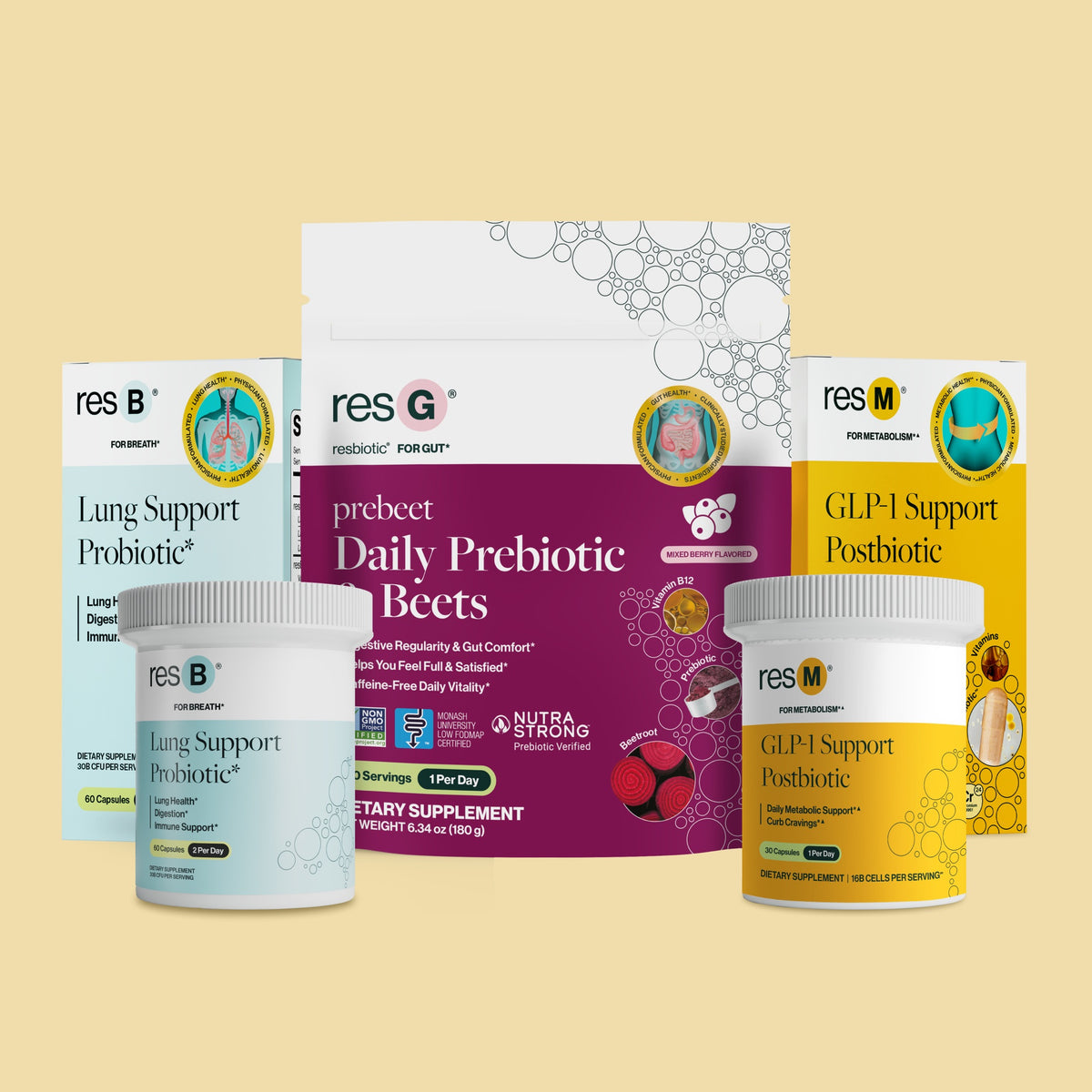
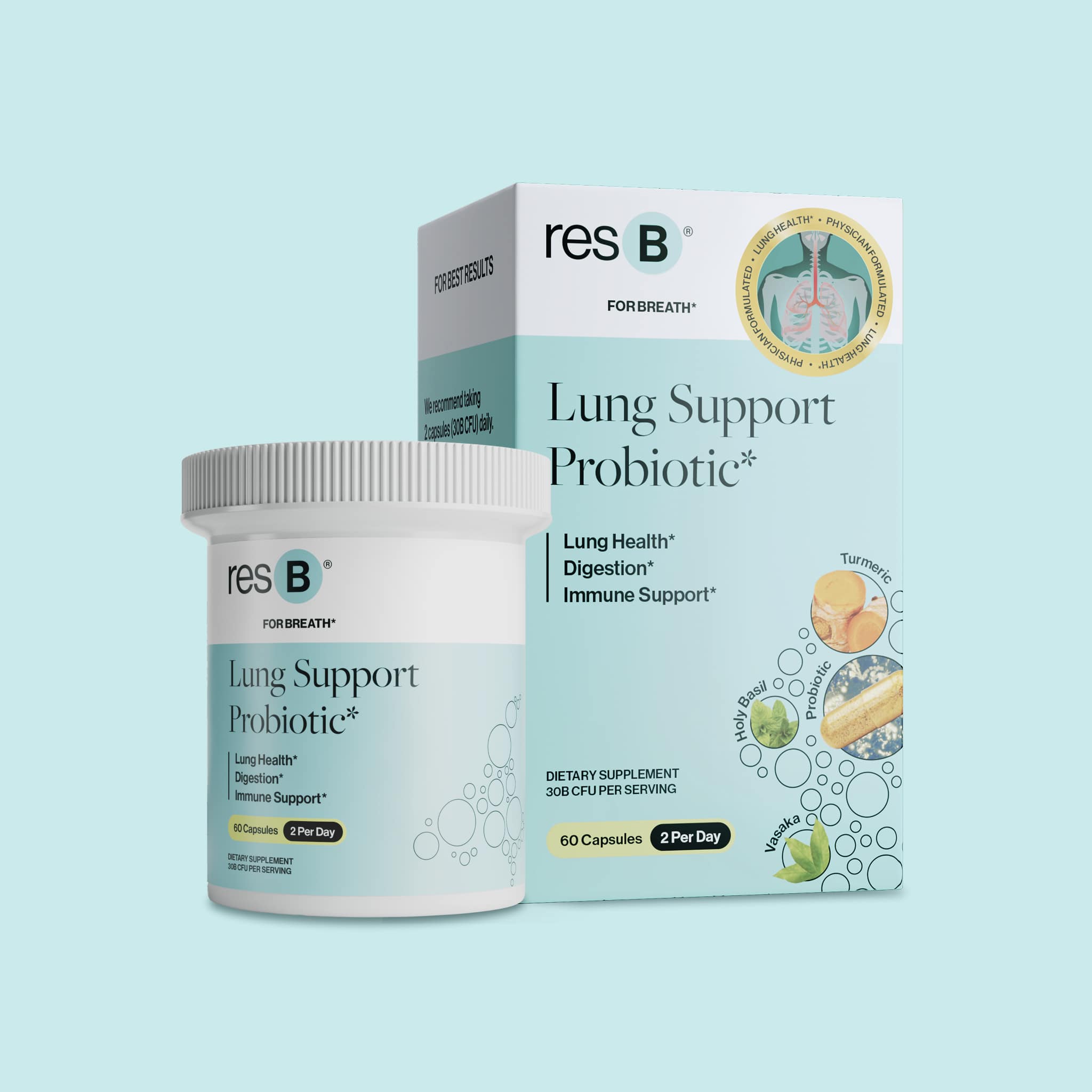
We'll cover all the turmeric benefits for lungs below and show you how our lung support probiotic resB® can help you breathe better. It includes turmeric alongside vasaka, and holy basil, and 3 clinically-studied probiotics for daily respiratory support.*
Is Turmeric Good For Your Lungs? 3 Turmeric Benefits For Lungs
Most of what people think are the best lung supplements really only do one thing. Curcumin does several at the same time. Here's what makes it so effective:
- It blocks NF-kB, an inflammatory signal in the airways1
- It slows the tissue-scarring pathway driven by TGF-beta2
- It neutralizes free radicals that wear down lung cells over time3
- It may help offset the natural decline in lung function that begins around age 354
We know that might not mean anything if you don't have a biology degree, so let's break it down - why is turmeric good for your lungs?
Lung Protection and Repair
Pulmonary fibrosis is a condition involving scarring of the lung tissue. Scar tissue can't exchange oxygen the way healthy lung tissue can, so every bit of fibrosis gets in the way of proper breathing. This is one of the most well-documented benefits of curcumin for lungs.
A 2023 meta-analysis of 27 preclinical studies found that curcumin dramatically improved fibrosis severity. It also minimized inflammation markers and rebalanced oxidative stress in lung tissue.2
Separate research showed curcumin preserved antioxidant enzyme levels in lungs exposed to chemical-induced oxidative damage.3 The kind of cellular stress that builds up from pollution exposure, smoking, or working around industrial chemicals. These are things you come in contact with all the time whether you know it or not. We say that to tell you anyone can benefit from turmeric for lungs.
Easing Respiratory Issues
COPD affects over 16 million Americans. Most treatments just manage symptoms. They don't do anything to repair the damage driving symptoms in the first place. Turmeric might, though. We know curcumin has an anti-inflammatory profile (more on that in a moment). So, it makes sense that it could help with any condition driven by airway hyperreactivity.
A 2024 randomized controlled trial gave nanocurcumin to patients with severe COPD. The improvements in FEV1, FVC, and FEV1/FVC ratios were significant compared to placebo.5 IL-6 (a key inflammation marker) also dropped meaningfully. Those are the lung function measurements that pulmonologists track to gauge disease progression.
Supporting a Better Inflammatory Response
You might not notice chronic low-grade inflammation in the airways. It can take a toll in the background, though. Maybe allergies hit harder than they used to, or colds drag on longer and take more time to bounce back from. These are signs your inflammatory response is weak.
One of the more well-established curcumin benefits for lungs is how the compound disrupts the inflammatory cascade before it has an opportunity to build up momentum. NF-kB is the main target. This signaling system amplifies inflammation across the body, and curcumin stops it in its tracks.1
Who Can Benefit From Turmeric Lung Supplements?
So, is turmeric good for your lungs? Yes - and honestly, anyone breathing city air, managing seasonal allergies, or carrying oxidative damage from past smoking could benefit from it. It just helps make your respiratory system more resilient, and it has far-reaching benefits for the rest of your body as well. You don't need to have COPD or asthma to add it to your regimen.
Lung function naturally declines around the time you turn 35.4 Chronic inflammation just speeds that up. Curcumin might help slow it down a bit, so you can breathe better for longer.
Whether you have a diagnosis or just want to protect your respiratory system in the long-term, you can tap into the turmeric benefits for lungs. Former smokers in particular need this ancient remedy since oxidative damage can linger for years after quitting.
The question is, how do you get started with turmeric for lungs?
How to Harness the Turmeric Benefits For Lungs
The one main issue with dietary turmeric is bioavailability. The curcumin content doesn't absorb great on its own. That's why it's worth adding black pepper to any dish or drink you prepare that has turmeric in it. The piperine from black pepper can increase curcumin absorption by 2,000%.6 Taking curcumin with fat also boosts uptake.
Turmeric tea and golden milk are easy ways to get some curcumin in your daily routine as well. Figuring out how to take turmeric for lungs is really about finding what you can be consistent with - that's why supplements make the most sense for anyone trying to improve lung function.
Our lung support probiotic resB® combines turmeric with vasaka and holy basil. There are also three proprietary probiotic strains (L. plantarum RSB11, L. acidophilus RSB12, L. rhamnosus RSB13) to support respiratory health.*
This combination of probiotics and herbs for lungs works according to clinical studies. 72% of users noticed lung function improved, and 100% reported no adverse side effects.* Place your order with peace of mind knowing it's protected by a 30-day money-back guarantee.
Closing Thoughts on the Curcumin Benefits For Lungs
In closing, is turmeric good for your lungs? The turmeric benefits for lungs are backed by real research showing it can help repair damage and protect against inflammation.
You can learn more about lung health vitamins and the best fruits for lungs in our blog to round out your respiratory regimen. Otherwise, take a moment to learn more about the science behind resB® today.
References
- Venkatesan N, et al. "Curcumin as a pulmonary protectant." Mol Nutr Food Res. 2007;51(6):626-635. PMID: 17569221.
- Fang C, et al. "Efficacy and safety of curcumin in the treatment of pulmonary fibrosis: A summary of preclinical studies." Front Pharmacol. 2023;14:1209793. PMID: 37900163.
- Hassani S, et al. "Protective effects of curcumin on pulmonary oxidative stress and lipid peroxidation." Inflammation. 2015;38(4):1524-1533. PMID: 25233897.
- Sharma G, Goodwin J. "Effect of aging on respiratory system physiology and immunology." Clin Interv Aging. 2006;1(3):253-260. PMID: 18046878.
- Zare'i M, et al. "The effect of nanocurcumin supplementation on lung function, inflammation and oxidative stress biomarkers in chronic obstructive pulmonary disease." Complement Ther Med. 2024;80:103010. PMID: 38178561.
- Shoba G, et al. "Influence of piperine on the pharmacokinetics of curcumin in animals and human volunteers." Planta Med. 1998;64(4):353-356. PMID: 9619120.