







There are so many great natural perimenopause herbs that may help ease the discomfort that comes with this transitional stage in life. So what are the best herbs for perimenopause? We’ve put together this list of the top 10 options:
- Black Cohosh
- Chasteberry
- Red Clover
- Sage
- St. John’s Wort
- Valerian Root
- Maca Root
- Shatavari
- Turmeric/Curcumin
- Passionflower
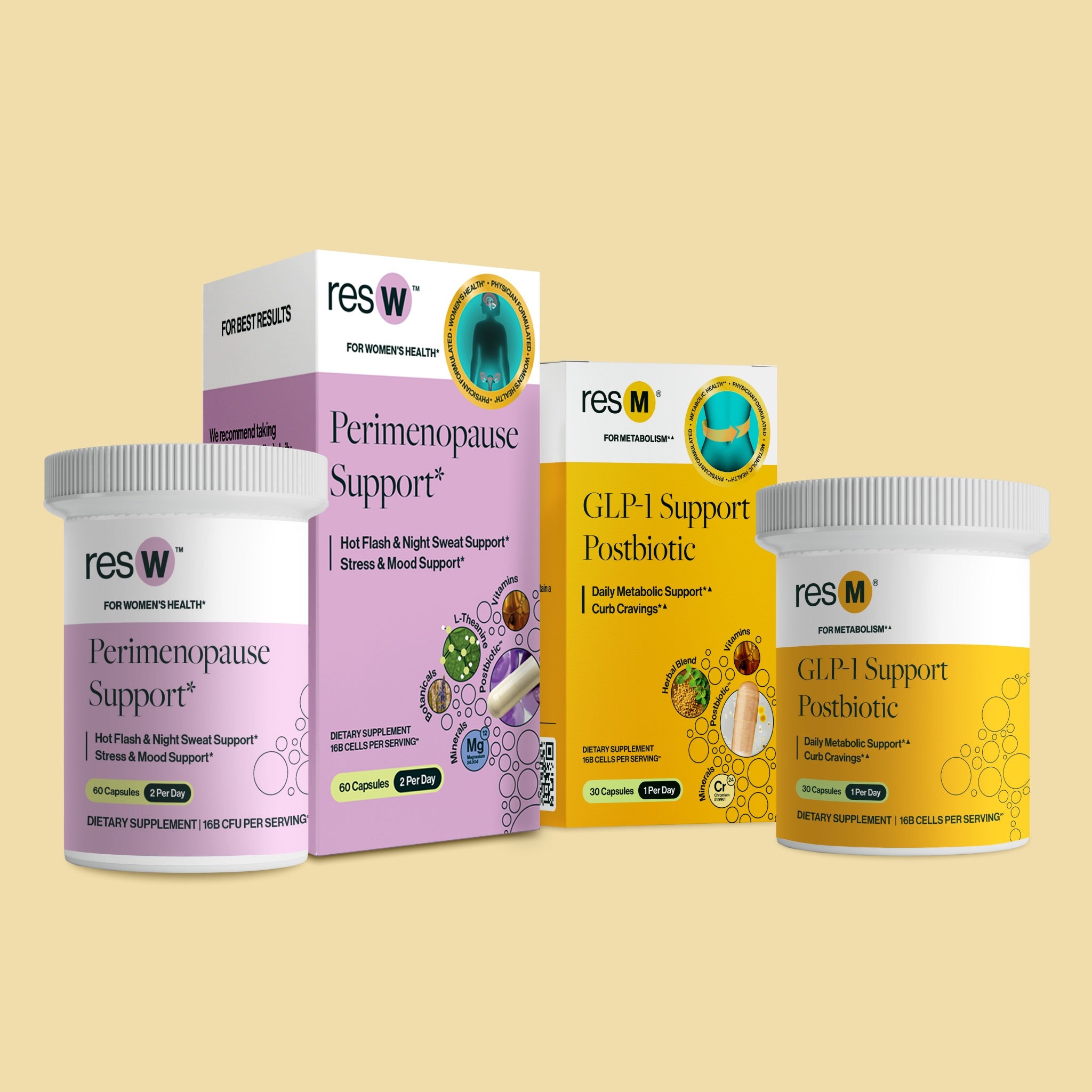
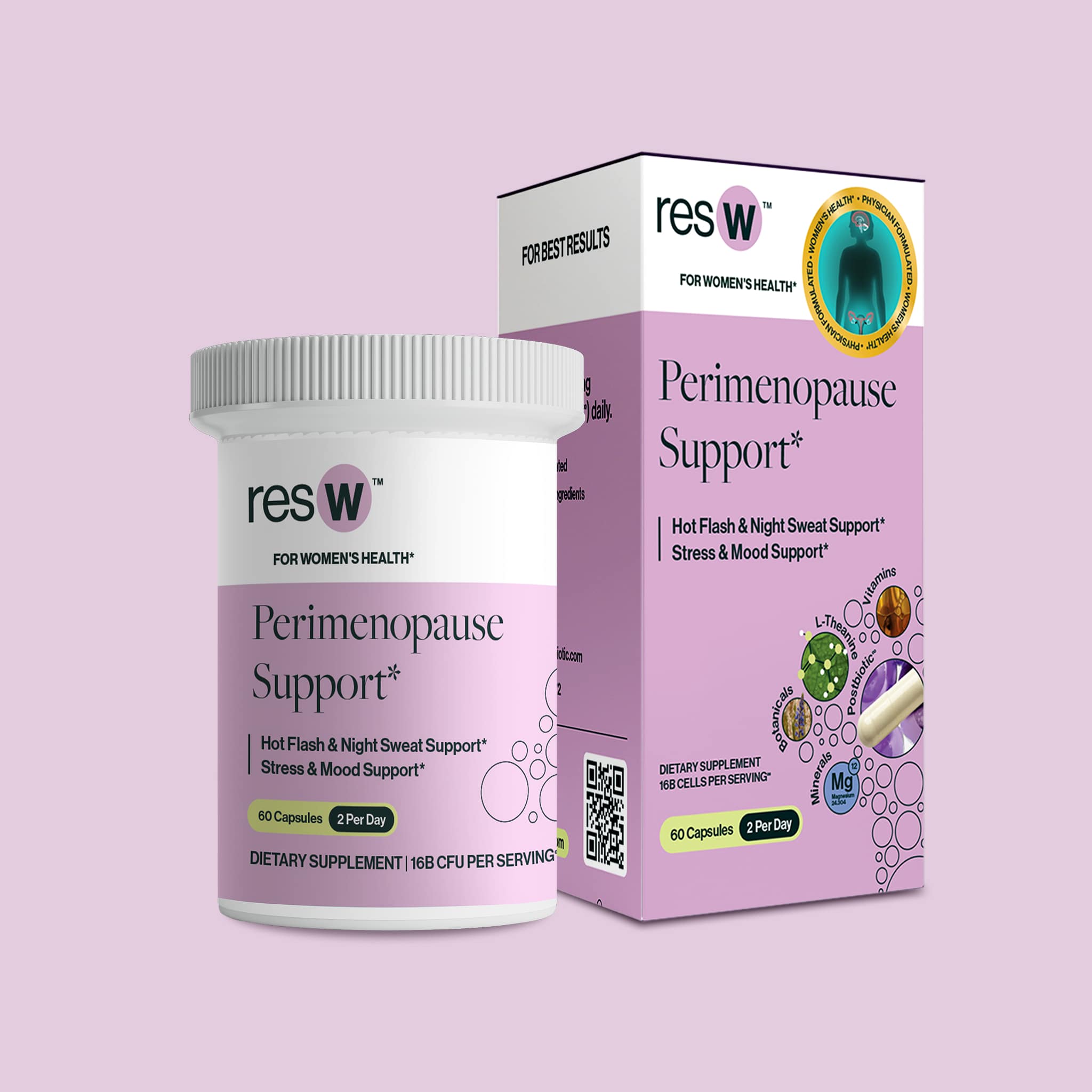
We’ve brought together some of these in resW perimenopause support, like Black Cohosh and Chasteberry. You also get clinically studied Postbiotic L. plantarum RSB11®, Magnesium Glycinate, L-Theanine, and Vitamins D3, B6, & B12. This combination is designed to support gut–hormone communication, stress balance, sleep quality, and overall comfort during perimenopause.* Learn more about the science behind resW™ at resbiotic.*
“I feel less foggy in the morning. That’s new for me.” - Andrea
“I noticed fewer night sweats after about a month.” - Melissa
“My mood feels steadier. I don’t feel on edge all the time anymore.” - Karen
Individual experiences may vary, and testimonials reflect personal experiences rather than guaranteed results
Common Perimenopause Symptoms
Perimenopause happens in a woman’s late 30s or early 40s, and marks the beginning of a new chapter in life. Estrogen and progesterone begin rising and falling in uneven patterns. These hormones influence quite a few different systems, so fluctuations can lead to quite a few uncomfortable symptoms, including but not limited to:
- Hot flashes and night sweats
- Irregular or heavier periods
- Trouble falling or staying asleep
- Mood swings or increased irritability
- Anxiety or racing thoughts
- Brain fog or trouble concentrating
- Weight changes or bloating
- Fatigue or low energy
It’s normal to start freaking out when you realize that you’re going through perimenopause, but it’s an unavoidable rite of passage for any woman. And the good news is you’re not in it alone. There are plenty of perimenopause herbs that can help you refind your footing.
How Can Perimenopause Herbs Help?
Women dealing with hormonal changes have relied on certain herbs for centuries because they have naturally occurring compounds that interact with the nervous system, circulation, and stress response.
The herbs for perimenopause with the greatest potential often contain phytoestrogens. These gently interact with estrogen receptors and may help with temperature regulation, mood shifts, sleep disruption, and daily tension. Some other herbs may support neurotransmitters tied to calm and emotional balance.
The effects are subtle, and they won’t occur overnight. But so many women say they feel a difference after sticking to herbalism for a consistent period of time.
Is it Safe to Take Herbs to Help Perimenopause?
There are countless conventional treatments for perimenopause out there, but many bring some less-than-pleasant side effects with them. That’s why so many women explore natural herbs to help perimenopause in the first place.
It’s important that you realize anything can cause an adverse reaction if you take it unsupervised, use low-quality herbs, or combine the wrong things. Some herbs may interact with medications, while people with pre-existing health conditions need to take extra caution.
In general, though, perimenopause herbs are considered relatively safe in the right form, dose, and regimen. So what are the BEST herbs for perimenopause?
Best Herbs for Perimenopause
We narrowed it down to just the top 10 herbs to help perimenopause, but there are so many others worth exploring as well. Our personal favorite, though, is Black Cohosh.
Black Cohosh
This is one of the most researched herbs for perimenopause, especially for temperature regulation. Instead of acting on estrogen directly, it’s believed that Black Cohosh interacts with the neurotransmitters and blood vessel signaling involved in temperature regulation. This is why Black Cohosh is included in resW™ as part of a broader, non-hormonal approach to supporting temperature comfort during perimenopause.*
Chasteberry
Chasteberry is also one of the best perimenopause herbs worth adding to your regimen. It works through the pituitary gland, which helps the body respond to shifts in estrogen and progesterone levels.
According to research, chasteberry is traditionally used to support mood steadiness and cycle-related comfort during hormonal transitions. But it may even ease breast tenderness and bring balance to cycle irregularity. We’ve seen women say it’s a good fit when they’re dealing with symptoms that mirror long-standing PMS.
Red Clover
Red clover is loaded with isoflavones, a type of plant compound that can bind to estrogen receptors. There are studies suggesting it could minimize the frequency and/or intensity of hot flashes - but results can vary, so more research is needed.*
Sage
Sage is another one of the many natural herbs for perimenopause that plays a role in temperature regulation.* It has compounds that appear to influence sweat gland activity and thermoregulation, which may keep women feeling cooler at night in particular.*
St. John’s Wort
St. John’s Wort is best known for its role in mood support, smoothing out the highs and lows that come during this period of life. It has a connection to serotonin, which is how it can influence emotional balance.* There are also studies on its effect on temperature.*
Just be aware it has well-established interactions with other common medications, so you’ll want to talk to your doctor before incorporating it in your regimen.
Valerian Root
We think this is one of the best herbs for perimenopause when you can’t seem to fall asleep like you once did. Research suggests it influences GABA activity in the brain, calming an overactive nervous system and helping you find your balance again.* The catch is that it can work too well in some cases, leading to next-day grogginess and brain fog.
Maca Root
This herb has been used for centuries to support energy, mood, and libido during hormonal transitions. Like most perimenopause herbs, it doesn’t directly interact with hormones. It simply supports the hypothalamic-pituitary system, which helps regulate hormonal signaling.*
That’s why some women say they feel better as far as mood goes. But, maca may help with sex drive as well, which can start to weaken with age.* This herb can feel a little overstimulating in some cases, though. It’s not for everyone.
Shatavari
Shatavari is an Ayurvedic herb traditionally used for women’s reproductive health. It has plant compounds that may support estrogen-related pathways and overall hormonal balance.* Some women use it for dryness, fatigue, or general discomfort during hormonal shifts.*
One caveat - women with hormone-sensitive conditions should talk to a healthcare provider before using shatavari because it has mild phytoestrogen activity.*
Turmeric/Curcumin
Turmeric, more specifically, its curcumin content, is one of the most well-studied perimenopause herbs, particularly the physical discomfort that may come with it.* It supports balance and may ease aching joints, stiffness, and general fatigue.* Bonus points - turmeric is also among the herbs for lung health.* It’s a powerful addition to any health regimen, really.*
Passionflower
Last but not least on our list of natural herbs for perimenopause, we have passionflower - a personal favorite for supporting relaxation and sleep quality.* It appears to influence GABA signaling, which can help quiet racing thoughts and reduce nervous tension.*
Some perimenopausal women find it helpful when stress or a racing mind gets in the way of rest.* It’s generally gentle, so it can be used alongside other perimenopause herbs.*
How Do I Use Natural Herbs for Perimenopause?
There you have it, all the best herbs for perimenopause. Now it’s just a matter of picking the ones that make sense for your unique needs and incorporating them into your regular routine. Here are some things to think about as you explore the best supplements for perimenopause:
- Ingredient quality and sourcing matter most
- You need clinically studied doses, not trace amounts
- Forms that absorb well and are gentle on digestion are worth paying more for
- Clear labeling shows you exactly what you’re taking, so you enjoy peace of mind
- Formulas designed for daily use, not short-term fixes, are your best bet
resW combines time-tested herbs like Black Cohosh and Chasteberry with a clinically studied postbiotic and targeted nutrients to support gut–hormone communication during perimenopause.* Rather than addressing symptoms in isolation, the formula is designed to support interconnected systems related to temperature comfort, stress response, sleep quality, and daily comfort.* It may offer hot flash support, mood & stress balance, sleep support, and hormone regulation all at once.*
The formula centers on the best probiotics for perimenopause - more specifically, a postbiotic known as L. plantarum RSB11®. It may support gut-hormone communication and stress balance during this period of life.*
resbiotic also includes some of the best vitamins for perimenopause (D3, B6, & B12) and the best magnesium for perimenopause (magnesium glycinate). The formula is well-rounded to address the challenges of perimenopause from every angle to support bone health, nervous system function, energy metabolism, and relaxation during perimenopause.*
Consistency matters more than timing tricks or complex schedules when taking perimenopause herbs. Take your supplement at the same time each day, pair it with food when recommended, and give your body several weeks to respond. Don’t expect an overnight transformation.
Many women find it helpful to track sleep, mood, and comfort over the first month to notice subtle improvements. Pair it with other lifestyle adjustments like stress management, exercise, and a good diet.
Parting Thoughts on Perimenopause Herbs
The best herbs for perimenopause bring steady, reliable plant-based support in a time when you can feel overwhelmed with all the changes going on around you. Getting a head start on your self-care regimen in perimenopause smoothens out the transition to menopause and beyond.
resW brings together select perimenopause herbs, targeted nutrients, and a clinically studied postbiotic in a single, hormone-free formula. Designed to support gut–hormone communication, stress balance, sleep quality, and daily comfort, resW fits easily into a consistent perimenopause wellness routine.*