

















You wake up tired even after a full night in bed, your energy crashes by mid-afternoon, and suddenly you’re wondering, does perimenopause cause fatigue, or is something else going on?
Perimenopause fatigue is unfortunately quite common, and it makes sense when you think about what’s really going on - shifting hormones, disrupted sleep, stress, and changes in metabolism can all leave you running on fumes.
But you don’t have to let perimenopause and fatigue dictate your life. We’re going to walk through ways to support your body during this phase, from smarter nutrition and daily habits to clinically studied ingredients like in resbiotic’s resW® Perimenopause Support.*
What is Perimenopause?
This is the stage of womanhood just prior to menopause, as estrogen and progesterone begin shifting in unpredictable patterns. It usually happens in your late 30s or 40s.
Periods may become more irregular, sleep can feel more fragmented, and mood changes start occurring with no clear rationale. Some women notice hot flashes or night sweats; others deal with brain fog, a heightened stress response, or changes in metabolism.
These hormone swings affect more than just the reproductive system. Your nervous system, digestion, and daily energy levels can all be influenced. Speaking of energy, does perimenopause cause fatigue?
Does Perimenopause Cause Fatigue?
The short answer is yes, perimenopause can cause fatigue. In fact, this is one of the earliest symptoms women report, long before periods stop.
So, why does perimenopause cause fatigue? There are a few reasons this can happen. Hormone fluctuations influence sleep, metabolism, stress response, and nutrient use, all of which affect how energized you feel on a day-to-day basis.
The Link Between Estrogen and Cellular Energy
Estrogen influences how cells make and use energy. The body has to work harder to maintain balance as estrogen rises and falls unpredictably, which can leave you feeling sluggish. Some women notice a “heavy” fatigued feeling that doesn’t get better with caffeine or a short nap.
Lower Progesterone Reduces Natural Calm
Progesterone can help calm the nervous system. So as it declines, the body can feel more ramped up during the day yet more exhausted at the same time. It’s that classic “tired but wired” feeling. This makes it harder to fully recharge, even after rest.
Blood Sugar Fluctuations Change How Fuel Is Used
Perimenopause even alters how the body handles carbs and insulin. Energy spikes followed by crashes may become more prevalent, especially after meals high in sugar or refined carbs. These swings can show up as afternoon exhaustion or trouble concentrating.
Increased Cortisol From Daily Stress
Hormonal shifts can mess with your body’s stress response. Higher cortisol levels during the day may keep you temporarily alert, but this leads to burnout later on. This vicious cycle can leave you feeling mentally and physically drained in the long run.
Changes in Muscle Mass and Recovery
Two often overlooked symptoms of estrogen shifting are slower muscle recovery and lean muscle atrophy. Muscle tissue has a pretty direct role in helping your body maintain energy and metabolic stability, so even small losses can be detrimental to your stamina.
Other Perimenopause Symptoms Impact Sleep
It’s no secret that some women feel as if their internal temperature has been turned up during this stage of life. Night sweats can make it hard to get the rest you need, and chronic insomnia is going to impact your daily energy.
How Long Does Perimenopause Fatigue Last?
You’re probably wondering when you’ll be able to get back to living life like you used to. So, how long does perimenopause cause fatigue for?
Unfortunately, perimenopause fatigue doesn’t follow a fixed timeline. It can be pretty sporadic. Some women notice it comes and goes in waves. Others feel persistently drained for years. The common theme, though, is the intensity shifts with your hormone patterns.
Does it ever go away? The good news is that most women find it settles after menopause. But fatigue won’t disappear overnight. Sleep habits, stress levels, nutrition, and muscle health still play a role long after the hormonal transition ends.
That’s why coming up with a strategy for managing perimenopause and fatigue is so important.
How to Handle Perimenopause and Fatigue
Perimenopause fatigue isn’t going anywhere anytime soon, so it’s worth taking steps to support the systems working harder than usual - hormones, sleep patterns, stress response, and metabolism. You’d be surprised at just how much a difference small lifestyle changes can make.
Reassess Your Diet
You probably know to some extent how what you eat influences your energy levels. This becomes more important during perimenopause.
Your meals should be centered around protein, healthy fats, and fiber for steady blood sugar management. This will go a long way in helping you avoid the afternoon crashes so many women notice during perimenopause.
It’s imperative that you’re eating enough and getting in a slight caloric surplus if you feel your energy reserves are empty. Trying to beat perimenopause fatigue while in a caloric deficit is like trying to drive a car with no fuel in the tank.
What you don’t eat is just as important. Steer clear of highly processed snacks and sugary drinks if you can manage it. These are only going to cause more harm than good.
Hydration plays a role as well, especially when night sweats or disrupted sleep leave you feeling drained the next day. Make sure you’re drinking water from when you wake up until a few hours before bed - that way, you don’t have to chug to “catch up.”
Supplemental Support
Diet aside, you should look into smart supplements to help you fill in the gaps. There are so many great herbs for perimenopause, and magnesium, B vitamins, vitamin D, and probiotics/postbiotics have their place as well.
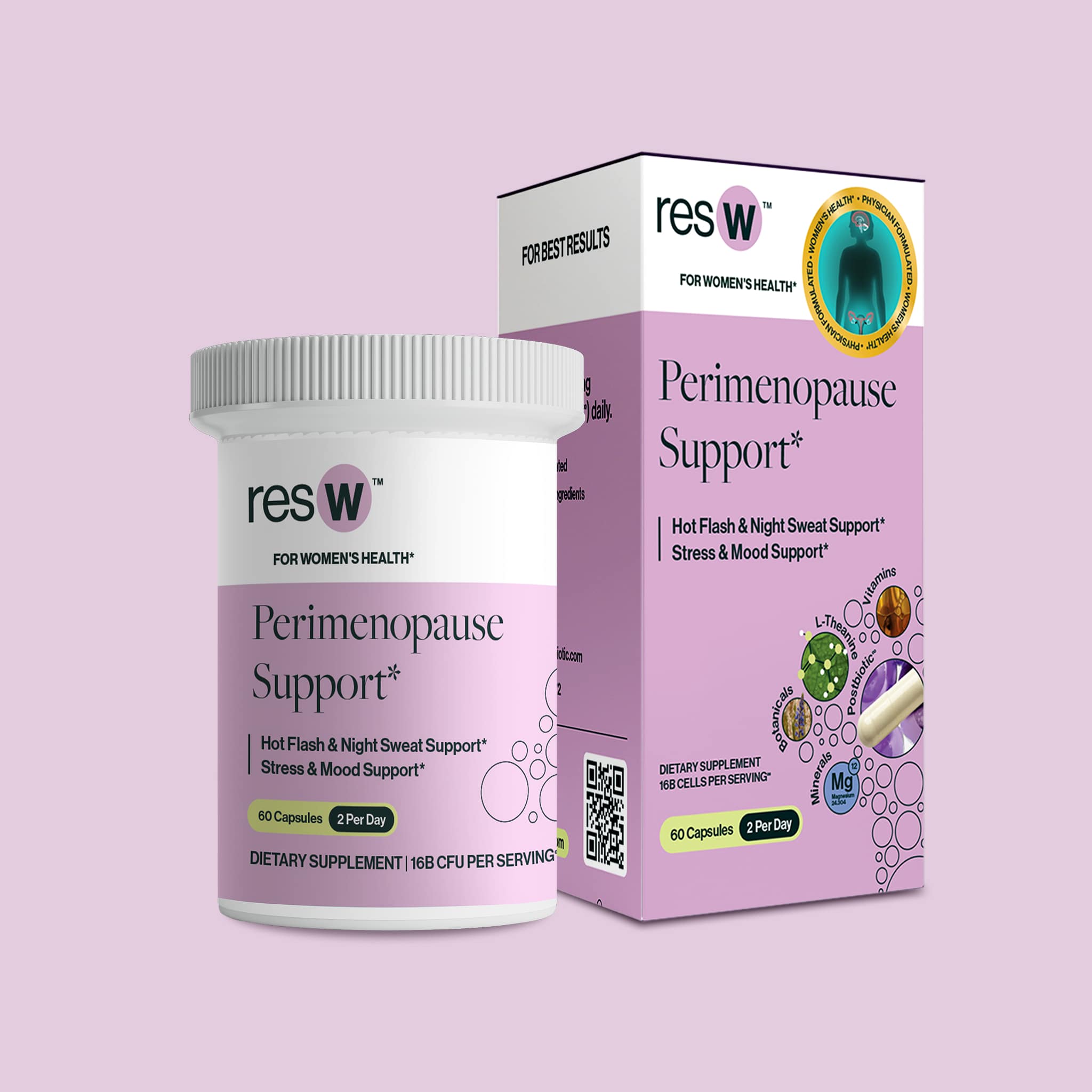
You don’t have to stress about which magnesium is best for perimenopause or find the perfect multivitamin, though. We’ve brought together what you need most during this transition in a single formula, resbiotic’s resW.* Here’s what’s inside:
- Magnesium glycinate
- L-theanine
- Chasteberry
- Black cohosh
- Postbiotic L. plantarum RSB11®
- Vitamins D3, B6, B12
Each ingredient has been clinically studied for at least one aspect of perimenopause relief, from hormone regulation to temperature regulation, sleep, mood, and more.* It’s vegan, non-GMO, gluten-free, and proudly made right here in the USA. Try it risk-free for 30 days.
Exercise Regimen
We know getting to the gym can feel impossible when you’re running on empty, but regular exercise may help with hormone regulation. It’ll also help you preserve muscle mass, which we talked about earlier as an important aspect of perimenopause fatigue.
You don’t have to do anything crazy, either. Strength training two to three times per week can help preserve metabolism. A daily walk boosts circulation and mood. The key is consistency, not intensity.
Improving Sleep Hygiene
Sleep and fatigue are closely connected. But figuring out how to sleep better during perimenopause can be tough, especially if you’re struggling with hot flashes and night sweats.
resbiotic’s resW is designed to support sleep and overall well-being as part of a broader perimenopause wellness routine.*.* Supplements aside, though, there are simple measures you can take to improve sleep quality and quantity. Creating a consistent wind-down routine, limiting screens late at night, and keeping the bedroom cool all go a long way.
Other Lifestyle Changes
We know it’s tempting to resort to caffeine to boost you during the day, or alcohol at night to help you wind down. But these things are actually going to make matters worse. Caffeine will likely leave you more exhausted in the end, and alcohol only leads to fragmented sleep patterns.
Try to limit stress as much as you can, too. Yes, it’s inevitable. But there may be stressors in your life that you could cut out. At the very least, look to bolster your stress response and make sure you have healthy outlets like journaling, yoga, or friends to talk to.
When to Get Professional Guidance
Persistent fatigue that doesn’t improve with lifestyle changes may need a deeper look. There’s a chance it’s not perimenopause fatigue at all, and it could be something like thyroid issues, nutrient deficiencies, anemia, or other conditions that sometimes overlap with perimenopause.
Getting professional input can help rule out underlying concerns, and it’ll also be a great way to build out a personalized plan to support both hormonal health and overall well-being.
Parting Thoughts on Perimenopause Fatigue
In closing, does perimenopause cause fatigue? Unfortunately, it’s a pretty common symptom of this transitional period. But the good news is you have more control over perimenopause fatigue than you may think.
Our blog has more tips on the best probiotics for perimenopause or what vitamins are good for perimenopause if you’re looking for additional resources for the road ahead. But again, one option many women explore is adding resbiotic’s resW Perimenopause Support as part of a daily routine focused on hormonal balance, sleep, and stress support.*
Learn more about the support resbiotic’s resW can bring to your journey through perimenopause today!